
Laboratory testing plays a critical role in the diagnosis, monitoring, prognosis, and treatment of diseases. In modern healthcare, best practice emphasizes the principle of shared decision-making. Although this approach is more commonly applied to therapeutic decisions, it is equally relevant to laboratory investigations and diagnostic testing, as highlighted by Watson et al. While patients rarely request blood tests directly, they often perceive laboratory investigations as a meaningful step in the management of their health condition and as an indication that their physician is taking their concerns seriously. For patients, laboratory results are expected to provide clear answers or solutions, whereas physicians typically use them as tools to rule out serious conditions and to guide clinical reasoning. Due to the discrepancy between patients’ expectations and the lack of adequate explanations regarding the actual purpose of the investigations, some patients are disappointed when the tests do not provide a clear diagnosis or concrete solutions for their medical condition [1].
In the context of individuals’ tendency to absolutize the role of laboratory testing – as either a means of validating their health status or resolving medical issues – direct-to-consumer laboratory testing emerges as a form of self-empowerment. This is a challenge for the safety and efficacy of healthcare because it allows patients to obtain test results without physician referral, clinical interpretation, or a clear understanding of the limitations related to the test’s analytical and diagnostic performance or its overall quality [2].
In the context of an increased volume of test requests, there is a potential for negative consequences. When performed by physicians, ordering unnecessary tests may lead to overdiagnosis, which can result in unwarranted treatments, potential adverse effects, and increased costs for the healthcare system. Contributing factors include patient expectations and pressure, as well as physicians’ fear of legal liability, all of which may influence the decision to order tests that are not clinically justified [3].
Furthermore, the education and training of physicians in ordering adequate laboratory investigations might be a challenge. According to a study conducted by Fung et al., the majority of residents in family medicine ordered appropriate tests from a list of 38 laboratory investigations for prevention and screening purposes; however, the majority of the participants ordered at least one inappropriate test per patient (average from 3.3 to 5.7 per patient), leading to excessive costs. Several factors have contributed to the tendency to order unnecessary laboratory tests, including patient requests, fear of overlooking important clinical details, working in solo practice, and concerns about potential litigation [4].
While the main reason why healthy individuals visit the primary care facilities is preventive check-ups, and in this context, the family physicians order a high number of screening tests, the overuse of laboratory investigations has decreased from 1978 [5].
Considering the major influence in balancing overuse and effective screening of individual perceptions, understanding, and emotional responses regarding the role of laboratory testing, this study aims to provide general insights from individuals living in Romania. It explores their opinions, habits, behaviors, and knowledge related to laboratory testing, intending to inform the design of future representative studies.
A survey was conducted using an online data collection tool (Google Forms), which included questions with predefined answers. Respondents selected the answers they deemed most appropriate. The questions addressed various topics related to medical laboratory investigations, including knowledge, opinions, habits, and behaviors. Participation in the survey was voluntary; the link to the form was accessible to anyone, and respondents’ completion of the survey was automatically considered as consent to participate in the study. An introductory section provided information about the study’s purpose.
Data were collected using a general data collection instrument rather than a validated questionnaire, aiming to capture a broad perspective and highlight insights and new areas for research, rather than yielding quantitative and generalizable results.
The data were centralized and analyzed using Microsoft Excel and Google Sheets. Relative frequencies were calculated and presented in tables and charts. This study employed descriptive statistics only, reflecting its exploratory nature and the self-selected sample. Therefore, no inferential analyses were performed, and causal or generalizable conclusions cannot be drawn. Further research with representative samples and appropriate analytical methods is needed to investigate potential associations.
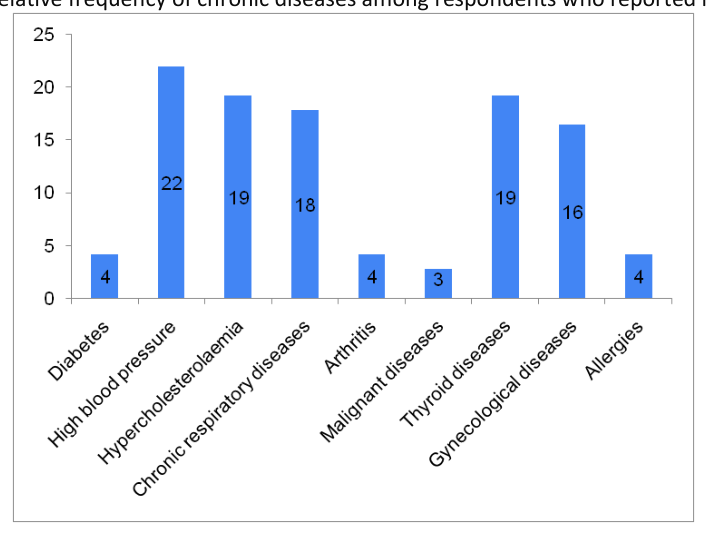
A total of 321 respondents participated in the survey, with an average age of 29 years (ranging from a minimum of 18 to a maximum of 81 years). Among the participants, 85% identified as female and 15% as male. Geographically, 22% of respondents resided in rural areas, and 78% in urban settings. The educational and professional backgrounds of the respondents are detailed in Table 1. Notably, 27% reported having no relatives or close friends working in the healthcare field. Regarding self-reported health status, 77% of respondents considered themselves healthy, while 23% indicated they suffered from chronic conditions, as illustrated in Figure 1.
| Level of studies | Middle school | High school | Higher education |
|---|---|---|---|
| 1.5% | 27% | 72% | |
| Occupation | Student | Employee | Other |
| 45% | 50% | 5% | |
| Study or work in one of the following fields: health, medicine, veterinary medicine, dentistry, pharmacy, biology | No | Yes | |
| 55% | 45% |
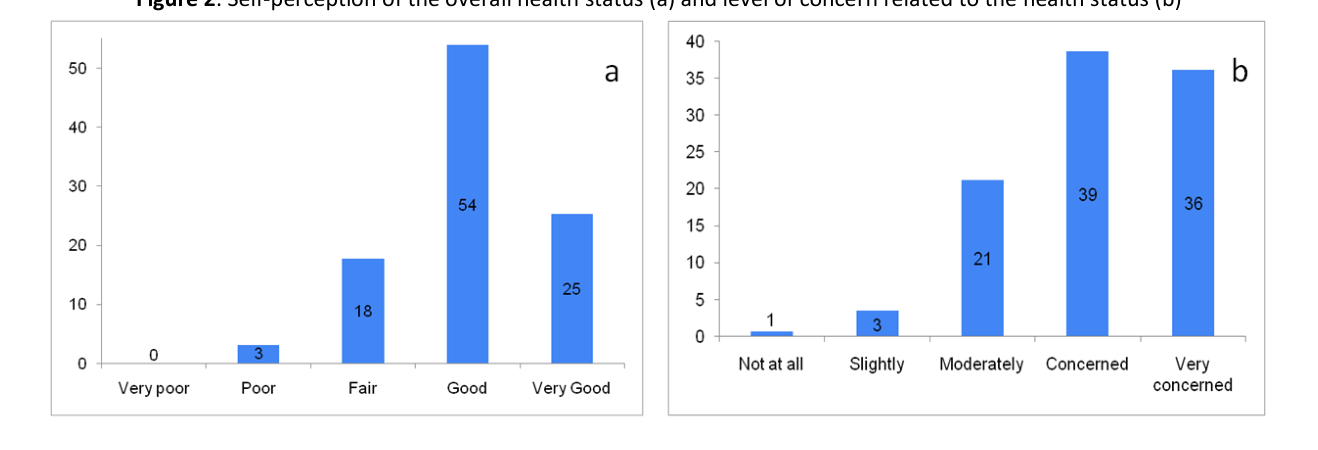
The majority of respondents rated their overall health status as good or very good; however, most also reported being concerned or very concerned about their health, as shown in Figure 2.
Several behaviors were reported by respondents as being associated with their health-related concerns, as presented in Table 2.
| Behavior linked to health concerns | Relative frequency |
|---|---|
| I don’t consider myself concerned about my health. | 4% |
| I frequently see a doctor for preventive purposes. | 28% |
| I visit the doctor immediately when symptoms appear. | 47% |
| I get medical tests done frequently. | 50% |
| I get laboratory tests done as soon as I notice symptoms. | 25% |
| I go directly to the pharmacy to request treatment if I notice something is wrong. | 21% |
| Concern about my health makes me think about it all the time or frequently. | 15% |
| Concern about my health makes me anxious. | 20% |
| I adopt a healthy lifestyle to be in the best possible health. | 36% |
| I’m afraid of catching infectious diseases in various everyday situations. | 26% |
| I generally postpone going to the doctor for as long as possible. | 11% |
| When I should go to the doctor, I prioritize it over other professional or personal matters. | 38% |
| When I should go to the doctor, I first deal with other professional and personal matters and only then make an appointment. | 13% |
Table 3 summarizes respondents’ views and knowledge about medical laboratory investigations, their importance, and the recommendations they reported being familiar with regarding laboratory testing.
| How important do you consider routine laboratory tests to maintaining health? | |
|---|---|
| Very important, laboratory tests are essential for detecting and monitoring health problems. | 87% |
| Moderately important, laboratory tests may be useful in certain situations, but are not always necessary. | 12% |
| I do not consider laboratory tests essential for maintaining health. | 1% |
| Do you think it is important to have regular laboratory tests, even if you are healthy? | |
| Yes, to detect potential health problems in their early stages. | 90% |
| No, if I don’t have symptoms, I don’t need tests. | 2% |
| It depends on each person’s age and lifestyle. | 7% |
| I am not sure. | 1% |
| How well do you think laboratory test results indicate health status? | |
| The tests show exactly what health problems I have. | 25% |
| Most of the time, the analyses are indicative. | 41% |
| The tests cannot accurately indicate what health problems I have, regardless of their nature. | 4% |
| Certain tests can indicate the exact disease, while others assess the general state of health. | 29% |
| What do you consider to be the ideal approach? | |
| We should have all kinds of tests done frequently to make sure we are healthy. | 51% |
| We should perform several more important types of tests frequently to ensure we are healthy. | 48% |
| I do not believe that it is necessary to perform routine tests frequently to detect possible health problems. | 1% |
| Do you think that your doctor recommends enough tests for you? | |
| I didn’t need to see my family doctor/specialist. | 8% |
| Yes, I believe I am receiving the necessary recommendations for my health. | 63% |
| I am not sure. | 8% |
| No, I think I am being recommended too many tests. | 2% |
| No, I think that too few tests are recommended for me. | 16% |
| I don’t do laboratory tests. | 2% |
| How frequently do you think laboratory tests are recommended for someone your age? | |
| 3-4 times a year | 6% |
| 1-2 times a year | 83% |
| Once every 2-3 years | 2% |
| Less often | 1% |
| No specific time frame is recommended | 3% |
| What is your level of confidence in the results of laboratory tests? | |
| Very high | 28% |
| High | 61% |
| Moderate | 11% |
| Low | 0% |
| Absent | 0% |
| How do you see the doctor’s role in interpreting laboratory test results? | |
| As an essential guide in understanding the results. | 90% |
| Like someone who should only be consulted in case of problems. | 6% |
| I do not consider it necessary to have a doctor interpret it, as there is enough information available on the | 1% |
| internet. | |
| No opinion. | 2% |
| Do you think laboratory tests should be used more in prevention? | |
| Yes, it could help prevent some conditions. | 62% |
| Yes, it could help detect diseases in their early stages. | 31% |
| No, it could cause unnecessary worries. | 1% |
| It depends on each individual case. | 5% |
| How do you evaluate the experience during sample collection for laboratory analysis? | |
| Comfortable and without problems. | 55% |
| Acceptable, there is potential for improvement. | 40% |
| Uncomfortable and unpleasant. | 4% |
| I have no personal experience in this regard. | 1% |
| Which of the following aspects do you think could improve your experience while performing laboratory tests? | |
| Reducing waiting time for results. | 12% |
| Lower costs or covered by health insurance. | 60% |
| Better communication and explanation of results. | 13% |
| Reducing waiting time for sample collection. | 2% |
| Do you consider that laboratory results are managed with confidentiality in mind? | |
| Yes, I trust that they are treated confidentially | 77% |
| I am not sure | 15% |
| No, I have doubts about their confidentiality | 2% |
| I have no personal experience with this | 3% |
| No opinion | 2% |
| Do you think there is enough public education about the importance and usefulness of laboratory tests? | |
| Yes, there is enough public education. | 7% |
| No, more education would be beneficial. | 87% |
| Not sure. | 4% |
| I don’t think public education would make a difference. | 2% |
| No opinion. | 1% |
| When you receive the results of laboratory tests, do you consider it useful to automatically receive explanations of the results in a formal setting? | |
| No, because I understand all the content and I don’t need any other information. | 7% |
| No, because I can find the necessary information by asking people I know or searching the internet. | 1% |
| I do not know. | 1% |
| Yes, I think it would be useful to receive explanations of the results every time I have my lab tests. | 88% |
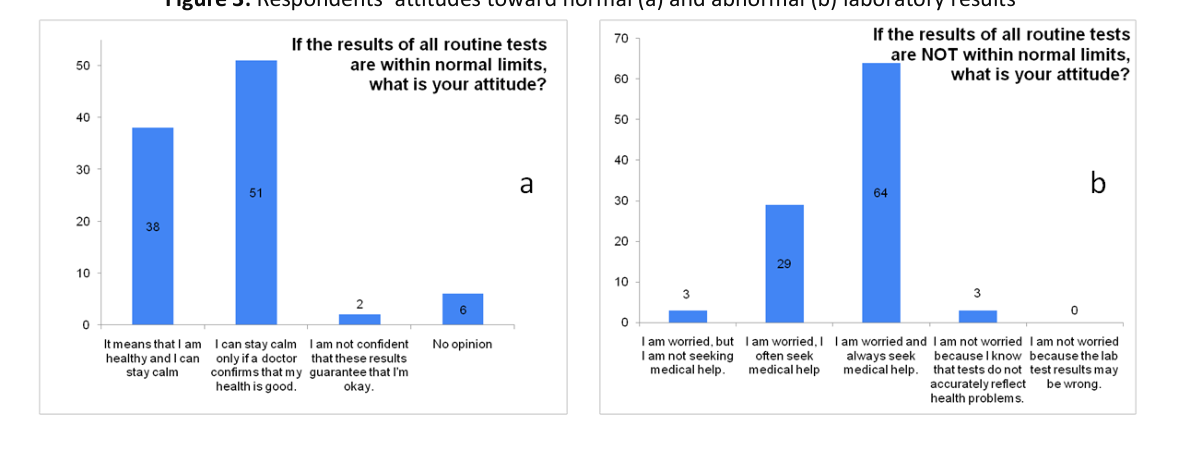
Regarding how the respondents deal with the results of medical laboratory investigations, most respondents reported either seeking medical advice or requesting feedback about their health, as shown in Figure 3.
Table 4 presents self-reported adherence to physicians’ recommendations regarding laboratory tests, as well as respondents’ motivation, testing frequency, and behaviors related to receiving laboratory results.
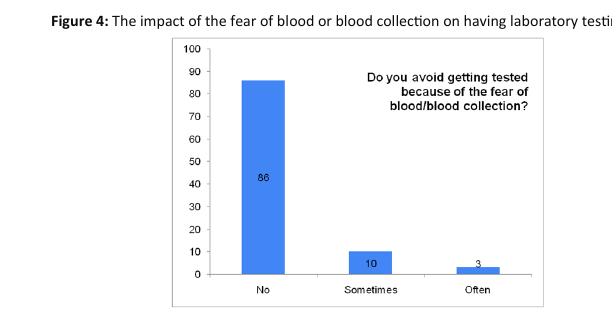
The majority of the responders reported that the fear of blood or the fear of blood collection does not prevent them from having their laboratory tests done, as presented in Figure 4.
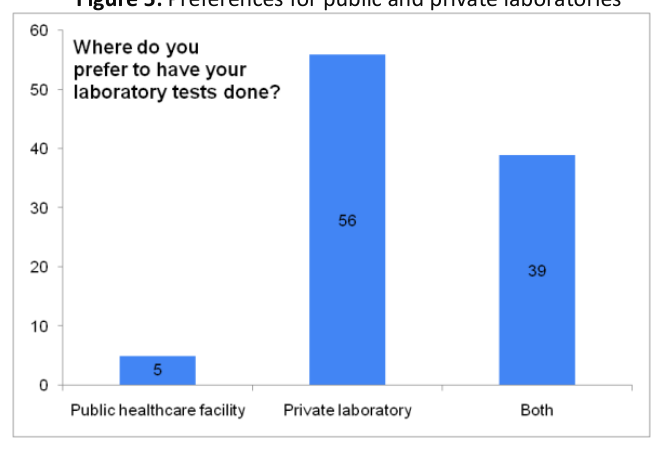
With regard to the entity involved in laboratory investigations, the majority of the responders preferred private laboratories to have their tests done, as shown in Figure 5.
In the group of responders who were employed, 48% mentioned that their employer does not provide access to routine laboratory testing, 47% that they have access to routine laboratory testing once a year or more often, and 4% that they have access to routine laboratory testing from their employer every few years.
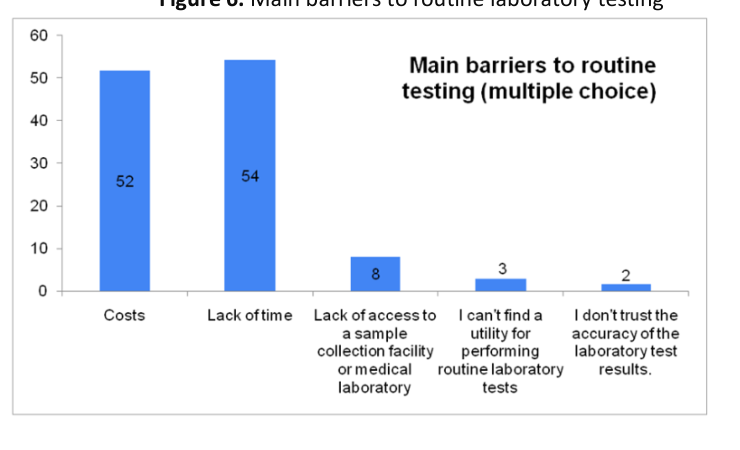
The responders considered costs and lack of time as the main factors that prevent them from having their routine laboratory testing done, as presented in Figure 6.
| Do you do laboratory tests on your own initiative or on the recommendation of a doctor? | |
|---|---|
| On the recommendation of a family doctor/specialist. | 23% |
| On my own initiative. | 24% |
| Both on the recommendation of a doctor and on my own initiative. | 51% |
| I don’t do laboratory tests. | 2% |
| How often do you do your routine lab tests? | |
| Twice a year or more often | 23% |
| Once a year | 61% |
| Once every few years | 6% |
| Only when I have a health problem | 8% |
| Never | 2% |
| When you do laboratory tests on your own initiative, what is the motivation? (multiple choice) | |
| I do not do my laboratory analyses on my own initiative. | 14% |
| I want to make sure that my health remains good. | 63% |
| I want to know if I have a health problem, even if I don’t have symptoms. | 52% |
| I have chronic illnesses or other conditions and for this reason, I want to have tests done. | 13% |
| When you performed laboratory tests on the doctor’s recommendation, for what purpose were you guided in this direction? (multiple choice) | |
| To establish a diagnosis. | 46% |
| To follow up a disease. | 24% |
| To perform routine tests without having a health problem. | 69% |
| I did not do any tests recommended by a doctor. | 6% |
| Do you always do your lab tests when your doctor recommends them? | |
| Always | 74% |
| Often | 21% |
| Rarely | 3% |
| Never | 2% |
| When you don’t do lab tests following your doctor’s recommendation, what is the motivation? (multiple choice) | |
| No medical tests were recommended to me. | 26% |
| I was healthy and it was just routine tests. | 30% |
| I did not have enough time. | 19% |
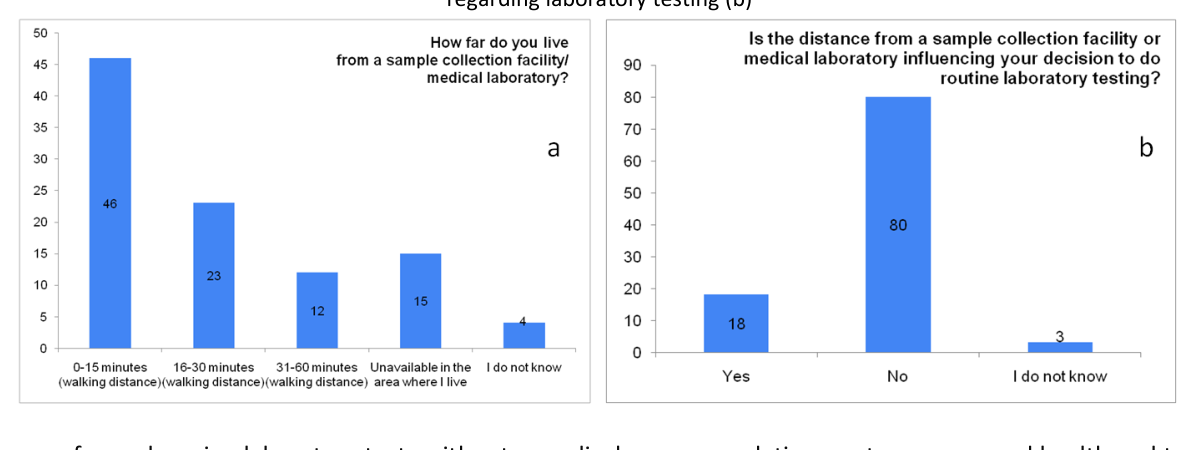
| I did not have access to a collection point/medical analysis laboratory. | 7% |
| I didn’t see the usefulness of the analyses in that context. | 6% |
| The costs were too high. | 17% |
| What would you do if your tests are outside normal limits, and the doctor tells you that everything is fine with your health status? | |
| I turn to another doctor. | 35% |
| I inquire into other sources and make my own decisions for diagnosis and treatment. | 7% |
| I continue the investigations and repeat the tests. | 40% |
| I trust the doctor and do nothing extra. | 17% |
| What is your main source of information regarding laboratory tests? (multiple choice) | |
| My physician | 89% |
| Acquaintances who work in the medical field | 33% |
| Healthcare related websites | 13% |
| Family, friends and acquaintances who do not work in the medical field | 11% |
| I did not request/seek information about the analyses | 3% |
| Books, magazines and specialized articles | 17% |
| Websites of laboratories and clinics | 28% |
| Social media groups | 1% |
Overall, respondents were optimistic about their health status, with most rating it as good or very good. Nevertheless, the majority also reported being concerned or very concerned about their health. This particular perception may influence their attitudes and behaviors related to laboratory investigations. For example, health anxiety has a major impact on healthcare use [6].
Despite expressing concern about their health, fewer than one-third of respondents reported seeking preventive medical care. Approximately 40% reported adopting a healthy lifestyle, and less than half indicated that they consult a physician promptly upon noticing symptoms. More than 60% agreed that laboratory testing could be used more extensively for prevention, and over 30% believed that laboratory tests could be better utilized for early disease detection. However, half of the respondents considered that they already undergo laboratory tests frequently, while only a quarter reported getting tested when symptoms occur.
In general, respondents demonstrated awareness of the importance of laboratory testing for disease diagnosis (including early detection) and monitoring. They also acknowledged that the variety of available laboratory tests serves different purposes in healthcare. While less than one-third expressed very high confidence in laboratory test results, more than 60% reported having confidence in them overall. Additionally, nearly 80% of respondents stated that they trust laboratory investigations are handled confidentially.
| Are laboratory tests reimbursed by the public healthcare insurance system? | |
|---|---|
| I don’t know this information. | 30% |
| Routine tests are reimbursed once a year. | 26% |
| Laboratory tests are reimbursed, regardless of whether they are routine or not, once a year. | 4% |
| Routine tests are reimbursed whenever a referral from the family doctor is used. | 33% |
| Lab tests are reimbursed, regardless of whether they are routine or not, whenever needed. | 3% |
| Lab tests are reimbursed only for those with an established diagnosis. | 2% |
| Lab tests are reimbursed only for hospitalized persons. | 1% |
| Have you ever benefited from laboratory tests reimbursed by the public healthcare insurance system? | |
| Rarely | 15% |
| Every time/almost every time | 21% |
| Often | 36% |
| I do not know | 10% |
| No | 17% |
Patients often perceive laboratory tests as inherently accurate and confidential, yet studies suggest gaps in their understanding of these concepts. Sankar et al. highlighted that misconceptions about confidentiality can undermine trust, with some patients overestimating privacy safeguards [7]. Educating patients about the accuracy limits of tests and existing privacy protections may strengthen their engagement and promote informed participation in healthcare decisions [8].
With regard to healthcare received from physicians and the medical system, most respondents considered that, in general, they are adequately recommended for laboratory testing. Overall, routine laboratory testing appears to be driven equally by the respondents’ own initiative and by physicians’ recommendations. Patients who undergo laboratory testing on their own initiative are motivated by various factors, including the desire to confirm their perceived good health status or personal experiences—such as witnessing family members or acquaintances being diagnosed or saved through timely laboratory testing [3]. The growing availability of direct-to-consumer testing has enabled patients to access laboratory analysis without a physician’s mediation, but some studies highlight potential risks, including misinterpretation of results and unnecessary anxiety [9]. According to the results of Shaked et. al, in the case of patient-requested laboratory investigation, even after the doctor explained why the tests were unnecessary, the majority of patients expected to receive a referral for laboratory testing, likely due to the perception that blood tests are objective and reliable tools for validating one’s health status [3].
The main reasons for undergoing laboratory tests without a medical recommendation are to ensure good health and to detect early or subclinical diseases. Balancing preventive strategies with patient education about the limitations and risks of indiscriminate testing is essential to avoid fostering a culture of overmedicalization [10]. Approximately 90% of the respondents of this study acknowledged the importance of physicians in explaining laboratory test results. Similarly, nearly 90% believed it would be beneficial to receive explanations of their results in a formal setting each time they undergo laboratory investigations.
Around half of the participants reported that, when laboratory results fall within the biological reference interval, they feel reassured only after receiving confirmation from a physician that their health status is adequate. When routine test results fall outside the reference interval, more than 60% of respondents stated that they always seek medical help, while nearly 30% reported doing so often. According to a study performed by Marloes et al., patients overestimate the performance of blood testing, and results within normal limits were automatically seen as proof of an optimal health status. However, this study included only patients who voluntarily presented to the general practitioner for blood tests [11].
Furthermore, the vast majority of respondents (approximately 90%) identified physicians as their primary source of information regarding laboratory tests. Random online, non-professional sources were not commonly used. Instead, acquaintances working in healthcare and official websites of medical institutions were reported as the second and third most frequently cited sources of information, respectively. On the other hand, a survey by Cocco et al. revealed that an important part of respondents searched for explanations of lab results online before consulting a clinician, sometimes resulting in inappropriate self-diagnosis [12]. McMullan et al. found that patients using online resources for interpreting laboratory results often encounter conflicting or inaccurate information, leading to confusion and heightened anxiety [13].
When routine testing is recommended by a physician, the majority of respondents comply with the recommendation and undergo testing. Among those who do not comply, the main reasons reported are the perception of being in good health due to the routine nature of the check-up, lack of time, and associated costs. Adherence to recommended laboratory testing is essential for effective clinical management, but can be suboptimal. In patients with diabetes, a large registry study found that approximately 1 in 7 did not complete essential lab tests (such as HbA1c or creatinine) within six months of ordering. Key predictors of better adherence included older age, female sex, and orders placed during face-to-face visits [14].
The majority of respondents considered that routine laboratory testing should be performed once or twice per year. Over 60% reported undergoing routine testing once annually, while more than 20% reported doing so twice a year or more frequently. The optimal frequency for routine blood testing depends on individual health status and clinical context. For healthy adults, many guidelines recommend annual basic panels during preventive visits, but more frequent testing is justified in chronic conditions or medication monitoring [15].
Although fear of blood or blood withdrawal is generally common [16], only 4% of respondents in this study described the sample collection procedure as uncomfortable or unpleasant. Additionally, nearly 90% reported that such fears do not influence their decision to undergo laboratory testing.
From the respondents’ perspective, reducing waiting times for sample collection or results, as well as receiving more information and explanations about laboratory investigations and their outcomes, were not considered priorities for improvement. The primary issue identified was the cost of laboratory investigations and their coverage by health insurance.
Cost represents a significant concern, especially given that the majority of respondents reported preferring to have their laboratory tests performed in private laboratories rather than in public healthcare facilities. Additionally, lack of time and financial constraints were reported as the main barriers to undergoing laboratory testing.
Due to the widespread availability of private laboratories in Romania and access to their services without the need for a physician’s referral, two specific aspects emerge: firstly, the healthcare system lacks control over potential overuse of testing, and secondly, the costs are often entirely supported by the patient. This situation may differ in other countries, where the overuse of laboratory investigations is potentially driven by the extensive coverage provided by public or private health insurance. When testing is widely accessible and patients and the healthcare provider are not directly burdened by the costs, the likelihood of overuse may increase [17].
Respondents appeared to have limited knowledge regarding the coverage and conditions for laboratory investigations under the public health insurance system, and few reported utilizing reimbursed laboratory tests.
Overall, respondents expressed the view that there should be increased public education regarding the importance and benefits of laboratory testing. Patients often struggle to understand the need for certain laboratory tests and their results, highlighting the importance of public education in laboratory medicine [18].
Overall, the responses to questions regarding laboratory medicine suggest that the general public in Romania may have high expectations for routine testing. Currently, there are no regulations in Romania that restrict access to direct-to-consumer testing. While direct-to-consumer access to routine laboratory investigations is generally permitted across countries, some nations have imposed restrictions on direct access to genetic testing [19]. Although most genetic conditions are rare, for example, familial hypercholesterolemia is a relatively common genetic disorder [20]. In the absence of regulatory limitations, such conditions may be perceived by the general public as suitable for direct-to-consumer testing – particularly given the high prevalence and awareness of hypercholesterolemia. However, this raises the risk of misinterpretation, since direct-to-consumer tests for this condition often lack optimal performance for accurate detection [21].
The current study has several limitations. First, the data collection instrument was not a validated questionnaire, which limits the generalizability of the findings. Additionally, respondents were self-selected, resulting in a sample that is not representative of the general population. Moreover, the sample did not uniformly or comprehensively cover all demographic backgrounds of Romanian citizens, with most respondents holding higher education degrees and residing in urban areas. Finally, all data were self-reported, relying on respondents’ subjective perceptions and, in some cases, their memory and ability to estimate the frequency of events (e.g., how often they underwent routine laboratory testing).
However, it is essential to conduct this type of exploratory research, which is less quantitative in nature, to identify key areas for further investigation. This study provided a rapid assessment of various aspects related to patients and laboratory testing, offering a foundation for more detailed future research.
Future studies should build on the exploratory findings of this research by employing validated questionnaires and representative samples to enhance the generalizability of results. Further investigation is needed to understand the multifaceted factors influencing patients’ adherence to physician recommendations for laboratory testing, including psychosocial, economic, and cultural determinants. Additionally, evaluating the impact of public education campaigns on patients’ knowledge, trust, and behavior regarding laboratory investigations could provide valuable insights. Qualitative research methods, such as in-depth interviews and focus groups with both patients and healthcare providers, would offer a deeper understanding of the perceptions, fears, and informational needs surrounding laboratory testing. It is also important to explore disparities in access to laboratory services across urban and rural settings and among different socio-economic groups. Finally, examining the role of cost and health insurance coverage in shaping patients’ decisions to undergo laboratory testing would contribute to the development of targeted interventions to reduce barriers and improve utilization.
The authors declare no conflict of interest. No artificial intelligence automatically generated text was inserted in this manuscript, and no image was previously published in another journal or is under consideration for publication elsewhere. This research received no external funding.
The research group was formed with the support of the Medical Research Education Project (https://ssmb.ro/departamente/#scome) of the Medical Students’ Society of Bucharest (SSMB).
Conceptualization, M.D., T.C., I.A.B and E.P.; methodology, M.D., T.C., I.A.B. and E.P.; investigation, M.D., T.C., I.A.B., I.I., R.M.U., G.T.L., R.R., A.S., M.M.C., E.P.; data curation, M.D., I.A.B., E.P.; writing—original draft preparation, M.D., T.C., I.A.B., I.I., R.M.U., G.T.L., R.R., A.S., D.O.C., E.P.; writing—review and editing M.D., T.C., I.A.B., I.I., R.M.U., G.T.L., R.R., A.S., M.M.C., E.P.; supervision, M.D., T.C., E.P. All authors have read and agreed to the published version of the manuscript
This study was conducted using an online questionnaire that was publicly available and open to the general population. Participation was voluntary, self-selected, and anonymous. No personal or identifiable data were collected, and no recruitment of patients was involved. Information about the purpose and nature of the study was provided at the beginning of the form. Completion and submission of the form were considered as an indication of informed consent to participate in the study. Considering all these aspects, the study was conducted in compliance with ethical guidelines.