
Occupational cancer is one of the most common occupational diseases. The estimated fraction of all cancer incidents that can be attributed to occupational risk factors generally varies between 2 and 8% worldwide [1]. The incidence and mortality rates associated with occupational cancer are, therefore, important. Based on these data, strategies and methods for preventing and controlling risk related to the carcinogens’ presence in the workplace were developed. Exposure data are collected directly and systematically only in a few countries; for the worldwide evaluation, they have to be compiled from several indirect sources, such as the number of people employed in certain high-risk industries or jobs, the prevalence of exposure among these individuals, and the relative risk found in epidemiological studies. The diversity of sources and the differences in methodologies of various studies could lead either to an overestimated or an underestimated risk [2].
Prevention strategies begin with primary prevention, which aims to eliminate or reduce exposure to carcinogens in the workplace and is supplemented by secondary prevention measures implemented by occupational medicine. The crucial point of secondary prevention is early detection, which includes screening and early diagnosis of occupational cancer. There are numerous screening methods, ranging from medical history (personal and family history), physical examination, and medical screening tests (CT, hematologic tests, etc.).The identification of exposure to carcinogens (occupational history, designated questionnaires to identify a possible exposure, registries for workers exposed to carcinogens or for jobs with a high risk of exposure) is currently used to define the workers at risk, for whom postexposure monitoring should be implemented. The effective use of a structured questionnaire is one method to improve the early diagnosis of certain work-related cancers [3].
Using one, two, or three methods—or a combination of them— increases the rate of identification of occupational cancers [4].
The aim of this study is to design and validate a questionnaire to detect the possibility of occupational exposure and, afterward, the possibility of an earlier diagnosis of occupational cancer. Incorporating a structured, easy-to-use, and reliable questionnaire in the medical routine can improve the detection of occupational cancers and facilitate the diagnostic algorithm for cancers in patients who have been exposed to occupational carcinogens.
This study aims to validate a questionnaire on exposure to occupational carcinogens (Occupational Exposure to Carcinogens Questionnaire) and to develop a risk score based on the intensity and duration of occupational exposure.
This is a multicenter study conducted in several public hospitals and clinics in Bucharest: Colentina Clinical Hospital, Prof. Dr. Theodor Burghele Clinical Hospital, the Marius Nasta Institute of Pneumophysiology in Bucharest, the “Prof. Dr. Alexandru Trestioreanu” Oncology Institute in Bucharest, and the Domina-Sana Clinic. The subjects were recruited intermittently between 2023 and 2026, depending on the center.
The study was conducted in accordance with the principles of the Declaration of Helsinki and Good Clinical Practice Guidelines and was approved by the Ethics Committee of each hospital (20/23.12.2022; 3291/03.04.2023; 23941/25.10.2023; 6571/09.05.2024; 576/19.04.2023).
In addition to administering the questionnaire, various medical data were also collected: age, sex, level of formal education (highest level of education completed), profession, occupation, occupational domain of activity, age at diagnosis, medical history, localization of the cancer, comorbidities, treatment for previous cancer diagnoses. These data were used in the final analysis of the population to which the questionnaire was administered.
The target population consisted of 400 patients diagnosed with cancer located in the respiratory system—lung cancer; urinary system—kidney, bladder, and prostate cancer; but also other locations of the cancer: reproductive system—breast, ovarian, and uterine cancer; digestive system—gastric, hepatic and colon cancer; skin, endocrine glands, and lymphoid-related cancers.
The first two types of cancer were the most represented, as they are the most frequent occupational cancers, in general. According to epidemiological data, the annual incidence of lung cancer and bladder cancer in Romania is approximately 12500 and 5000 respectively [5]. From epidemiological research, we know that occupational lung cancers represent 8-15% of all lung cancers [6], with a prevalence of 10% in Romania [7] and sometimes with not very long exposure [8]. A percentage of 4-10% of total bladder cancers are related to occupational exposure [9,10]. Based on this data, the study required a sample of 137 patients with lung cancer and 86 patients with bladder cancer [11]. For cancers in other body locations, there are approximately 81000 new cases in Romania with a 2- 8% occupational etiology [12], and the required sample size is 113 patients with a cancer diagnosis. The final number of 400 patients is the sum of 132 lung cancers, 125 bladder cancers, and 143 other types of cancers.
Inclusion criteria:
Exclusion criteria:
The subjects were clearly informed about the study procedure and its objectives. They were enrolled after signing a written informed consent form and data confidentiality was ensured by registering subjects in the database using a code.
The reasons for refusals to participate were noted.
The questionnaire was designed specifically for the study after a review of the literature and various similar questionnaires [13-17].
The initial draft of the Occupational Exposure to Carcinogens Questionnaire consisted of 21 questions to cover both occupational and main non-occupational exposures: 14 questions relate to occupational factors, 3 to domestic exposure, and 4 to assess exposure to smoking and second-hand smoke. The questions are closed-ended, with yes-no or multiple-choice answers. The answers to the multiple-choice questions—which covered the list of carcinogens, industrial processes, and occupations with a high risk of exposure— were selected based on information from the scientific literature [18]. Only group I carcinogens selected from the International Agency for Research on Cancer (IARC) lists that might be present in the workplace were included, as they are the only ones recognized as causes of occupational cancer in Romania.
Considering that the three most common types of occupational cancers are mesothelioma, lung cancer, and bladder cancer [19], and that the carcinogenic risk factors have a specificity depending on the cancer’s location, three versions of the same questionnaire were drafted: one for lung cancer, one for bladder cancer, and a general one for the others. Mesothelioma is a rare form of cancer, and in fact, all mesotheliomas should be assessed for their occupational exposure to asbestos by an occupational physician. Therefore, only lung and bladder cancer had distinct versions of the questionnaire. There are 2 main differences between the 3 versions of the questionnaire: the list of carcinogens, and the most frequent occupations associated with the different forms of cancers. Thus, for lung and bladder cancer, the list was limited to the ones in the IARC tables targeting these localizations. For all other cancers, the questionnaire included all carcinogens in Group I that might be present in the working environment. The occupations related to lung cancer and bladder cancer were selected based on data from IARC classification by cancer site [20] and other reliable information published by occupational health and safety centers around the world [21-25]. In the questionnaire for patients with lung cancer, 3 other questions related to dermal exposure and exposure to certain carcinogens were removed because they had no association with lung cancer.
This final questionnaire, with all three versions, is available in Supplementary Materials.
The ability of the questionnaire to measure the dimensions of the construct was evaluated. The group of experts, together with other medical specialists, evaluated its structure and whether the questions in the questionnaire are relevant to what needs to be measured. The draft was discussed with an expert group in occupational medicine and with one expert in lung cancer, in urology, an oncologist, and a radiotherapist. They conducted an assessment of the questionnaire’s structure and its relevance to the items being analyzed, as well as its clinical applicability and the time required to administer it.
After an interviewer administered the questionnaire, 30 participants evaluated its comprehensibility. The expert committee determined whether the questionnaire measured what it was intended to measure and whether the respondents understood all the questions.
Construct validity was achieved by applying the questionnaire and obtaining a result similar to known clinical or epidemiological data. The result obtained from the administration of the questionnaire is a proportion (in both absolute number and percentage) of subjects diagnosed with cancer that have definite exposure to occupational carcinogens.
The accuracy of identifying occupational exposure can be improved by combining the exposure data with an exposure risk level score.
The score for the level of risk derived from the exposure to carcinogens is based on 4 items— the presence of the hazard in the workplace (the exposure), the duration of this exposure, the actual use of personal protective equipment and the presence of ventilation. Ventilation was chosen as a general protective measure, as most carcinogens have this route of absorption [26]. For dermal absorption, individual protective measures are mostly relevant, but they were assessed with a specific item of the questionnaire. Each item has several response options scored according to their impact on the risk (Table 1). Because personal protective measures are ranked at the top of the pyramid of risk control, we also included in this item the duration of daily exposure. Adding the scores gives a total score ranging from 0 to 13. Exposure risk stratification is performed by calculating intermediate exposure levels, with the maximum score indicating a high level of retrospective exposure risk for the subject in question [27]. There are 4 levels of risk exposure: No risk or very low risk between 0 – 2; low risk between 3 – 6; moderate risk between 7–9; and high risk between 10 – 13.
| Item | Score | Minimum | Maximum |
|---|---|---|---|
| Exposure | |||
| NO | 0 | ||
| YES | 1 | ||
| YES, more than 1 carcinogen | 2 | ||
| Total score exposure | 0 | 2 | |
| Duration of exposure (years) | |||
| 0 | 0 | ||
| <10 years | 1 | ||
| 10-19 years | 2 | ||
| 20-29 years | 3 | ||
| > 30 years | 4 | ||
| Total score duration | 0 | 4 | |
| General protection measures (Ventilation) | |||
| YES | 0 | ||
| YES, intermittent | 1 | ||
| NO | 2 | ||
| Total score general protective measures | 0 | 2 | |
| Personal protective equipment | |||
| YES, permanently | 0 | ||
| NO, for < 2h of the total exposure time | 1 | ||
| NO, for 2-4h of total exposure time | 2 | ||
| NO, for 4h of the total exposure time | 3 | ||
| NO, for 6h of the total exposure time | 4 | ||
| NO for all day work (8h exposure time) | 5 | ||
| Total score personal protective equipment/time of exposure | 0 | 5 | |
| TOTAL SCORE | 0 | 13 | |
The questionnaire was evaluated by comparing it to a gold standard represented by an occupational medical history. The comparison was performed based on the results obtained with the questionnaire filled in by 100 subjects, and a standard occupational medical history which was taken by an occupational physician. The questionnaire and occupational history were afterward reviewed by two different investigators.
Intra-observer reliability or test–retest reliability was evaluated by administering the questionnaire by the same interviewer, using the same method, to the same patient, at two different times, separated by an interval of 2–3 months. The intra-observer reliability was tested on 30 patients. This longer time interval attempts to eliminate the problem of recall bias. The percentage of different answers was calculated.
Inter-observer reliability was assessed by administering the questionnaire to another subgroup of 30 subjects on two different occasions by three independent interviewers. Of note, the second interviewer was also a doctor, but not a certified specialist in occupational medicine. The purpose of administering the questionnaire by different interviewers is to evaluate the level of correlation among responses and the possible influence of the interviewer on those answers. The percentage of different responses was determined.
The data obtained from the questionnaires and the medical data were statistically analyzed using statistical analysis software such as SPSS (IBM SPSS Statistics 20). For the construct validity, analyses related to occupational exposures were performed for the whole group and for the subgroups with lung cancer, bladder cancer, and other types of cancers. The criterion validation and intra-observer and inter-observer reliability were evaluated by calculating Cohen’s Kappa index (k); the concordance was considered poor under 0.20, low between 0.21-0.40, moderate between 0.41-0.60, good between 0.61-0.80, and excellent if k was 0.81 and over [28].
The total number of participants for validating the questionnaire was 400, divided into 132 lung cancers, 125 bladder cancers and 143 other types of cancers. Men accounted for 253 of the total number of participants (63.25%). The average age was 66.48 years (SD=10.64), and the average age at the moment of diagnosis was lower, 63.80 years (SD= 10.86). Smokers outnumbered non-smokers in the overall cohort and in the groups with lung cancer and bladder cancer (66.75%, 78.03% and 74.40%), but they were fewer in number than non-smokers in the group with cancers of other sites (49.65%). A high percentage of smokers were heavy smokers (69.92%), with more than 20 packs/years, the average was 38.47 packs/years (SD=25.66) and more than 20 years of smoking.
The level of education showed that the largest group was undergraduate (73.50%), and among these, the highest percentages were represented by technical school (24.75%) and high school (22.25%). In the graduate category, the highest percentage is represented by participants with university degrees (18%).
The short form of the European Health Literacy Survey Questionnaire was applied to the entire group. The questionnaire, with 16 items, validated in Romanian [29], was applied to assess the patients for the four core competencies of health literacy (find, understand, appraise, and apply health information) in three domains (health care, disease prevention, health promotion). The total score (HLS-EU-Q16) could be 16, and for the total group the average score was 13.71 (SD=2.79). The distribution of health literacy levels showed that the majority of participants had an adequate health literacy level (71.78%), 27 participants had an inadequate score (6.75%), and 86 had a problematic one (21.50%).
Nearly a quarter (25.50%) of all participants had a family history of cancer, and 25 of them (6.25%) had family members with the same type of cancer as the participant.
The characteristics of the study population are presented in Table 2. The differences between the three groups are statistically significant, with Group 3 accounting for the difference, while the other two groups are much more similar.
| Total | Group 1 | Group 2 | Group 3 | p | |
|---|---|---|---|---|---|
| Age (mean ± SD) | 66.48±10.64 | 65.20±9.92 | 69.50±9.47 | 65.02±11.71 | 0.001 |
| Age at dg (mean ± SD) | 63.80±10.86 | 63.67±10.08 | 65.86±9.76 | 62.12±12.15 | 0.035 |
| Gender (no of Women, %) | 147 (36.75%) | 51 (38.64%) | 29 (23.20%) | 67 (46.85%) | 0.000 |
| Smokers (no, %) | 267 (66.75%) | 103 (78.03%) | 93 (74.40%) | 71 (49.65%) | 0.000 |
| Level of education (no of undergraduate, %) | 294 (73.50%) | 102 (77.27%) | 82 (65.60%) | 110 (76.92%) | 0.000 |
| HLS-EU-Q16 total score (mean, SD) | 13.71±2.79 | 13.04±2.93 | 14.39±2.38 | 13.73±2.85 | 0.000 |
| Family history of cancer (no, %) | 102 (25.50%) | 36 (27.27%) | 27 (21.60%) | 39 (27.27%) | 0.000 |
Group 1 – patients with lung cancer, Group 2- patients with bladder cancer, Group 3 – patients with any other types of cancers
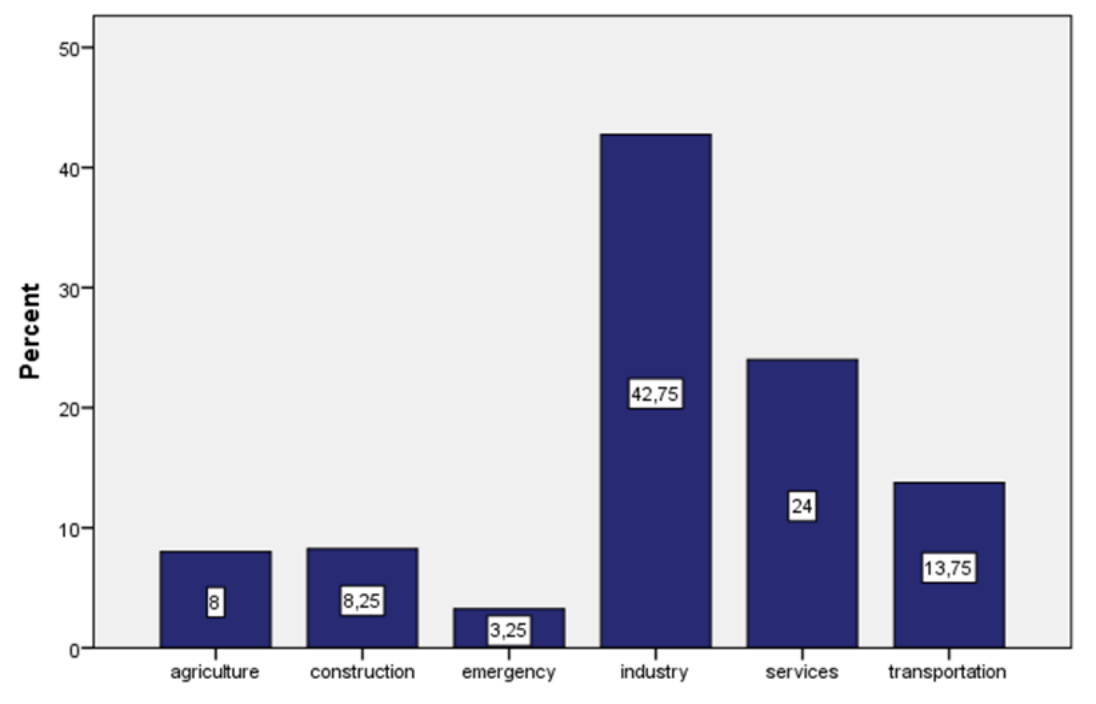
The activity domains of the subjects included in the study were grouped into six broad categories (Figure 1).
The group of experts considered the questionnaire to be adequate from both structural and content perspectives, as it is capable of accurately identifying exposure to carcinogens (i.e., occupational or non-occupational). Three questions were removed from the questionnaire because they did not provide information relevant to the screening or to the calculation of the exposure risk score. The input to separate the industrial processes from IARC into two separate questions, because only some of these industrial processes are included in Romania’s table of occupational cancers, was included in the final version. The final version of the questionnaire contains 19 questions, while the version focused on lung cancer contains only 16. Most discussions were to include supplementary details on the exposure (such as daily exposure time and frequency during the week) from the side of the occupational physicians and the length of the questionnaire from the other experts. Finally, the compromise presented above led to 85.71% agreement among all.
Administration time for the questionnaire was also tested and took about 10–15 minutes.
The comprehension and logical reasoning were assessed, and the expert group considered that the majority of the questions were adequate. Only three of them presented difficulty and needed to be revised. The questions were rephrased to eliminate confusion between years of employment and years of actual exposure to carcinogens, work equipment and protective equipment for that exposure, and meals served at work, taking into account the existing hygiene conditions.
Overall, after administering the questionnaire, 279 patients out of 400 (69.75%) were exposed to at least one possible carcinogenic agent at the workplace, and 192 (48%) were able to designate at least one carcinogenic agent from the list. There were 212 participants (53% of the entire sample) who were exposed both to occupational carcinogenic agents and to non-occupational ones.
We had a higher number of cases of moderate and high levels of occupational exposure in the lung cancer group than in the bladder cancer or cancers in other locations groups, which is to be expected given the high percentage of occupational lung cancers recorded worldwide (Table 3).
| Total | Group 1 | Group 2 | Group 3 | |
|---|---|---|---|---|
| Occupational exposure related to Romanian table of occupational cancers (no, %) | 63 (15.75%) | 42 (31.82%) | 13 (10.40%) | 8 (5.59%) |
| Occupational exposure related to Romanian table of occupational cancers with moderate and high level of risk (no, %) | 44 (11%) | 34 (25.75%) | 6 (4.80%) | 4 (2.79%) |
| Occupational exposure related to IARC carcinogenic agents with sufficient evidence (no, %) | 98 (24.50%) | 53 (40.15%) | 33 (26.40%) | 12 (8.39%) |
Group 1 – patients with lung cancer, Group 2- patients with bladder cancer, Group 3 – patients with other types of cancers
For the comparison of the questionnaire with the respondent’s occupational history, we used the items included in the exposure risk level score. The comparison was conducted for each item individually, for the final score, and for the exposure risk category (Supplementary Table 1). The result based on Exposure risk level category showed a good concordance (k = 0.719).
The intra-observer reliability test was performed for each question in the Occupational Exposure to Carcinogens Questionnaire. Of the 19 questions, 3 have moderate agreement, 1 has good agreement, and the rest are excellent (Supplementary Table 2). Overall, the intra-observer reliability test showed a Cohen’s kappa coefficient value of 0,795 for exposure risk level score and a k = 1.000 for exposure risk level category.
The result of the inter-observer test indicates a good level of reliability with a k = 0.790 for exposure risk level score and an excellent one with a k = 0.945 for exposure risk level category. For this test, out of the 19 questions, 3 are rated “moderate agreement,” 6 are rated “good agreement,” and the rest are rated “excellent” (Supplementary Table 3).
This questionnaire was developed to identify patients diagnosed with cancer who have been exposed to carcinogens. The questions focused on IARC Group I occupational carcinogens and high-risk occupations involving exposure to carcinogens. Some of the questions also tried to highlight non-occupational exposure, both from smoking and from the environment. Smoking, a major risk factor for cancer, was considered both as active smoking and as exposure to secondhand smoke. Meanwhile, smoking assessment is important, as occupational cancer risk in smokers is higher [30]. It is also important in terms of interventions, as educational programs should target not only the occupational hazards, but also smoking and the complex, personalized interventions [31].
After the initial pilot testing of the questionnaire on 30 patients and following discussions with the expert group, the structure of the questionnaire was slightly modified. The final version of the questionnaire was deemed to have good acceptability and comprehensibility by participants and scientific validity by experts.
A comparison with the reference standard—the occupational medical history—revealed good agreement with the Questionnaire on Occupational Exposure to Carcinogens. Furthermore, both the intra-observer and inter-observer reliability tests indicated high agreement, suggesting a high degree of repeatability and consistency.
The time required to complete the questionnaire—between 10 and 15 minutes— makes it easier to use in consultations.
All of these factors contribute to the advantage of this questionnaire, which can be used by doctors from various specialties and can even be self-administered by the patient, justifying its use as an effective and user-friendly tool in practice.
Most of the patients included in our study can be considered representative of patients with occupational cancer. The median age at diagnosis was similar to the peak identified in the literature [32]. The median age at diagnosis in the study was slightly lower than what is reported in the literature, a finding which might be correlated to the fact that more than half of them reported occupational exposure to at least one carcinogen. In a previous analysis of an older Romanian cohort of lung cancer, we identified an earlier onset in some activity domains [33].
There is a disparity in the incidence of occupational cancers between men and women. The number of men is 4 to 5 times higher than the number of women in the workforce [34]. In this study, the number of women with medium and high risk was lower than that of men, but by a smaller proportion than shown in other statistics (36.75%). This could be explained by past employment (during the communist period) of many women in occupations in which, in other countries, the majority of the workforce is represented by men.
The fields of activity of the participants in the study were grouped into six broad categories: agriculture, construction, emergency (police, military), industry (industry, power generation, water distribution), services (education, healthcare, public administration, scientific activities, financial intermediation, hospitality), and transportation (trade, transportation). The largest number of respondents were those who worked in the industrial sector (42.75%), followed by the services and transportation sectors. These data overlap with what we know about work areas with high levels of exposure to carcinogens. Increased exposure to carcinogens was related to the leather and leather products industry, the wood, woodworking and furniture industries, extractive industry, production of electricity, thermal energy, gas, hot water and air conditioning, metal construction industry, metallurgical industry and products from non-metallic materials. Most of these types of industry are included or related to IARC group I carcinogens and studies demonstrated an elevated prevalence of lung cancer [33]. The industry and transportation sectors are also related to increased prevalence of bladder cancer [24].
The questionnaire identified 69.75% of the 400 subjects diagnosed with cancer who reported possible exposure to a known carcinogen. Of these, 63 (15.75%) showed a correlation between the carcinogen and the cancer’s location, based on the list of carcinogens included in Romania’s Table of Occupational Diseases [35]. Based on the risk score, we identified 44 (11%) subjects who had occupational exposure and a moderate to high risk of exposure to carcinogens, which is concordant with the expected prevalence of occupational cancer. This demonstrates the questionnaire’s ability to be relevant in identifying potential occupational cancers; therefore, patients with moderate or high-risk levels should be referred to an occupational physician.
This study has several limitations. The first is a possible selection bias, because those who were more interested in responding to the questionnaire may have had occupational exposure, leading to an overestimation of occupational exposure to carcinogens. The second limitation is a possible recall bias, as some subjects had difficulty recalling information, most commonly due to a lack of knowledge about the products used.
As part of this study, a concise and easy-to-apply questionnaire — Occupational Exposure to Carcinogens Questionnaire — was developed and validated for identifying occupational exposure to carcinogens. Its systematic use in Romania could simplify the identification of individuals with occupational cancer. Recognizing these types of cancer could contribute to epidemiological monitoring, the implementation of preventive measures, and the provision of information to workers exposed to carcinogens. Furthermore, the questionnaire can be used in everyday medical practice and can assist physicians in the cancer diagnosis algorithm for patients who have been exposed to occupational carcinogens.
The authors declare no conflict of interest.
I would like to express my sincere thanks to everyone who contributed to the successful completion of this study. I would like to thank Dr. Liliana Râpas (Department of Public Health) for her guidance. Her experience in occupational medicine and her valuable insights regarding practical cases were essential in defining the structure of this questionnaire. I would also like to thank Dr. Andrei Popescu (Colentina Clinical Hospital—Oncology Department) for his valuable observations and support throughout the entire project. I am appreciative of Cătălina Elena Coșcleacără for her assistance in conducting the interviews. I am also grateful to the medical support staff at all the hospitals and clinics that facilitated the operations necessary to carry out this research.
Conceptualization, C.M., A.S.C.R., S.D.R., M.T.G., C.L.T., and MRO.; methodology, C.M., A.E.M., M.T.G., C.L.T., and M.R.O.; software, C.M.; validation, C.M., A.S.C.R., S.D.R., A.M., and M.R.O.; formal analysis, C.M.; investigation, C.M., and A.M.; resources, C.M., A.S.C.R., and S.D.R.; data curation, A.E.M.; writing—original draft preparation, C.M.; writing—review and editing, A.E.M., M.T.G., C.L.T., and M.R.O.; supervision, C.L.T., and M.R.O. All authors have read and agreed to the published version of the manuscript.
The study was conducted in accordance with the Declaration of Helsinki, and approved by the Institutional Review Board (or Ethics Committee) of COLENTINA CLINICAL HOSPITAL (protocol no. 20 from 23.12.2022), PROF. DR. THEODOR BURGHELE CLINICAL HOSPITAL (protocol no.3291 from 03.04.2023), THE MARIUS NASTA INSTITUTE OF PNEUMOPHYSIOLOGY IN BUCHAREST (protocol no.23941 from 25.10.2023), THE “PROF. DR. ALEXANDRU TRESTIOREANU” ONCOLOGY INSTITUTE IN BUCHAREST (protocol no. 6571 from 09.05.2024), AND THE DOMINA-SANA CLINIC (protocol no. 576/19.04.2023).
Informed consent was obtained from all subjects involved in the study.