
Health literacy refers to an individual’s ability to access, understand, evaluate, and apply health-related information and services, enabling them to make informed health decisions [1]. In today’s world, health literacy has become a fundamental necessity and plays a crucial role in health-related decision-making [2,3]. Low health literacy is considered one of the major challenges in public health. Individuals with inadequate health literacy often face difficulties in accessing, understanding, and interpreting essential health information, which limits their ability to make informed decisions and adopt preventive behaviors [4,5]. Low health literacy is associated with inappropriate use of the healthcare system, lower participation in screening and prevention programs, poor treatment adherence, ineffective management of chronic diseases, increased hospitalizations, greater use of emergency services, treatment delays, and poorer health outcomes. Moreover, such individuals are less able to recognize health risks in a timely manner and often lack confidence in communicating effectively with healthcare professionals, leading to worsening health conditions and increased healthcare costs [6,7].
Mental Health Literacy (MHL), as a subset of health literacy, refers to the ability to understand and manage mental health issues, recognize signs and symptoms of mental disorders, and identify resources and services needed to support mental well-being. In other words, MHL encompasses the knowledge and skills that enable individuals to effectively address psychological challenges and seek appropriate actions such as counseling and treatment [8]. Numerous studies on the concept of MHL have demonstrated that adequate MHL is associated with disease management, information-seeking behavior, prevention of long-term complications, and reduction of chronic harm [9,10]. Furthermore, it serves as a powerful predictor and mediator for all health-promoting behaviors and quality of life [9].
Military personnel, due to exposure to high levels of stress, physical risks, and traumatic experiences in combat zones, are at a heightened risk of mental health disorders. The prevalence of mental health disorders among military personnel is significantly higher compared to the general population [11]. This issue not only affects the personal quality of life of these individuals but can also lead to broader social and economic consequences [12]. Therefore, MHL is of critical importance among military personnel. However, evidence from research indicates that the level of MHL in this population remains insufficient. For instance, a study conducted among military college students in China reported that only 21% of participants demonstrated adequate mental health literacy [13]. Similarly, low levels of MHL have also been observed among healthcare providers serving military personnel [14].
In recent years, attention to MHL as a key factor in improving military personnel’s overall health has increased. However, in many countries, educational programs and interventions related to MHL remain insufficient [15,16]. Studies have shown that neglecting mental health can lead to increased rates of suicide, addiction, and other social problems [17]. One of the main challenges in this field is the lack of sufficient information about the importance of MHL and its impact on the performance of military personnel. Implementing mental health interventions in military forces to enhance psychological well-being, with a focus on principles such as job-specific training, cohesion, and repeated skill practice, is essential [18]. Support for mental health during military operations is often inadequate due to insufficient training for commanders and mental health professionals. Advanced training is necessary to address the unique mental health challenges faced during deployment [19].
Additionally, the impact of MHL on factors such as stress, anxiety, and depression among military personnel needs to be examined. Therefore, neglecting MHL can have serious consequences for military forces. Higher levels of mental health literacy (MHL) can reduce and prevent mental health problems throughout life. The ACP model—emphasizing assertiveness, clear communication, and positivity—offers a practical framework for enhancing MHL programs across diverse contexts [20]. MHL is particularly crucial in military settings due to the high-stress, psychologically demanding, and uniquely challenging nature of the work environment. Military personnel are frequently exposed to critical and high-risk situations that can adversely affect their mental well-being, leading to conditions such as anxiety, depression, and stress. Enhancing MHL among military personnel not only promotes their psychological resilience and quality of life but also contributes to the overall effectiveness and operational performance of the armed forces. This study serves as a valuable resource for researchers and military officials seeking to strengthen mental health support systems and reduce related challenges. The present narrative review explores the significance of MHL, the key factors influencing it, and summarizes current evidence on mental health literacy among military personnel, identifying existing gaps and proposing directions for future interventions.
The present narrative review was guided by PRISMA principles to enhance transparency. Although PRISMA is primarily designed for systematic reviews, this study adopted a narrative approach due to methodological heterogeneity among eligible studies and the limited number of publications on the topic, while following PRISMA principles to enhance transparency. It includes articles published in Persian and English in domestic and international scientific journals from 2015 to 2025, with the final search conducted on 6 August 2025.
Databases searched included PubMed, Web of Science, Scopus, SID, and MagIran. Keywords included “health literacy”, “mental health literacy”, “mental health”, “military personnel”, “armed forces”, and “strategies”. Boolean operators AND / OR were used to construct search strings. A representative PubMed query was (“mental health literacy”[MeSH] OR “health literacy” OR “mental health”) AND (“armed forces” OR “military personnel”).
Two independent reviewers screened titles and abstracts. Duplicates were removed prior to screening.
Inclusion criteria: studies examining MHL in military personnel, full-text available in Persian or English, and relevant keywords in the title or abstract. Exclusion criteria: studies not aligned with research objectives, unavailable full texts, or letters to the editor (Table 1).
Disagreements were resolved by discussion among the authors.
Out of 43 retrieved articles, 7 met the inclusion criteria. The selection process is shown in Figure 1.
The information extracted included the author, year, location, population, methodology, intervention, and main findings. Due to heterogeneity in methods and results, quantitative synthesis was not performed; data were analyzed qualitatively.
| Element | Inclusion Criteria | Exclusion Criteria |
|---|---|---|
| Population | Military personnel | Civilian population |
| Intervention | MHL interventions, educational programs | Non-mental health studies |
| Comparison | Any | N/A |
| Outcome | MHL level, psychological well-being, help-seeking | Unrelated outcomes |
| Study design | Quantitative, qualitative, mixed methods, narrative/systematic reviews | Letters, commentaries, unavailable full texts |
The Mixed Methods Appraisal Tool (MMAT, McGill University) was used to assess the methodological quality of quantitative, qualitative, and mixed-method studies (Table 2).
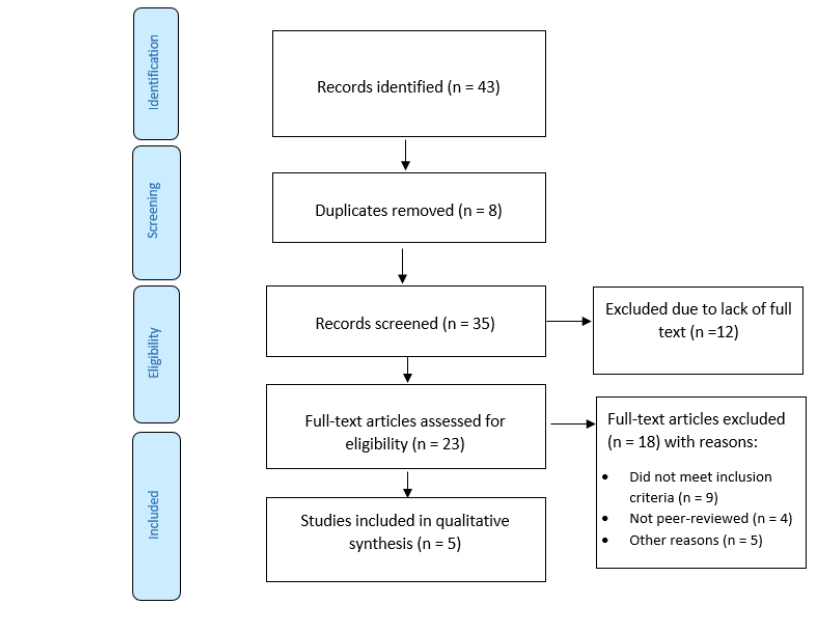
In this study, five articles related to MHL among military personnel were selected, and their findings were analyzed. Regarding the research settings, one study was conducted in India, one in the United States, and one each in the United Kingdom, Spain, and Iran. In terms of study design, four studies were cross-sectional, one was mixed-methods, and two were quasi-experimental. The results of these studies are summarized in Table 3.
Based on the reviewed articles, MHL in the armed forces enables personnel to identify mental health issues and respond to them effectively. This type of literacy includes the ability to recognize signs and symptoms of mental health problems, understand supportive strategies, and make informed decisions to manage stress and psychological crises. Personnel with higher MHL are generally better equipped to maintain their own mental health and that of their colleagues, and they can perform more effectively in psychologically challenging and stressful situations. MHL plays a crucial role in the armed forces.
| No. | Author | Year | Article Title | Location | Design | Population | Sample Size | Randomization | Blinding | Selection Bias | Data Analysis | Overall Quality Score |
|---|---|---|---|---|---|---|---|---|---|---|---|---|
| 1 | Saini | 2023 | Augmenting Mental Health Literacy of Troops in a Large Military Station: A Novel Approach | India | Quasi-experimental | Soldiers | 1200 | No | No | Low | Adequate | High |
| 2 | Iago Portela | 2023 | Evaluation of Health Literacy and Its Predictive Formative Factors Among Spanish Military Personnel | Spain | Cross-sectional | Spanish military personnel | – | N/A | N/A | Medium | Adequate | Medium |
| 3 | Crone | 2020 | Mental Health First Aid for the UK Armed Forces | UK | Quasi-experimental | UK Armed Forces personnel | 602 | No | No | Low | Adequate | High |
| 4 | Soleimani-Sefat | 2022 | Development and Psychometric Properties of the Mental Health Literacy Questionnaire (MHLQ) Among Young Iranian Soldiers | Iran | Psychometric | Young Iranian soldiers | – | N/A | N/A | Medium | Adequate | Medium |
| 5 | Thomas | 2021 | Mental Health Literacy in U.S. Soldiers: Knowledge of Services and Processes in the Utilization of Military Mental Health Care | USA | Cross-sectional | U.S. soldiers | – | N/A | N/A | Medium | Adequate | Medium |
Randomization and Blinding: Applicable only for experimental or quasi-experimental studies. Selection Bias: Assessed based on study design and reported details (Low = low risk, Medium = moderate risk). Data Analysis: All studies employed appropriate data analysis methods (Adequate). Overall Quality Score: Determined based on a combination of the above dimensions and the overall reliability of each study.
First, increasing awareness of mental health helps personnel better recognize the symptoms of mental disorders and coping methods. This awareness can reduce stigma and taboos associated with mental health issues and frame help-seeking as a sign of strength. Conducting training programs on stress and crisis management also empowers personnel [21]. In terms of prevention and treatment, MHL allows personnel to manage psychological and emotional pressures better. Identifying warning signs of psychological crises and taking timely action can prevent more serious problems. Additionally, increased awareness of early signs of mental disorders facilitates early identification and treatment of these issues [22-25].
| No. | Author | Year | Article Title | Location | Design | Population | Sample Size | Main Findings |
|---|---|---|---|---|---|---|---|---|
| 1 | Saini (21) | 2023 | Augmenting Mental Health Literacy of Troops in a Large Military Station: A Novel Approach | India | Quasi-experimental | soldiers | 1200 | This study demonstrated that augmenting mental health literacy (MHL) among troops through a novel approach could enhance their ability to manage stress and improve mental health outcomes. The intervention was well-received and effective. |
| 2 | Iago Portela (22) | 2023 | Evaluation of Health Literacy and Its Predictive Formative Factors Among Spanish Military Personnel | Spain | Cross-sectional | Spanish military personnel | – | The study evaluated health literacy and its predictive factors among Spanish military personnel. Results indicated that higher health literacy was associated with better mental health outcomes and resilience. |
| 3 | Crone (19) | 2020 | Mental Health First Aid for the UK Armed Forces | UK | Quasi-experimental | UK Armed Forces personnel | 602 | The study assessed the effectiveness of Mental Health First Aid (MHFA) training for UK Armed Forces. Findings showed that MHFA training improved mental health literacy and encouraged help-seeking behavior among participants. |
| 4 | Soleimani-Sefat (23) | 2022 | Development and Psychometric Properties of the Mental Health Literacy Questionnaire (MHLQ) Among Young Iranian Soldiers | Iran | Psychometric | Young Iranian soldiers | – | The study developed and validated the Mental Health Literacy Questionnaire (MHLQ) for young Iranian soldiers. Results indicated that the MHLQ is a reliable tool for assessing mental health literacy in this population. |
| 5 | Thomas (24) | 2021 | Mental Health Literacy in U.S. Soldiers: Knowledge of Services and Processes in the Utilization of Military Mental Health Care | USA | Cross-sectional | U.S. soldiers | – | The study found that mental health literacy among U.S. soldiers ranged between 27% and 74%. Soldiers with higher literacy levels and more deployments had better responses to mental health items. No difference was observed between those seeking treatment and those who were not. This study documented soldiers’ mental health literacy for the first time and identified educational and promotional targets. Future studies should explore comprehensive factors and correlations of mental health literacy. |
| Role | Description |
|---|---|
| Education and Awareness | – Increasing Awareness: Recognizing symptoms of mental disorders and coping methods. – Changing Attitudes: Reducing stigma and taboos, framing help-seeking as a sign of strength. – Training and Empowerment: Conducting educational programs for stress and crisis management. |
| Prevention and Treatment | – Stress Management: Identifying and managing psychological and emotional pressures. – Crisis Prevention: Recognizing warning signs and taking timely action. – Preventing Mental Disorders: Early identification of issues and preventing their progression. – Early Diagnosis and Treatment: Timely identification and treatment of mental health issues. |
| Performance Improvement | – Reducing Absenteeism and Turnover: Creating a healthy and stable environment. – Decision-Making Ability: Making rational decisions in critical situations. – Improving Efficiency: Increasing accuracy and effectiveness in task performance. |
| Leadership and Social Support | – Facilitating Interpersonal Interactions: Strengthening communication skills and empathy. – Social Support: Creating support networks and reducing feelings of loneliness. – Developing Effective Leadership: Establishing supportive and positive work environments. |
| Impact on Society and Family | – Impact on Families: Improving family relationships and quality of life. – Developing a Culture of Psychological Safety: Creating a space for discussing mental health issues. – Post-Service Support: Assisting military personnel in adapting to post-service life and managing stress. |
From a performance improvement perspective, focusing on mental health can reduce absenteeism and turnover, creating a healthy and stable environment. Personnel with good mental health are typically able to make rational and effective decisions in critical situations, which enhances efficiency and accuracy in task performance [20]. In the context of leadership and social support, MHL strengthens communication skills and empathy, facilitating the creation of supportive networks. These positive relationships can reduce feelings of loneliness and enhance team morale. Additionally, leaders who are aware of mental health issues can create supportive and positive work environments [26]. Finally, the mental health of armed forces personnel not only impacts them but also benefits their families. Improving mental health can lead to the development of a culture that respects and addresses mental health issues, while also supporting soldiers in adapting to post-service life [27]. (Table 4).
MHL in the armed forces refers to the ability to understand and manage psychological issues, which is of significant importance. This literacy can positively impact the performance and well-being of military personnel by reducing stress and its associated complications, thereby enhancing individual and collective capabilities. This study examines the importance of MHL in the armed forces and, through a narrative review, analyzes and explains its various dimensions.
The literature on MHL in military contexts indicates that increased awareness and education can substantially enhance soldiers’ understanding of mental health, with effects persisting for up to 6 months post-intervention [21]. Standardized educational programs focusing on MHL—such as symptomatology, stress management techniques, and coping and resilience strategies—can improve psychological awareness and empower military personnel. However, evidence suggests that raising awareness alone is insufficient to ensure the effective utilization of mental health services. For instance, a study among the Canadian Armed Forces revealed that although soldiers demonstrated relatively high levels of mental health knowledge, service utilization remained low. This discrepancy was more pronounced among younger soldiers, single personnel, and those perceiving limited support from their commanders [28]. These findings highlight the critical influence of organizational and interpersonal factors, including communication quality with supervisors, institutional norms, and military policies, in translating knowledge into action. Additionally, attitudes toward mental health and fear of stigma can hinder the effectiveness of educational initiatives [21,29]. Therefore, interventions that target cultural and attitudinal change should accompany traditional training programs [30]. Courses such as Mental Health First Aid have been shown to enhance knowledge, improve attitudes, and increase confidence in identifying and supporting individuals with psychological difficulties [31]. As a result, such interventions can strengthen supportive behaviors at the unit level and reduce stigma associated with mental disorders. Integrating these findings suggests a conceptual pathway in which improved attitudes toward mental health reduce stigma-related fears, thereby increasing the willingness to seek help and access professional services. Contextual factors—including age, marital status, type of service, organizational culture, and leadership style—can further facilitate or hinder the development of MHL within military populations.
Increasing the operational efficiency of military personnel requires focused attention to mental health. Given soldiers’ exposure to high-risk, critical situations, effective stress management is an essential competency that must be prioritized within military systems. Promoting mental health awareness among service members and relevant authorities facilitates the early identification of symptoms of psychological disorders and supports the use of evidence-based techniques, such as meditation and mindfulness, to regulate stress [25]. By providing appropriate resources and supportive conditions, psychological resilience can be strengthened, enabling military organizations to prevent serious mental health problems while enhancing the overall mental health literacy of personnel. In turn, this contributes to improved military readiness and performance.
Existing evidence indicates that improvements in mental health literacy lead to increased help-seeking behavior and earlier access to psychological support services. However, the effectiveness of such interventions is influenced by cultural, structural, and organizational characteristics within the armed forces. Preventive strategies that are aligned with military organizational culture and tailored to internal norms and values are more likely to achieve meaningful and sustainable outcomes [32,33]. Therefore, in addition to educational programs, strengthening organizational commitment to mental health and fostering supportive environments is essential for enhancing MHL and promoting psychological well-being among military personnel.
One of the key factors in enhancing employee performance, particularly among military personnel, is paying attention to mental health. Promoting mental well-being can reduce absenteeism and even decrease rates of desertion. Focusing on mental health, especially in critical situations, improves decision-making abilities and enhances the operational efficiency of military forces. Psychological support not only strengthens loyalty and a sense of security among personnel but also increases perceived organizational support and reduces the costs associated with recruiting and training new staff [20]. Therefore, systematic planning for mental health screening, management, and the implementation of comprehensive mental health programs within military organizations leads to improved decision-making capabilities and overall operational performance. To achieve this, military organizations should structurally establish regular training courses or workshops aimed at promoting MHL. Such programs can be conducted in three phases: pre-mission, during-mission, and post-mission. In addition to training, military organizations need to develop adequate infrastructure that ensures rapid access to psychological counseling, referral to specialized centers, and psychological rehabilitation services. In a review study, Fikretoglu et al. also emphasized the importance of establishing appropriate infrastructure to improve the mental health performance of military personnel [34]. Similarly, Wu et al. (2021) highlighted the promotion of a supportive organizational culture, improved access to mental health resources, and the implementation of related policies—findings consistent with the present study [35].
MHL plays a vital role in shaping the psychological and social dynamics within the armed forces. Beyond its direct influence on individual well-being, MHL contributes to stronger interpersonal relationships, greater social support, and more effective leadership. A closer examination of existing studies reveals several key themes that help explain these interconnections. First, improving MHL enhances communication and empathy among service members. When personnel understand mental health concepts and recognize early signs of distress, they are more capable of offering support to one another. This understanding builds mutual trust and fosters teamwork—factors that are essential for maintaining morale and cohesion in high-pressure military environments [35,36]. Second, the role of social support emerges as a critical mediator between MHL and mental health outcomes. Greater literacy about mental health tends to reduce stigma, making individuals more willing to seek help and share their experiences. This not only prevents feelings of isolation but also strengthens unit solidarity. Some studies have noted that while social support may not directly reduce depressive symptoms, it significantly enhances life satisfaction and resilience among personnel [37]. These findings suggest that the relationship between support and psychological health is complex and may operate through multiple pathways, including perceived belonging and emotional regulation. Third, leadership plays an important bridging role. Commanders and supervisors with higher levels of MHL are better equipped to identify early signs of distress in their teams and to create an environment of psychological safety. Effective leaders can shape a positive organizational culture that encourages open communication about mental health issues and supports timely access to professional care [38]. Consequently, leadership enriched with mental health awareness not only benefits individual soldiers but also enhances unit effectiveness and operational readiness. A possible mechanism underlying these relationships may follow this sequence: Improved MHL → Reduced Stigma → Increased Help-Seeking → Enhanced Mental Health → Greater Operational Effectiveness. This process aligns with broader psychological models emphasizing that awareness and attitude shifts are prerequisites for behavioral change. It is also important to consider contextual factors. Cultural norms, type of military branch, and organizational structure can significantly affect how MHL programs are received and implemented. For example, in more hierarchical or combat-oriented environments, stigma and fear of appearing weak may reduce participation in mental health initiatives. Adapting training materials to local culture and leadership style can therefore increase program effectiveness [39].
The mental health of military personnel plays a critical role in both organizational effectiveness and the quality of individual and family life. Promoting psychological well-being not only strengthens family relationships and facilitates access to support resources but also fosters a culture in which mental health is valued equally with physical health. In such environments, service members are more likely to express their concerns without fear of stigma and to seek appropriate assistance. Enhancing MHL is essential for cultivating this culture. Improved MHL contributes to individual well-being, supports scientific understanding of psychological issues, and creates a safe environment for open dialogue about mental health. Evidence from previous studies indicates that health promotion initiatives in military settings—such as communication skills and empathy training—can enhance family cohesion, resilience, and social support [34,35]. Furthermore, increased MHL within the broader community can strengthen the mental health of service members and their families by encouraging early identification and treatment of disorders, promoting psychological safety, and improving access to counseling and support systems. These findings align with research emphasizing the central role of family and social factors in maintaining the mental health of military personnel [25,26]. A plausible mechanism underlying these relationships suggests that greater MHL reduces social stigma, enhances help-seeking behavior, promotes the use of supportive resources, and ultimately improves individual and collective resilience. Cultural and organizational factors also influence the effectiveness of such interventions. In certain military branches or societies where mental illness carries a strong stigma, personnel may be less inclined to seek counseling or psychological support (40). Therefore, educational and preventive programs should be tailored to the cultural values and organizational structures of each military context to ensure greater acceptance and effectiveness [27]. Moreover, the integration of digital tools and online training can expand access to mental health services, particularly for families who become geographically distant from military facilities after service. Furthermore, organizational health literacy also plays an important role in promoting psychological well-being within military settings. Organizational health literacy refers to an organization’s capacity to design, coordinate, and implement processes that facilitate members’ access to, understanding of, and effective use of health-related information and services. By investing in this area, military organizations can develop more health-oriented work environments and reduce barriers to access and stigma related to mental health care.
Evidence suggests that improving organizational health literacy enables armed forces to deliver more targeted and effective mental health education and support programs in the field [41]. This enhancement increases the acceptance and utilization of psychological services and interventions, ultimately fostering greater resilience and improving overall organizational performance. This systems-based approach emphasizes that personnel’s mental well-being depends not only on individual-level support but also on structural, policy, and cultural determinants within the organization. Therefore, organizational health literacy should be addressed alongside individual mental health literacy to achieve sustainable progress in mental health promotion.
This review is limited by the relatively small number of eligible studies and the heterogeneity in study designs, populations, and outcome measures. These factors constrained the ability to perform quantitative synthesis. Future research should utilize standardized assessment tools, employ rigorous study designs, and evaluate the effectiveness of mental health literacy (MHL) interventions specifically within military contexts. Such research will provide more robust evidence to guide policy, training programs, and mental health support strategies for armed forces personnel.
MHL among military personnel is essential for fostering psychological resilience, early recognition of mental health problems, and promoting help-seeking behaviors. This review underscores that higher levels of MHL are linked to improved quality of life, operational effectiveness, and overall performance among members of the armed forces. Given the inherently stressful and high-pressure nature of military service, personnel remain vulnerable to various mental health disorders. Strengthening MHL can therefore serve as a preventive and empowering approach—enabling individuals to manage stress more effectively, identify psychological challenges at early stages, and prevent their escalation during critical missions. Furthermore, leadership that acknowledges and integrates mental health awareness into organizational culture can foster supportive and resilient work environments. Based on these findings, it is recommended that military institutions and policymakers develop and implement structured educational programs, continuous training, and evidence-based interventions aimed at improving MHL among service members. Such initiatives not only enhance individual well-being and morale but also contribute to greater organizational performance, readiness, and mission success within the armed forces.
The authors declare no conflicts of interest and no funding
The authors of this article would like to express their gratitude to all individuals who assisted in conducting this research.
No generative AI was used in the production of this manuscript.
Conceptualization, M.Z. and S.K.; methodology, M.F.A and R.F; software, R.F. and M.F.A.; validation, M.Z and S.K.; formal analysis, R.F. and M.F.A.; investigation, M.Z. and S.K.; data curation, M.Z. and S.K; writing—original draft preparation, M.Z. and S.K.; writing—review and editing M.Z. and S.K.; visualization, R.F. and M.F.A.; supervision, M.Z. and S.K.; project administration, M.Z. and S.K. All authors have read and agreed to the published version of the manuscript.
Not applicable.
Not applicable.