
The operational limits of military personnel are frequently challenged in a range of extreme scenarios, including parachute operations (both High Altitude High Opening [HAHO] and High Altitude Low Opening [HALO]), engagements in symmetrical and asymmetrical warfare, subterranean missions, and close-quarters combat situations. Among these, combat aviation is widely regarded as one of the most physiologically and psychologically taxing environments. Military pilots are exposed to both acute and chronic stressors, such as heightened autonomic nervous system activity, pronounced cardiovascular and hemodynamic responses, and sustained exposure to gravitational accelerations (G-forces), which can exceed 9G during high-intensity maneuvers. These conditions can substantially compromise functional capacity, manifesting in acute loss of consciousness, grey-out episodes, spatial disorientation, and blackouts, even when utilizing oxygen supplementation systems and G-suits. Furthermore, combat aviators must operate at altitudes exceeding 15 kilometers (~50,000 feet), with cabin pressurization and the administration of supplemental oxygen typically required above 7 kilometers (~20,000 feet) to mitigate the dangers associated with hypoxia and decompression illness during tactical missions [1,2,3,4,5].
Exposure to acute psychophysiological stress elicits pronounced sympathetic nervous system activation, increases in anaerobic metabolism—as evidenced by elevated blood lactate concentrations—and disturbances in several cognitive domains, including cortical arousal, memory retention, temporal perception, and perceived exertion. Repeated exposure to such stressors can induce habituation, which is associated with attenuated physiological responses and improved task performance. However, when stress exposure is prolonged and recovery is inadequate, this may result in deleterious long-term effects on both physiological and psychological health. As such, implementing training strategies that closely mimic the stressors encountered in combat within a controlled setting is essential to enhance both operational effectiveness and the overall well-being of military personnel and aviators [5,6,7,8].
In this context, simulation-based training has gained increasing recognition as a method to reproduce the multifaceted stressors characteristic of combat environments. In aviation, flight simulators are commonly employed to replicate conditions such as high-G exposure, complex tactical maneuvers, and the cognitive load inherent to aerial combat. These simulated environments enable pilots to adapt to task-specific challenges without facing the direct risks associated with live combat operations. Prior investigations have demonstrated the utility of such simulators in assessing variables like mental workload, spatial orientation, and perceptual illusions under stress-inducing conditions. Nonetheless, despite their widespread implementation, research remains limited regarding the extent to which simulators replicate the full spectrum of psychophysiological responses observed during actual combat aviation [6,7,8,9].
Existing literature examining the physiological demands of real combat aviation has largely focused on variables such as G-force exposure, hypoxia, and the cumulative stress of extended tactical engagement. These studies have documented substantial physiological strain on the respiratory and muscular systems, as well as on metabolic processes, with measurable alterations in biomarkers such as lactate and cortisol. In contrast, flight simulators are engineered to recreate these stressors predominantly at a cognitive level, often falling short of reproducing the mechanical and gravitational stresses encountered in real flight. Although some findings suggest simulators effectively induce mental stress, there is insufficient empirical evidence to support their capacity to fully emulate the psychophysiological impact of actual combat flying [10,11,12].
A comprehensive understanding of the differential psychophysiological responses elicited by real versus simulated combat flight is imperative for refining pilot training regimens and operational planning. Given the considerable implications for pilot health and mission effectiveness, accurate replication of combat-induced stress in training environments is of paramount importance. This study seeks to address a notable gap in the current literature by directly comparing the physiological and metabolic responses of fighter pilots engaged in both real and simulated combat maneuvers. The outcomes of this research have the potential to inform the development of optimized training protocols, thereby enhancing preparedness for the demands of aerial warfare.
Accordingly, the present study hypothesizes that real combat flight induces significantly greater acute psychophysiological stress in pilots compared to simulated flight conditions. This hypothesis is grounded in the premise that, although simulation technologies are capable of replicating many cognitive stressors, they are inherently limited in their ability to reproduce the physical elements of combat aviation, including the effects of G-forces and mechanical loading. Elucidating these distinctions is essential for the advancement of simulation-based training strategies that adequately reflect the realities of combat flight.
To achieve the objective of this research we analyzed the physiological response of fighter pilots before and after a simulated and real attack flight maneuver.
A total of 12 fighter pilots (age=33.08±5.21) from the Spanish Air Force participated in this cross-sectional study. Participants had mean military service experience of 13.25 ± 5.15 years, with experience in international missions in the current conflict in Lebanon, Afghanistan, Bosnia, Kosovo, and Iraq. Before participation, the experimental procedures were explained to all the participants, who gave their voluntary written informed consent in accordance with the Declaration of Helsinki. In addition, All the procedures were approved by the University research ethics committee (approval number: 206/219), and all participants agreed and gave written consent to participate in the study. Participants were equipped with the standard flying suit and boots, combat gear composed of parachute harness, life support jacket, and G-suit with a total weight of 10kgs.
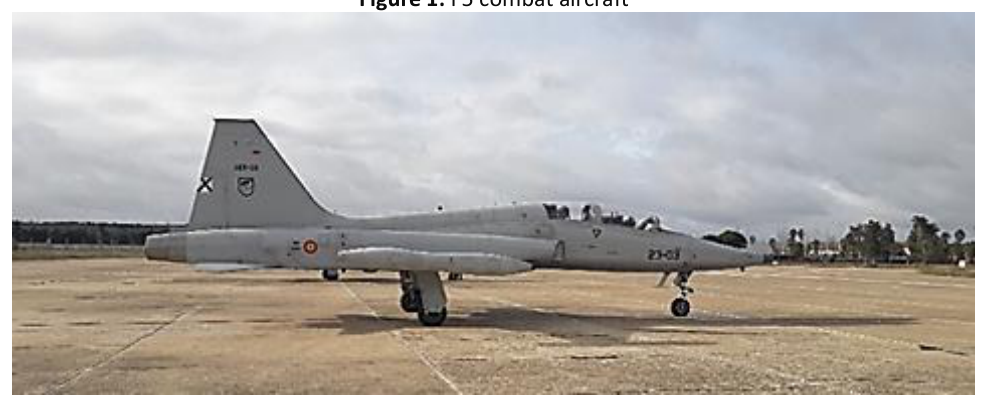
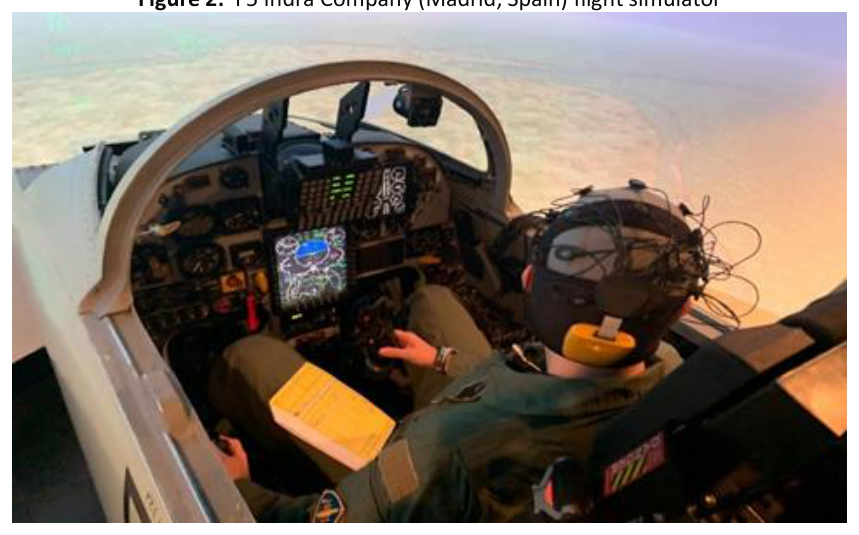
Pilots were evaluated before and after a real fight mission and a simulated one. Conditions, protocols, and procedures were exactly the same either in simulated or real combat. F5 combat aircraft was used for the real manoeuvres (Figure 1). For the simulated maneuvers, an operational F-5 M (Indra Company, Madrid, Spain) flight simulator was used (Figure 2). All pilots conducted both protocols, and 48 hours of rest between them were assigned. The tactical combat maneuvers were performed in the Air Fighting School of the Spanish Air Force at Talavera de la Real Air Base (Badajoz, Spain), in the middle of April month, between 08:00 and 15:00, with temperatures between 20 and 24 ºC and clear sky. Order and type of protocol were also randomized, in both cases, the protocol consisted of:
In both cases, pilots conducted both maneuvers at altitudes between 8000 and 18,000 ft, with G force between 0.5 and 5.9, with oxygen mix supply over 8000 ft with a combat duration between 30 and 35 min. The offensive maneuver consisted of a fighter aircraft that started at a 1-mile separation and a speed of 400 knots (unit of speed equal to one nautical mile). Both aircraft maintained a sustained rate of 410 knots and 5.5 Gs for 30 to 40 seconds until the target aircraft (referred to as the ‘bandit’) was within effective gun range. By this point, the bandit had closed the distance to the offensive aircraft, causing the speed to drop to 350–300 knots and the G-load to decrease to 4–4.5 Gs. After the initial bullet stream, a repositioning maneuver could be performed to solve range, aspect, and closure. Speed will decrease to 300 knots and gravity forces to 3G’s to return to a control position of effective gun employment. The exercise started at 16000 ft and it progressively decreased to 10,000 ft. In the defensive maneuver, the lead aircraft turned to one side to keep the pursuing offensive aircraft in sight. The exercise began at an altitude of 17,000 feet and a speed of 350 knots. Defensive aircraft executed a break turn at 4 G’s slowing down at the same time, looking over the shoulder at the offensive aircraft to assess his pursuit curve. At 300 knots, the defensive aircraft executed turning maneuvers, gradually reducing G-forces from 3.5 to 2 Gs and speed to 200–250 knots. Depending on the progression of the air combat, the defensive aircraft could maintain an airspeed of 350 knots and a G-load of 3.5–4 Gs while descending. Exercise finished at 10000 ft.
One hour before and thirty minutes after finishing the air combat maneuvers the following variables were measured:
Lower body muscular strength employing horizontal jump test. Subjects performed a standardized warm-up consisting of 2×10 vertical jumps and then, they performed two maximal horizontal jumps as in the previous report (-), and the best attempt was used for the statistical analysis.
The forced expiratory volume in the first second (FEV1) corresponds to the maximum volume of air exhaled in the first second of the FVC. And mean expiratory flow or FEF25-75, which is between 25% and 75% of the forced expiratory maneuver. Were analyzed using a QM-SP100 (Quirumed, Spain) spirometer in a maximum inhale-exhale cycle.
Urine samples were collected to analyze dehydration levels which were examined by the urine color (UC) chart (color range 1-8; where 1 = very pale-yellow urine, reflected a good level of hydration, and 8 = very dark yellowish-brown, reflected a significant level of dehydration); the number closest to the sample color was recorded.
Isometric hand strength (IHS) by a grip dynamometer (Takei Kiki Koyo, Japan).
Blood oxygen saturation (SatO2) and heart rate (HR) by a pulse oximeter (Pulse Oximeter 30 Beurer Medical).
Lactate and glucose samples were collected by taking a sample of 5 μl of capillary blood from the fingers of the pilots and analyzed by Accutrend Plus (Roche Diagnostics, Switzerland).
Direct Salivary Melatonin ELISA (Bühlmann, Schönenbuch, Switzerland) was used to measure cortisol concentrations.
Wilcoxon signed-rank test was used to examine the difference between the pre and post-measures. The baseline was subtracted to post-values to normalize and compare the acute effects of real vs. simulated flight. Effect sizes [r] were calculated for the nonparametric tests which are classified as follows: 0.5 is a large.
The results of the study revealed notable differences between the acute psychophysiological effects of real and simulated combat flights on specific metabolic, respiratory, and physical fitness variables. A significant reduction in glucose levels was observed following simulated combat flights (p = 0.021, effect size = 0.668), while this effect was not present after real flights. This finding suggests that the metabolic demands in simulated conditions may differ from those experienced during real combat maneuvers. Additionally, a significant improvement in horizontal jump performance was found after real flights (p = 0.004, effect size = 0.839), indicating enhanced lower body strength or neuromuscular efficiency induced by real combat flight conditions.
No significant differences were detected in other variables, including blood oxygen saturation, blood lactate levels, cortisol concentrations, urine color, respiratory function (FEV1, FER25, FEF75), or handgrip strength, either between pre- and postmeasurements or when comparing real and simulated flight conditions. These results highlight the comparable physiological demands of simulated and real combat flights across most variables, emphasizing the potential of simulation-based training to closely replicate real flight conditions. However, the observed differences in glucose levels and horizontal jump performance underline specific areas where real combat flight may impose unique demands.
These findings suggest that flight simulators are effective tools for replicating many of the psychophysiological demands of combat aviation, while also identifying areas where real combat conditions elicit distinct responses. This information is critical for optimizing training protocols and ensuring pilots are adequately prepared for operational demands.
| Variables | Baseline Mean (SD) | Post Mean (SD) | Baseline vs post measure | Acute effects of a real vs a simulated mission | |||
|---|---|---|---|---|---|---|---|
| p-value | Effect Size | p-value | Effect Size | ||||
| Real flight | Blood oxygen saturation (%) | 98.58 (0.51) | 98.00 (0.74) | .100 | 0.475 | .476 | 0.205 |
| Simulated flight | 98.08 (0.67) | 98.08 (0.67) | .527 | 0.182 | |||
| Real flight | Lactate (mmol/l) | 1.92 (0.78) | 2.86 (3.04) | .367 | 0.261 | .790 | 0.077 |
| Simulated flight | 2.62 (1.78) | 3.25 (2.97) | .533 | 0.180 | |||
| Real flight | Glucose (mg/dl) | 96.42 (9.57) | 96.25 (8.61) | .844 | 0.056 | .084 | 0.498 |
| Simulated flight | 102.75 (14.04) | 92.50 (4.74) | .021* | 0.668 | |||
| Real flight | Cortisol (µg/dl) | 9.70 (5.78) | 7.56 (6.30) | .158 | 0.408 | .445 | 0.220 |
| Simulated flight | 6.30 (4.83) | 6.87 (7.01) | .386 | 0.250 | |||
| Real flight | Urine color (a.u.) | 3.75 (1.71) | 3.17 (0.94) | .176 | 0.391 | .887 | 0.044 |
| Simulated flight | 3.08 (1.08) | 2.58 (1.44) | .092 | 0.486 | |||
| Real flight | Fev1 (l) | 5.11 (1.19) | 4.81 (0.66) | .450 | 0.218 | .142 | 0.424 |
| Simulated flight | 4.83 (0.68) | 4.85 (0.65) | .123 | 0.445 | |||
| Real flight | FER25 (l) | 3.92 (0.61) | 4.08 (0.44) | .308 | 0.294 | .722 | 0.103 |
| Simulated flight | 4.13 (0.64) | 4.16 (0.75) | .260 | 0.324 | |||
| Real flight | FEF75 (l) | 10.10 (1.89) | 9.72 (2.07) | .477 | 0.205 | 1.000 | <0.001 |
| Simulated flight | 9.98 (1.91) | 9.27 (1.99) | .678 | 0.120 | |||
| Real flight | Handgrip (N) | 52.62 (6.08) | 51.92 (7.43) | .759 | 0.088 | .386 | 0.250 |
| Simulated flight | 50.62 (7.23) | 51.09 (5.47) | .858 | 0.051 | |||
| Real flight | Horizontal jump (cm) | 141.33 (11.10) | 147.42 (12.99) | .004* | 0.839 | .878 | 0.044 |
| Simulated flight | 137.42 (9.10) | 144.09 (10.32) | .055 | 0.553 | |||
*p-value <0.05
Authors should discuss the results and how they can be interpreted from the perspective of previous studies and of the working hypotheses. The findings and their implications should be discussed in the broadest context possible.
This study aimed to analyze the acute psychophysiological effects of simulated and real combat flights in military pilots. The findings emphasize the utility of flight simulators for training purposes, as no significant differences were observed in most physiological and metabolic variables between simulated and real combat flights. These results align with previous research demonstrating that modern simulators effectively replicate many of the stressors encountered in real-world conditions, such as mental workload and physical demands while avoiding the risks associated with live operations [13,14,15]. The high fidelity of modern simulators in recreating operational environments supports their role as indispensable tools in pilot training.
Despite the overall similarity in physiological responses, certain differences were evident, providing nuanced insights into the unique demands of real combat flights. A significant improvement in horizontal jump performance following real flights was observed, suggesting that real combat maneuvers may elicit greater neuromuscular activation compared to simulated conditions. This response could be linked to the heightened cortical arousal and increased recruitment of fast-twitch muscle fibers required to cope with the physical and cognitive demands of real flight maneuvers. Similar findings have been reported in high-intensity military tasks, such as close-quarter combat and parachute jumps, where lower body strength improves due to acute neuromuscular adaptations to highstress conditions [16,17,18]. These findings reinforce the hypothesis that real-world stressors induce unique physiological responses that are challenging to replicate entirely in simulated environments.
Interestingly, no significant changes were detected in handgrip strength, highlighting the distinct demands placed on upper body fine motor skills in piloting. Unlike lower body strength, which benefits from gross motor activation, piloting requires sustained precision and control over joystick or yoke movements, which rely on fine motor skills rather than maximal force. Previous research has similarly noted that tasks involving fine motor coordination are less affected by acute fatigue compared to those demanding gross motor output [19,20,21]. These results suggest that while simulators effectively mimic many neuromuscular demands, they may not fully capture the precise motor control required during real flight operations.
The absence of significant changes in blood lactate levels following real flights contrasts with findings in other high-stress combat scenarios, where anaerobic metabolism typically increases due to intense physical exertion [22,23]. This discrepancy may be attributed to the effects of G-forces during real flights, which redistribute blood flow, potentially reducing capillary perfusion at peripheral sampling sites. Simulated flights, lacking such mechanical stressors, exhibited lactate levels closer to the anaerobic threshold, further supporting the influence of G-forces on metabolic responses [24,25,26]. Research on the physiological effects of G- forces in combat aviation highlights their role in altering cardiovascular and metabolic regulation, with implications for pilot performance and endurance [27,28].
Respiratory function, as assessed by spirometry and blood oxygen saturation, showed no significant differences between simulated and real flights. The stability of these variables suggests that the participants’ high level of operational experience and training enabled them to maintain respiratory efficiency across both conditions. Previous studies have identified respiratory fatigue as more prevalent among less experienced pilots or during extended operations [29,30]. The lack of observed respiratory impairments in this study underscores the resilience of experienced pilots. However, the reliance on spirometry alone may have limited the scope of respiratory assessments. Advanced techniques such as wearable strain gauge sensors or optoelectronic plethysmography could provide a more detailed understanding of respiratory patterns during flight [31,32].
Cortisol levels remained stable across both flight conditions, a finding that may reflect the effects of habituation associated with extensive operational experience. High-stress environments often elicit significant cortisol responses in less experienced individuals, but research has shown that habituation to stress reduces these responses over time in seasoned personnel [33]. This phenomenon is consistent with studies in other military contexts, where experienced individuals exhibit attenuated psychophysiological responses to acute stressors [34]. The stability of cortisol levels in this study further emphasizes the importance of experience in mitigating stress responses during high-pressure scenarios.
Hydration profiles, assessed through urine colorimetry, did not differ significantly between simulated and real flights. However, the hydration levels observed were close to dehydration thresholds, highlighting the need for improved pre-flight hydration strategies. Dehydration has been shown to impair both physical and cognitive performance, particularly in high-stress environments such as combat aviation [35,36,37]. The use of urine color charts for hydration monitoring has been validated in clinical and operational settings, offering a practical tool for maintaining optimal hydration status among pilots [38]. Addressing hydration deficits could enhance both safety and performance during flight operations.
The results of this study contribute to the growing body of literature emphasizing the effectiveness of flight simulators in replicating the majority of psychophysiological demands associated with real combat flights. However, the observed differences in neuromuscular and metabolic responses highlight specific areas where real flight conditions impose distinct challenges that simulators may not fully replicate. For instance, while simulators effectively mimic the mental workload and basic physiological demands of combat aviation, they may not accurately replicate the physical effects of G-forces or the fine motor requirements of real piloting.
These findings have important implications for the design and implementation of simulation-based training programs. By identifying the limitations of current simulators, training protocols can be refined to better prepare pilots for the unique demands of real combat scenarios. For example, incorporating supplementary training exercises that target neuromuscular activation and motor coordination could address the gaps identified in this study. Additionally, integrating advanced physiological monitoring tools, such as portable biosensors and electroencephalography, could enhance the precision and effectiveness of simulation-based training [39,40,41].
This study has several limitations that should be considered when interpreting the results. First, the relatively small sample size (n = 12) limits the generalizability of the findings, particularly given the elite status of the participants as experienced military pilots. Access to larger samples in similar operational contexts remains a challenge, but it would enhance the robustness of the conclusions. Second, the study did not control for gender differences, which may introduce variability in psychophysiological responses. Given the increasing presence of female pilots in military aviation, future studies should aim to include a gender-balanced sample.
Another limitation is the reliance on conventional physiological and metabolic measures, such as spirometry and blood lactate levels, which may not fully capture the complexity of pilot responses during flight. The lack of advanced monitoring techniques, such as electroencephalography (EEG) or respiratory inductive plethysmography, restricts the scope of insights into neuromuscular and respiratory dynamics. Additionally, the study did not evaluate psychological measures such as perceived exertion, stress, or workload, which are critical components of the psychophysiological response in high-stress environments.
Finally, while the study focused on acute effects, it did not assess the cumulative impact of repeated exposure to simulated and real flight conditions. Chronic stress and its potential long-term effects on pilot health and performance warrant further exploration.
Our research on the effects of experience on the findings of this study has direct implications for improving pilot training and operational readiness. The demonstrated effectiveness of flight simulators in replicating many psychophysiological demands of real combat flights supports their continued use as a safe, cost-effective, and practical training tool. Simulators allow pilots to acclimate to combat stressors without exposure to the risks associated with live operations, such as physical injury or equipment failure. These insights reinforce the value of simulators in enhancing pilot preparedness, particularly during the early phases of training.
The observed differences in neuromuscular activation and metabolic responses between real and simulated flights highlight areas where simulation-based training can be refined. Incorporating supplementary neuromuscular exercises, such as lower body strength training, may enhance physical preparedness for real combat scenarios. Additionally, addressing hydration deficits through pre-flight hydration protocols could mitigate the risk of dehydration-related performance decrements.
Moreover, the study underscores the importance of tailoring training protocols to individual pilot characteristics, including experience level and physiological baseline. Advanced monitoring technologies, such as wearable biosensors, could be integrated into training programs to provide real-time feedback on physiological and psychological responses, enabling personalized training adjustments.
Future research should build upon the findings and limitations of this study by addressing several key areas. First, future studies should include larger sample sizes and greater diversity, particularly through the inclusion of female pilots. This approach would improve the generalizability of findings and allow for a deeper exploration of potential gender differences in psychophysiological responses. Additionally, investigations into the cumulative effects of repeated exposure to both simulated and real combat flight conditions are essential. These studies could provide valuable insights into the long-term impact of operational stressors on pilot health, performance, and resilience, areas that remain underexplored.
Advanced physiological and psychological monitoring tools should also be integrated into future research. Techniques such as electroencephalography (EEG), respiratory inductive plethysmography, and portable biosensors could offer a more comprehensive understanding of pilot responses. These tools would enable the assessment of critical parameters, including brain activity, detailed breathing dynamics, and stress biomarkers, allowing for a more nuanced analysis of the interaction between physiological and psychological stressors.
Incorporating psychological measures, such as perceived exertion, workload, stress, and fatigue, will also enhance future studies by providing a holistic view of pilot performance under stress. These measures would complement physiological data and help elucidate the interplay between mental and physical demands in combat aviation. Furthermore, comparing psychophysiological responses between novice and experienced pilots would yield valuable insights into how training and habituation influence operational readiness, offering opportunities to tailor training programs to the specific needs of pilots at different stages of their careers.
Another important area for future research involves enhancing the fidelity of flight simulators. Efforts should focus on better replicating the physical effects of G-forces and other unique stressors encountered during real combat flights. Advanced simulation technologies that integrate neuromuscular and metabolic stressors could bridge the gap between simulated and real flight conditions, thereby improving training effectiveness.
Hydration and nutritional strategies represent another critical avenue for investigation. Tailored interventions to optimize hydration status and metabolic recovery could significantly enhance pilot performance during combat scenarios. Research in this area would address a practical operational need and contribute to the development of evidence-based protocols to support pilot health and performance.
Finally, cross-operational comparisons should be conducted to broaden the scope of research. Investigating psychophysiological responses across different aviation contexts, such as helicopter pilots or unmanned aerial vehicle (UAV) operators, would provide a more comprehensive understanding of aviation-specific stressors and their management. These comparisons would also facilitate the identification of universal stressors and strategies applicable across various aviation roles, contributing to the overall advancement of the field.
The present study underscores the essential function of flight simulators within pilot training frameworks, particularly in their capacity to replicate a substantial portion of the psychophysiological demands encountered in actual combat aviation scenarios. Nevertheless, the discrepancies identified in neuromuscular activation patterns and metabolic responses indicate that simulators may fall short in fully emulating the intricate physiological challenges of real-world flight operations. Bridging these limitations through the integration of targeted training interventions and sophisticated monitoring methodologies has the potential to enhance pilot preparedness and physiological resilience, thereby contributing to improved performance and mission safety. These results highlight the necessity of ongoing research aimed at refining training protocols to ensure that pilots are effectively equipped to meet the complex requirements of contemporary aerial warfare.
The authors declare no conflict of interest. No artificial intelligence automatically generated text was inserted in this manuscript, and no image was previously published in another journal or is under consideration of being published elsewhere. This research received no external funding.
This study has been made thanks to the contribution of the 3rd Wing located in the Talavera la Real Air Base (Badajoz) of the Spanish Air Force (Ministry of Defence) as well as the Department of Economy and Infrastructure of the Junta de Extremadura through the European Regional Development Fund. A way to make Europe (GR18129 and GR21094).
Conceptualization, V.J.C.-S., S.V. and J.P.F.-G.; methodology, V.J.C.-S., S.V. and J.P.F.-G.; formal analysis, J.F.T.-A., V.J.C.-S., S.V. and J.P.F.-G.; investigation, J.F.T.-A., V.J.C.-S., S.V., M.A.M.-G. and J.P.F.-G.; resources, J.P.F.-G. and V.J.C.-S.; data curation, J.F.T.-A., V.J.C.-S., S.V., M.A.M.-G. and J.P.F.-G.; writing—original draft, J.F.T.-A.; writing— review & editing, J.P.F.-G. and V.J.C.-S; visualization, M.A.M.-G.: supervision, V.J.C.-S. and J J.P.F.-G.; project administration, J.P.F.-G.; funding acquisition, J.P.F.-G. All authors have read and agreed to the published version of the manuscript.
The study was conducted in accordance with the Declaration of Helsinki, and approved by the Ethics Committee of the University of Extremadura (approval number: 206/219: July 24, 2019).
Informed consent was obtained from all subjects involved in the study.