
A “smoke-free Europe” has long been a priority and a vision guiding the European Commission’s policies on public health, the environment, employment, and research. Significant progress has been made over the past decade, largely due to legislative actions and persistent health promotion efforts [1].
Romania became a member of the European Union in January 2007, and by 2016, notable advances had been made in protecting the population from secondhand smoke exposure. Romania ratified the WHO Framework Convention on Tobacco Control on 27 January 2006 and joined the group of countries offering comprehensive smoking cessation support in 2008 [2].
Beyond the multi-level strategies of tobacco control, the role of healthcare professionals—particularly physicians—in smoking prevention and cessation is well recognized. In Romania, data on smoking prevalence among health professionals are inconsistent. However, pulmonologists have been relatively well-studied, though much of the data comes from poster presentations at international conferences. Smoking prevalence among lung specialists has decreased over time, as evidenced by various rounds of surveillance.
In 2002, the prevalence of smoking among Romanian physicians was reported at 43.2%, with 16.6% identified as ex-smokers and 40.2% as non-smokers [3]. At the National Institute of Pneumology, 31.3% of medical personnel were smokers, and 5.2% were ex-smokers [4]. A 2005 study across 18 pulmonology clinics in Romania found a smoking prevalence of 30.8% among staff [5]. That same year, a survey conducted in Romanian maternity wards revealed that 35.5% of the personnel were
smokers [6]. By 2009, smoking prevalence among pulmonologists had dropped to 11.3% [7]. In contrast, a 2014 study among cardiologists reported a higher prevalence of 26.5% [8]. Since then, no systematic evaluation of pulmonologists’ cessation counseling practices has been published.
This creates an important knowledge gap: while it is known that physician smoking prevalence has declined, it remains unclear to what extent Romanian pulmonologists implement comprehensive smoking cessation strategies—including the 5A model (Ask, Advise, Assess, Assist, Arrange)—and how they address newer nicotine delivery products.
Given the absence of longitudinal or interventional components, the present study is strictly descriptive in nature and does not examine causal pathways, determinants of behavior, or psychosocial mechanisms. Its purpose is limited to documenting current smoking prevalence and counseling practices among pulmonologists.
Pulmonologists, as healthcare professionals, play a key role in both advising patients on smoking cessation and serving as role models. However, some continue to use tobacco products themselves. To explore this issue, we conducted a survey using a structured questionnaire.
The study was launched during the Romanian National Congress of Pneumology in November 2024, and all pulmonologists (n = 332), registered as congress participants, were invited to take part in the survey. Recruitment was conducted through a congress newsletter and an electronic invitation containing a survey link, as well as in-person announcements at the event. Participants accessed the questionnaire through the emailed link. Eligibility criteria included being a licensed medical doctor who diagnoses, treats, and manages diseases of the lungs and respiratory system, practicing in Romania at the time of the survey. Exclusion criteria were incomplete or duplicate submissions. A “response” was defined as full completion of all 30 survey items. Data collection took place over a one-month period using a self-administered, internet-based questionnaire consisting of 30 items (Table 1). The questionnaire assessed personal tobacco use, attitudes toward smoking cessation, and clinical practices related to counseling patients who use tobacco or alternative nicotine products. The questionnaire was adapted from earlier surveys conducted among physicians on smoking behavior and cessation counseling practices. To reflect recent developments, items were updated to include new nicotine and tobacco products such as e-cigarettes and HTPs. The content was reviewed by senior pulmonologists for clarity and relevance; however, the instrument was not formally validated or pilot-tested prior to field use, which we acknowledge as a limitation.
All analyses were descriptive. Proportions were calculated directly from the number of respondents (n/N) and expressed as percentages. No specialized statistical software was used, and therefore, inferential analyses such as confidence intervals or regression models were not performed. As the study does not aim to draw causal inferences or examine psychosocial determinants, we acknowledge this as a limitation of the study, which restricts the generalizability of the findings and prevents deeper exploration of predictors of counseling practices.
| SECTION | Items | Content | Response type |
|---|---|---|---|
| PROFESSIONAL AND TOBACCO USE | 1-5 | Training level, tobacco, and e-cigarette consumption habits | Categorical |
| CLINICAL SMOKING PRACTICES | 6-17 | Frequency of assessing and advising patients about smoking | Likert scale (Always-Never) |
| COUNSELING ATTITUDES | 18-26 | Beliefs about responsibility and efficacy of counseling | Likert scale (Strongly disagree-Strongly agree) |
| PERCEIVED BARRIERS | 27-30 | Barriers related to discomfort, patient reaction,and time | Likert scale (Strongly disagree-Strongly agree) |
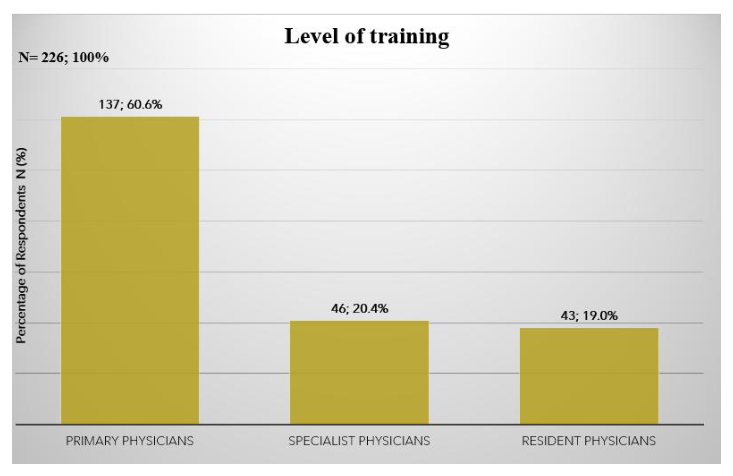
Of the 332 invited pulmonologists from various university centers across Romania, 68% (n = 226) provided complete responses. The sample consisted of 70% (n = 158) female and 30% (n = 68) male respondents. Regarding the respondents’ level of training, the majority were senior specialists 60.6% (n = 137), but the sample also included specialist physicians (n = 46) and resident physicians (n = 43) (Figure 1).
Current smokers were defined as individuals who had smoked for at least six months during their lifetime and were still smoking at the time of the survey.
Non-current smokers included:
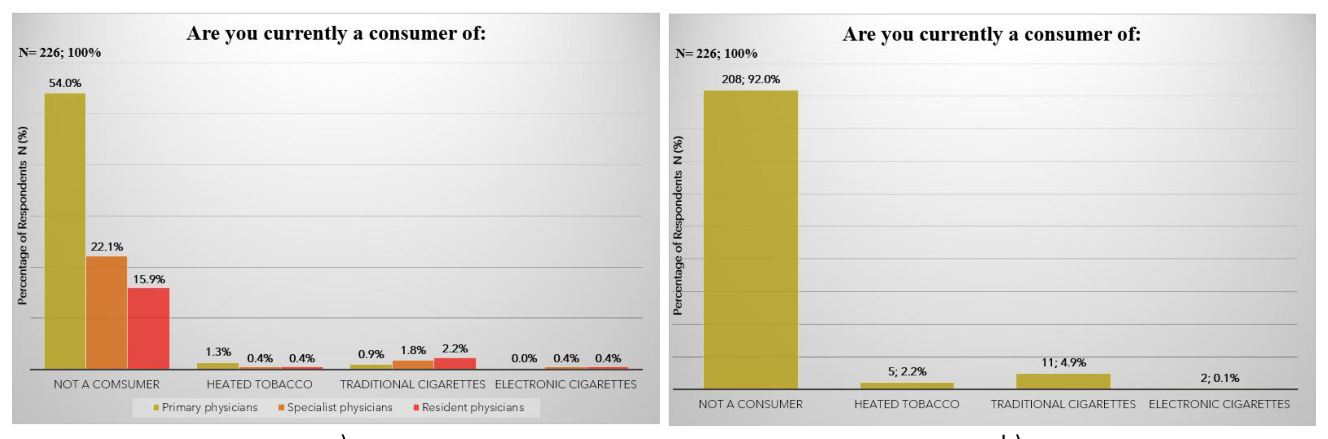
Among respondents, 8% (n = 18) reported current use of tobacco or tobacco industry–derived novel products, with a predominance of conventional tobacco users (Figure 2a). Although resident physicians represent the new generation, one might expect them to gravitate toward heated tobacco products or electronic cigarettes. However, as shown in Figure 2b, they also predominantly use conventional cigarettes.
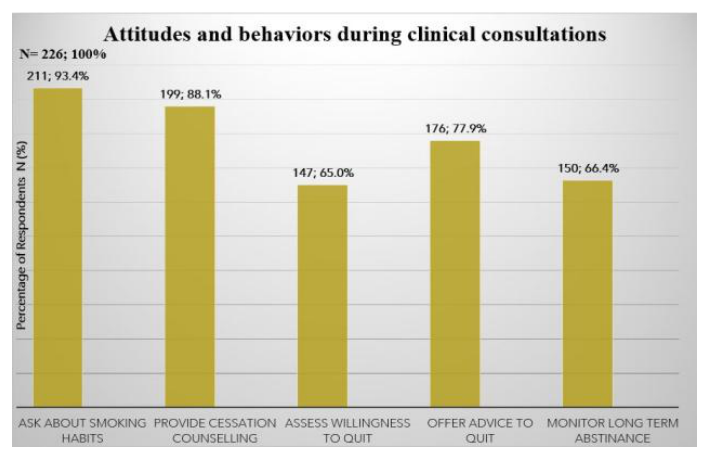
Our primary focus was on physicians’ interactions with their patients regarding nicotine dependence. Of the 30 questionnaire items, 28 explored this aspect, specifically addressing attitudes and behaviors during clinical consultations. A total of 93.4% (n = 211) of respondents reported that they consistently ask patients about their smoking habits, and 88.1% (n = 199) stated that they always provide cessation counseling during consultations. However, only 65% (n = 147) routinely assess patients’ readiness to quit, and 77.9% (n = 176) offer specific advice to support cessation. Notably, the percentage of physicians who monitor patients’ long-term abstinence dropped to 66.4% (n = 150) (Figure 3).
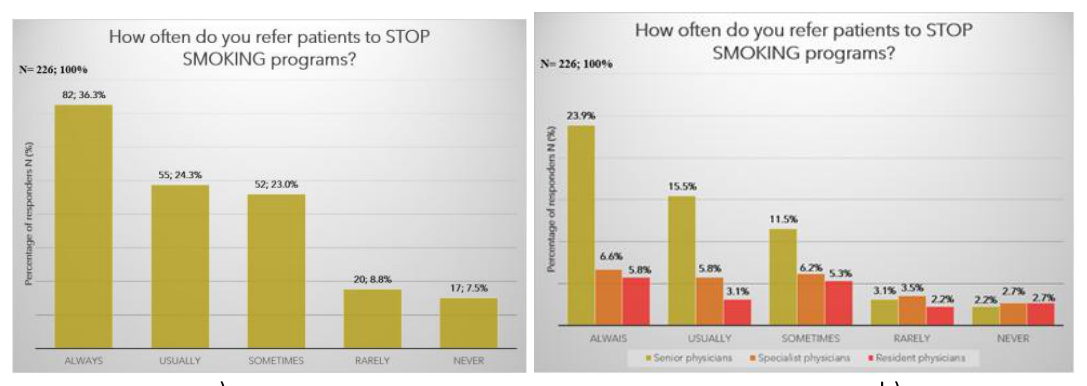
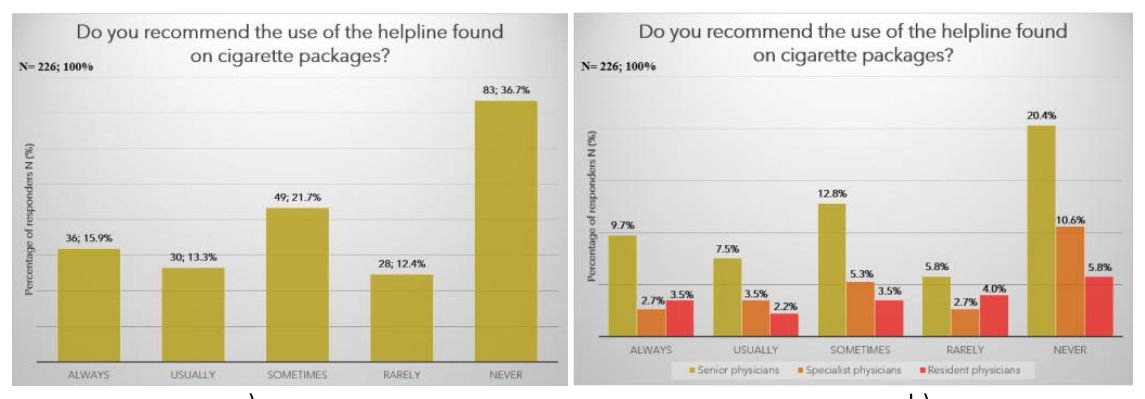
Importantly, the majority of respondents reported being unfamiliar with the STOP SMOKING program hotline (Figure 4). Only 15.9% (n = 36) of physicians stated that they always recommend the use of the telephone helpline to their patients (Figure 5), and just 36.3% (n = 82) refer patients to a formal STOP SMOKING program (Figure 4).
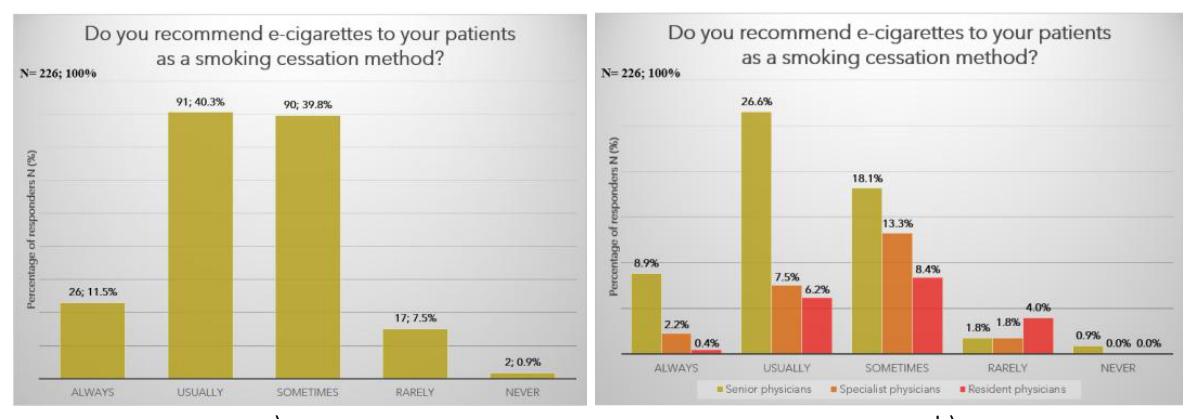
Another point of interest relates to the recommendation of e-cigarettes as a cessation aid. Currently, 11.5% (n = 26) of physicians support this option (Figure 7).
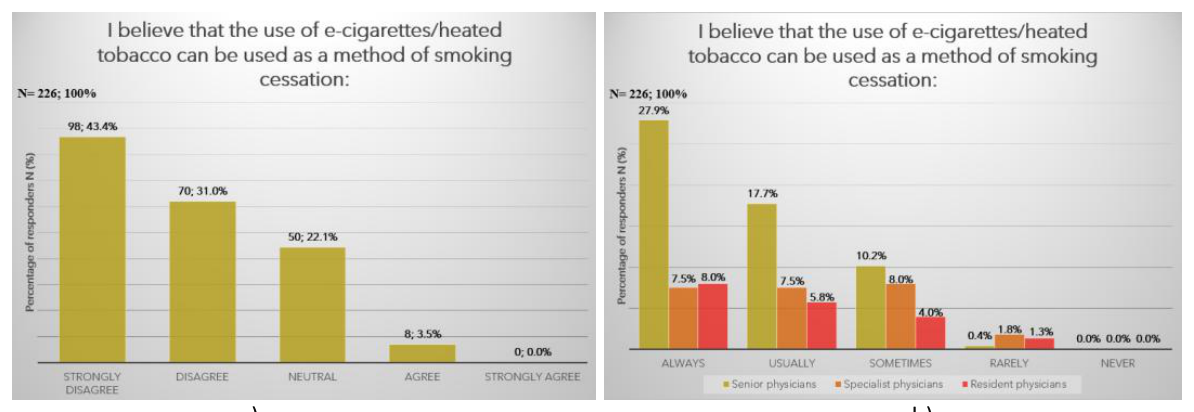
However, only a small fraction—3.5% (n = 8)—express confidence (agree) in the effectiveness of e-cigarettes or HTPs as viable methods for smoking cessation (Figure 8).
More positive results emerged when assessing physicians’ attitudes toward maintaining a smoke-free home environment—a key factor in preventing both passive smoking and relapse. A total of 58.9% (n = 133) of respondents stated it is always necessary, while 28.8% (n = 65) responded usually.
An important finding relates to physicians’ interest and knowledge in cessation methods: 27% (n = 60 lack of knowledge; n = 1 not interested) of participants reported either a lack of knowledge or disinterest in available quitting strategies. Nevertheless, 93.8% (n = 127 strongly agree; n = 85 agree) acknowledged it is their responsibility to advise patients on quitting, and 96.5% (n = 110 strongly agree; n = 105 agree) believed they play an important role in smoking cessation counseling.
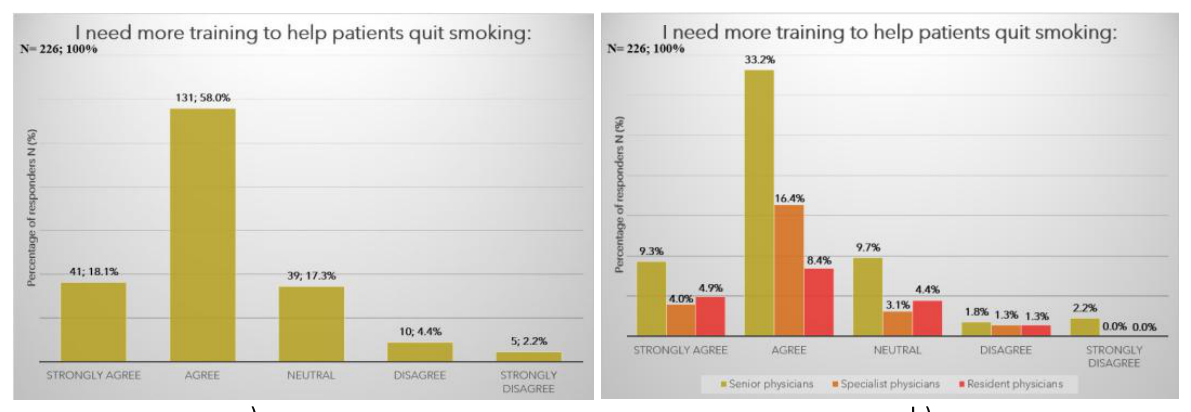
When probed further, 95.1% (n = 133 strongly agree; n = 82 agree) agreed that counseling remains important even if only a portion of patients follow through with cessation. Regarding preparedness, 76.1% (n = 133 strongly agree; n = 82 agree) of respondents expressed a need for training in smoking cessation counseling (Figure 9), and 78.3% (n = 48 strongly agree; n = 129 agree) believed they should adopt a more active role in supporting patients attempting to overcome nicotine dependence.
The final section of the questionnaire focused on physicians’ perceptions of patient reactions during discussions about smoking. According to respondents, 39.4% (n = 5 strongly agree; n = 8 agree; n = 76 neutral) of patients do not appreciate receiving smoking cessation advice, while 35.8% (n = 5 strongly agree; n = 10 agree; n = 66 neutral) believe that addressing smoking habits does not strengthen the physician–patient relationship. Additionally, 9.3% (n = 3 strongly agree; n = 7 agree; n = 11 neutral) of physicians reported feeling uncomfortable asking patients about their smoking status.
Further insights revealed some unexpected findings: 25.2% (n = 4 strongly agree; n = 21 agree; n = 32 neutral) of respondents felt that counseling patients on smoking cessation is not an efficient use of consultation time, and 50% (n = 14 strongly agree; n = 46 agree; n = 53 neutral) reported that they allocate too little time to this aspect of care.
It is nevertheless surprising that resident physicians—a group we would expect to be aligned with contemporary trends toward a smoke-free world—do not appear fully aware of the role they hold in this transition. As shown in the previously analyzed figures, their involvement in guiding patients toward smoking cessation does not stand out in any meaningful way. One would expect them to refer patients to cessation programs, to recommend the Quitline, to discuss pharmacotherapy, or at least to direct them toward noncombustible nicotine products, even though these are not cessation methods per se. Equally striking is the fact that medical personnel, including pulmonologists, do not fully recognize the gaps in their own training when it comes to counseling, guiding, and following patients throughout their cessation journey.
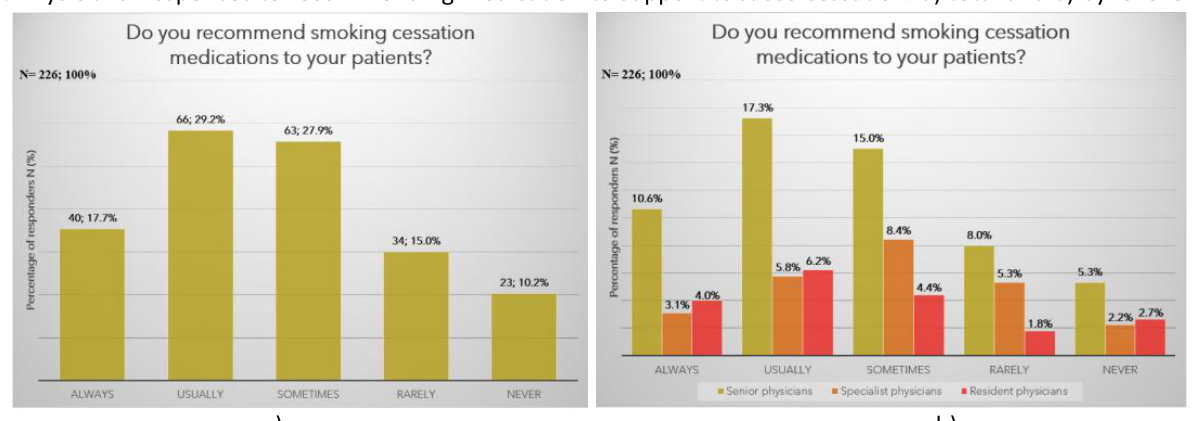
To provide a clearer overview of counseling practices, we consolidated the main survey outcomes into Table 2. This table summarizes the proportion of pulmonologists who reported consistently applying key smoking cessation practices, using n/N notation. The results show very high adherence for the initial steps of asking about tobacco use (93.4%) and advising patients to quit (88.1%). However, subsequent steps of the 5A model—such as assessing readiness to quit (65%), arranging follow-up (66.4%), and assisting through referral to structured cessation programs (36.3%) or pharmacotherapy (17.7%)—were much less frequently implemented. Notably, only 15.9% of respondents reported recommending Quitline, and 11.5% recommended e-cigarettes as cessation aids.
| Indicator | n/N | % |
|---|---|---|
| Always ask patients about smoking status | 211/226 | 93.4 |
| Always advise patients to quit | 199/226 | 88.1 |
| Assess readiness to quit | 147/226 | 65.0 |
| Offer specific cessation advice | 176/226 | 77.9 |
| Monitor long-term abstinence | 150/226 | 66.4 |
| Refer to the STOP SMOKING program | 82/226 | 36.3 |
| Recommend Quitline | 36/226 | 15.9 |
| Recommend pharmacological treatment | 40/226 | 17.7 |
| Recommend nicotine replacement therapy | 49/226 | 21.7 |
| Recommend e-cigarettes as a cessation aid | 26/226 | 11.5 |
This descriptive surveillance study provides updated national data on smoking behavior and cessation counseling among Romanian pulmonologists. The findings confirm a substantial decline in smoking prevalence over the past two decades—from 30.8% in 2005 [5] to 7.9% in 2024 (Table 3)—a trend that aligns with reports from other European pulmonology groups, where rates typically range between 3.5% and 10% [10,11]. This is notable given Romania’s broader epidemiological context, with an estimated 4.4 million tobacco users in 2022, ranking the country 37th globally and 10th in the WHO European Region [13,14].
| Year | Source | Prevalence of Smoking (%) |
|---|---|---|
| 2005 | Munteanu & Mihălțan[5] | 30.8 |
| 2009 | Munteanu et al.[7] | 11.3 |
| 2024 | Present study | 7.9 |
International comparisons further emphasize the variability of smoking among healthcare professionals. A meta-analysis of 246 studies involving 497,081 physicians reported an overall smoking prevalence of 21%, with the highest rates among medical students (25%) and family practitioners (24%) [9]. In Italy, smoking prevalence among healthcare workers increased from 15.9% in 2020 to 24.7%, including significant use of e-cigarettes (21%) [12,15]. Similarly high rates have been observed in Turkey (50.4% among hospital staff) [16] and China (26% among physicians) [17]. However, cross-country comparisons must be interpreted cautiously due to differing study years and methodologies.
Despite encouraging declines, any tobacco use among lung specialists remains relevant, given evidence that physicians’ smoking behavior can influence their engagement in cessation counseling [19–21]. The broader Romanian context reinforces this concern: GATS 2018 reported that 65.9% of individuals attempting to quit did so without assistance, while 15.1% used e-cigarettes and 10.4% used HTPs as cessation aids. These patterns suggest gaps in professional guidance, including limited awareness or utilization of the STOP SMOKING program and uncertainty regarding alternative nicotine products [18]. Comparable international data show strong adherence to asking patients about smoking—for example, 98% of SEPAR members in Spain routinely inquire [10]—and evidence indicates that systematic assessment improves readiness for cessation counseling [17,22].
While smoking prevalence among Romanian pulmonologists is low, the study identifies clear gaps in cessation-related practices. Although the majority ask (93.4%) and advise (88.1%) patients, subsequent steps—including assessing readiness (65%), recommending pharmacotherapy (17.7%), and arranging follow-up (66.4%)—are less consistently applied. Similar patterns have been documented in other settings where time limitations, insufficient training, and system-level constraints impede delivery of comprehensive cessation care [12,18,23,27].
The finding that 27% of respondents lack knowledge or interest in cessation methods highlights the need for structured professional development. Evidence from Romania and other countries shows that targeted training significantly improves clinicians’ confidence and implementation of cessation strategies [12,28]. The recent introduction of a national certification program in smoking cessation counseling (Ministry of Health Ordinance No. 1.677/2025) offers an important opportunity to address these gaps, provided that adequate support and dissemination are ensured.
System-level challenges were also evident. Only 36.3% of pulmonologists reported referring patients to the STOP SMOKING program, and 15.9% recommended the Quitline. Limited engagement with these services likely reflects their fluctuating availability, reduced visibility, and insufficient integration within routine care. Evidence from other countries shows that coordinated systems combining physician advice, pharmacotherapy, and Quitline or digital support enhance cessation outcomes [24–26]. Strengthening the stability, accessibility, and communication of national cessation resources is therefore crucial.
Overall, the results portray a professional group aligned with tobacco-control principles but constrained by educational and organizational barriers. Addressing these limitations—through enhanced training, reinforced national cessation infrastructure, and improved referral pathways—could substantially strengthen the role of Romanian pulmonologists in national tobacco-control efforts.
This study has several limitations that should be considered when interpreting the findings. All analyses were descriptive, and no inferential statistics were performed. As such, comparisons between subgroups or across countries are illustrative only and cannot be interpreted as statistically significant differences. The international studies cited (e.g., from Spain, Turkey, and Switzerland) were conducted in different years, with varying methodologies and sample characteristics, which limits the validity of direct cross-country comparisons. Additionally, the questionnaire was adapted from prior physician surveys and underwent expert review to ensure face and content validity; however, no pilot testing was conducted. The absence of pilot testing may have limited our ability to identify potential issues with item interpretation or survey flow. As a descriptive surveillance study, the design does not support causal
inference, modeling of psychosocial constructs, or identification of predictors; all findings should be interpreted solely as observed frequencies and self-reported practices. Finally, as participation was voluntary and limited to pulmonologists attending a national congress, selection bias may have influenced the results, and the findings may not be fully generalizable to all Romanian pulmonologists.
Training in smoking cessation and the preparation of healthcare professionals for patient counseling should be integrated into the core curricula of all health professions. This remains a significant challenge in Romania, particularly in light of recent budget cuts by the Ministry of Health to the STOP SMOKING program and the declining number of physicians adequately trained to support patients in smoking cessation. The ability of Romanian physicians to fulfill their public health mission in tobacco control now largely depends on three critical factors: the quality of their training, the inclusion of tobacco control and cessation counseling in university curricula, and the availability of structured, approved cessation support programs for their patients.
At the same time, addressing disparities in perceived wellness among Romanian populations at high risk for tobacco use, including physicians themselves, is essential. Special attention should be given to understanding the factors contributing to persistent or increasing smoking rates among pulmonologists and how this group perceives and manages their own wellness and professional role in tobacco control efforts. While Romanian pulmonologists demonstrate substantial involvement in smoking cessation, opportunities remain for enhancing training, strengthening system-level support, and better integrating national cessation programs into daily practice. Addressing both organizational and educational barriers will be critical to improving smoking cessation outcomes in Romania and aligning practices with international standards.
Romanian pulmonologists report markedly reduced smoking prevalence compared with two decades ago and demonstrate a strong commitment to asking and advising patients about tobacco use. However, significant gaps remain in assistance and follow-up, particularly regarding pharmacological support and referrals to structured cessation services. Addressing these gaps through enhanced training, better integration of national programs, and system-level reforms could strengthen the role of pulmonologists in tobacco control and contribute to improved patient outcomes.
The authors declare no conflict of interest. This research received no external funding. Acknowledgments No generative AI was used during the writing of this article.
Authors’ contribution
Conceptualization, FD.M. and AA.C.; methodology, FD.M.; validation, FD.M., AA.C. and AL.I.; formal analysis, FD.M., AA.C. and AL.I.; investigation, FD.M., AA.C. and AL.I.; resources, FD.M., AA.C. and AL.I.; data curation, AA.C.; writing—original draft preparation, AA.C. and AL.I..; writing—review and editing, AA.C.; visualization, FD.M., AA.C. and AL.I.; supervision, FD.M.; project administration, FD.M. All authors have read and agreed to the published version of the manuscript. All authors have equally quoted. Ethics approval and consent to participate
This study was conducted in accordance with the Declaration of Helsinki. The research protocol was reviewed and approved by the Ethics and Scientific Research Committee of the “Marius Nasta” National Institute of Pneumology, Bucharest, Romania (Approval No. 14946/29.07.2025).
Patient consent for publication
Informed consent was obtained from all subjects involved in the study.