
The nosological field of eating disorders (EDs) has evolved slightly since one edition of the American Psychiatric Association’s Diagnostic and Statistical Manual of Mental Disorders or the World Health Organization’s International Classification of Diseases (DSM IV TR, DSM-5, DSM-5TR, ICD-10, ICD-11) to another , being a rather conservative domain, both in terms of the number of validated diagnoses and diagnostic criteria [1-5]. A rapid comparison between the previously mentioned nosological systems, published in the last three decades, leads to the conclusion that, besides the “veterans” of this category, i.e., anorexia nervosa (AN) and bulimia nervosa (BN), a single diagnosis gained its own status, i.e., binge eating disorder (BED), while another, feeding disorder of infancy or early childhood (FDIEC) was substantially reconceptualized and expanded into avoidant/restrictive food intake disorder (ARFID) from DSM-IV TR to DSM-5 [3-5]. Of course, other aspects, such as the reorganization of the EDs chapter in the last editions of DSM and ICD by including pica and rumination disorders, or reevaluation of diagnostic criteria for AN and BN, are clinically significant, but still do not account for the complexity of the eating-related psychopathological phenotypes (ERPs), described in the medical literature over the last decades.
A large body of literature was devoted to entities not included in the DSM or ICD, such as food addiction (FA) (or, more recently, ultra-processed food addiction, UPFA) [6-10], sleep-related eating disorder (SRED) [11-13], anorexia athletica (AA) [14-16], night eating syndrome (NES) [17-20], diabulimia [21-23], etc. Also, the level of evidence is increasing both qualitatively and quantitatively, as systematic reviews and meta-analyses on orthorexia nervosa (ON), UPFA, pregorexia, diabulimia, and muscle dysmorphia (MD) have been published, supporting the core characteristics of these ERPs [24-31]. These meta-analytic processes showed that, although clearly defined diagnostic criteria are lacking for most ERPs, they nevertheless have a substantial association with already validated EDs. For example, ON has a moderate association with ED symptoms and much weaker with obsessive-compulsive symptoms, UPFA has been reported as presenting a pooled prevalence of 20% across populatiuons, with ≥50% prevalence in patients with BED, while for pregorexia, body-image dissatisfaction tends to increase during pregnancy and may persist in the postpartum period; in patients diagnosed with insulin-depndent diabetes, pooled estimates showed about 25% of them present clincially significant ERP, and about 20% report insulin omission or restriction; for muscle dysmorphia, a moderate pooled association exist with ED symptomatology [2431].
Another critique of the conservative approach to the nosology of EDs derives from high within-diagnosis heterogeneity, substantial symptom overlap between diagnoses, frequent diagnostic migration over time, and the persistence of clinically significant presentations that do not fit neatly within prototypical categories [32-33]. All these aspects have not only theoretical importance, but also may impact screening strategies, prevention policies, diagnostic instruments, and case management, by increasing the chance to identify ERPs neglected by current nosographic systems, by contributing to policies focused on early detection of such ERPs (for example, UPFA or pregorexia nervosa), by more accurately informing evidence-based strategies for pharmacological or psychotherapeutic interventions, etc.
The third line of arguments in favor of a more nuanced approach to the field of EDs stems from the significant functional impairment associated with this type of pathology, including various ERPs that are still awaiting nosological validation [34-36]. Creating adequate models of interpretation for ED and ERP would not only enhance mental health specialists’ awareness of these phenomena but, again, would also enable the implementation of therapeutic interventions that may improve these patients’ prognosis and overall functioning [35-36].
Therefore, searching for the conceptual foundations of a transdiagnostic approach to EDs has become increasingly attractive, not only at a theoretical level but also because of the anticipated positive impact on the case management of patients affected by this pathology. Pioneering this domain, Fairburn et al. (2003) proposed that AN, BN, and atypical eating disorders share core psychopathological processes despite differences in their clinical manifestations, and suggested that the cognitive-behavioral theory of BN may be extended to incorporate other EDs as well [37]. Fairburn also suggested the first transdiagnostic treatment for EDs that includes four stages: (1) engaging and educating the patient, creating a personalized formulation, and obtaining early behavioral change; (2) characterization of barriers to change, assessment of the contribution of maintaining mechanisms (clinical perfectionism, core low self-esteem, mood intolerance, and interpersonal difficulties), and creation of a revised and more refined intervention; (3) modification of the patient’s ED psychopathology, such as the overvaluation of eating, and adressing additional processes identified in the step 2; (4) ensuring the progress is maintained after the end of the treatment [37]. A special therapy for ED, known as CBT-E (cognitive-behavioral therapy for eating disorders), has evolved from this model and is currently supported by evidence from clinical practice [38-41]. A meta-analysis (n=15 CBT-E studies, N=948 participants) showed a statistically significant effect of the active intervention across all EDs (g=1.06), regardless of study design [42].
From a nosological perspective, Wildes and Marcus advanced the concept of dimensionality in the domain of EDs, advocating more nuanced assessments of eating psychopathology and associated clinical phenomenology, and incorporating potential neurobiological characteristics alongside conventional diagnostic categories [33]. In their seminal work, they stated that ED features are observed on a continuum with normality and considered that clinical management of affected patients across the ED continuum could benefit significantly from such an approach, e.g., by guiding treatment selection, setting, intensity, etc. [33].
This dimensional approach is not in direct conflict with categorical diagnoses, but may help develop the field by incorporating the previous perspective and enabling more targeted therapeutic interventions. Categorical diagnoses may therefore be decomposed into multiple features that require dimensional evaluation, so that their existence is not denied, since they represent the end of a continuum, i.e., the more severe form such a dimension may embody. In favor of this idea, empirical evidence is starting to gather; for example, the analysis of Luo et al. (2016) directly compared categorical, dimensional, and hybrid models of eating pathology in a large population-based sample and found that dimensional models provided the best overall match for features including body dissatisfaction, binge eating, weight preoccupation, and compensatory behaviors [43]. Forbush et al. (2017) identified eating-related dimensions included within a broader internalizing psychopathology hierarchy and reported that the lower-order dimensional structure explained substantially more variance in clinical impairment than conventional DSM diagnoses [32]. A subsequent longitudinal investigation, also conducted by Forbush et al. (2018), showed that a hierarchical-dimensional model predicted 60.1% of the variance in six-month outcomes, compared with 35.8% explained collectively by DSM eating, mood, and anxiety diagnoses [44].
Other, more recent investigations have expanded this area of research. For example, a hierarchical dimensional taxonomy (HiTOP), based on results from 252 community-recruited adults with EDs, included 10 hierarchical factor dimensions [45]. Multiple lower-order dimensions were identified, including body dissatisfaction, restricting, bulimic symptoms, excessive exercise, negative attitudes toward obesity, and cognitive restraint [45]. These dimensions showed considerable utility in predicting subsequent ED behaviors and psychiatric impairment (92% and 58% of the variance in recovery outcomes at six months and one year, respectively, was predicted by the dimensions explored) [45].
Also, dimensional evidence has emerged directly from examining DSM diagnostic criteria. In a 2026 study of clinician-rated DSM-5 criteria for AN, BN, and BED, factor analysis yielded a dimensional solution for ED criteria, accounting for almost 80% of the variance: binge eating, compensatory and purging behaviors, shape/weight overvaluation, drive for thinness, and absence of bingeing and purging [46]. Considerable overlap in diagnostic criteria across conventional nosographies led the authors to conclude that a transdiagnostic model may be a superior strategy to detect important aspects of ED psychopathology [46].
Based on these arguments, the dimensionality in the domain of EDs should not be regarded as a purely conceptually interesting topic, since multiple lines of evidence show that clinically relevant features related to eating behavior may cross conventional diagnostic boundaries and that their dimensional organization may offer information not contained in the diagnostic labels alone.
However, major theoretical and practical obstacles regarding dimensionality remain to be addressed, since, for example, most empirical dimensional models have been constructed from symptoms observed within established ED diagnostic frameworks and, in some cases, their relationships with broader, related psychopathology [32-33,44-46]. Secondly, clinical practice and also clinical research increasingly recognize a wider range of ERPs whose nosological status varies considerably, with constructs such as ON and UPFA, behaviors described as emotional eating (EE), and context-dependent presentations such as AA, pregorexia, drunkorexia, and voluntary insulin restriction for weight-control purposes, benefiting from a continuing amount of attention. For now, at least, such ERPs are not assumed to represent equivalent diagnostic entities, since their validation is still far from being achieved by empirical research. Therefore, some ERPs may be considered syndromes, some represent behavioral or psychopathological constructs, and others may reflect manifestations of established EDs occurring within particular medical, behavioral, or environmental contexts.
A previous integrative model attempted to address this expanded phenomenology by organizing both recognized EDs and less well-defined eating-related conditions into four broad groups according to their predominant clinical psychopathological features: (A) self-image dysfunction, (B) impaired self-control, (C) addictive components, and (D) abnormal eating behaviors associated with another medical or psychiatric condition [47]. The respective framework was mainly conceptual and focused on increasing awareness in mental health specialists, so it did not pursue the validation of core dimensions. Also, that model highlighted at least one intrinsic limitation of distributing complex phenotypes into defined categories, i.e., a single presentation may simultaneously involve disturbance in body image, restrictive eating, loss of control, compulsivity, reward-related processes, affect regulation, altered interoception, and compensatory or behaviors targeting body modification; conversely, phenotypes assigned to different conceptual categories may share several of these mechanisms [47]. A dimensional extension of the previous model, therefore, may offer the possibility of describing patterns of psychopathology, rather than allocating each phenotype to a single predominant group.
The distinction between overall ED severity and the configuration of specific psychopathological processes is also relevant in the case of structured and validated measurement. The Eating Disorder Examination Questionnaire (EDE-Q), considered to be one of the most widely used validated instruments for EDs, was recently reconsidered by Jeon et al. (2025) [48] in a clinical sample of 2032 individuals receiving specialized treatment for various EDs. Factor-analytic and item-response analyses supported an essentially unidimensional structure reflecting overall ED symptom severity, leading to the development of a refined 13-item version. Of importance for this topic, the authors emphasized the continued need for measures that can characterize more specific cognitive, behavioral, and affective components of disordered eating [48]. Overall severity and multidimensionality in the domain of EDs may therefore provide complementary rather than competing information: while the former indicates how severe eating psychopathology is, the latter may bring clarifications about its organization.
Based on these arguments, the current study proposes the Dimensional Eating Psychopathology Model (DEPM), in which established EDs and emerging or context-dependent ERPs are characterized within a common framework rather than treated as equivalent diagnostic labels. Eight core psychopathological dimensions are considered: (D1) shape-, weight-, or body-image overvaluation; (D2) restrictive dietary control; (D3) loss of control/disinhibited eating; (D4) compulsivity and cognitive rigidity; (D5) reward/addiction-like eating; (D6) emotion-regulation dependence; (D7) interoceptive dysregulation; and (D8) compensatory and body-modifying behavior. Elements that may impact the circumstances of these dimensions’ expression, including circadian/sleep involvement, medical-treatment manipulation, substance-use coupling, reproductive context, athletic/performance context, and health/purity-related motivation, are considered separately as contextual modifiers rather than psychopathological dimensions. In this formulation, dimensions describe how eating psychopathology is organized, whereas contextual modifiers describe the conditions under which it is expressed.
The primary objective of this study was to develop a hypothesis-generating, multidimensional model of eating-related presentations that could refer to both established EDs and emerging or context-dependent eating-related psychopathological configurations within a common model. More specifically, the study aimed to: (1) identify a set of core psychopathological dimensions that could be applied transdiagnostically across heterogeneous eating-related presentations; (2) distinguish these psychopathological dimensions from contextual factors that may influence the circumstances in which eating-related psychopathology emerges or become manifest; (3) construct preliminary dimensional profiles for established EDs and selected emerging or context-dependent ERPs; (4) explore, at a conceptual level, patterns of similarity and divergence between phenotypes based on their proposed dimensional configurations; and (5) extend the previously proposed categorical integrative model of EDs and ERPs into a multidimensional framework capable of account for overlapping between various phenotypes and for the simultaneous expression of several psychopathological phenomena.
The proposed framework is not focused on redefining existing diagnostic labels or criteria, nor on assigning diagnostic status to emerging constructs, but on considering diagnoses, not-yet-validated syndromes, eating-related behavioral constructs, and context-dependent presentations as phenotypes that require a dimensional characterization. The resulting DEPM should, therefore, be viewed as a theoretical and hypothesis-generating framework that would require subsequent validation through clinical and epidemiological studies.
This study used a conceptual model-development approach to construct a multidimensional framework for established and emerging ERPs, which extends and refines a previously published integrative classification in which eating-related conditions were grouped by predominant clinical characteristics. The current method moved from assignment to a predominant category of pathological behavior to the characterization of EDs and ERPs across multiple concomitant psychopathological dimensions.
It is to be noted that during this study, no actual patient information, expert consensus data, or other primary empirical observations were gathered; therefore, the dimensional ratings presented in the DEPM should be interpreted only as hypothesized profiles.
The starting point for model development was the observation that categorical assignment may inadequately represent phenotypes characterized by multiple overlapping psychopathological mechanisms. The previous categorical framework [47] was therefore decomposed into more specific transdiagnostic components that can vary independently across eating-related presentations.
Candidate dimensions were intriduced in the model based on their capacity to fulfill the following criteria: (1) relevance across more than one ERP; (2) ability to vary in severity rather than being present or absent; (3) conceptual distinction from already confirmed diagnostic labels; (4) potential clinical relevance for differentiating phenotypes; (5) applicability to both established disorders and emerging eating-related constructs; and (6) theoretical capacity to account for overlap between otherwise distinct clinical presentations.
This process resulted in eight proposed core dimensions: (D1) Shape-, weight-, or body-image overvaluation; (D2) Restrictive dietary control; (D3) Loss of control/disinhibited eating; (D4) Compulsivity and cognitive rigidity; (D5) Reward/addiction-like eating; (D6) Emotion-regulation dependence; (D7) Interoceptive dysregulation; and (D8) Compensatory and body-modifying behavior; each dimension was conceptualized as a continuum extending from minimal or absent expression to severe or characteristic expression.
A set of clinically important characteristics was considered inappropriate for inclusion as psychopathological dimensions, since they primarily describe the context in which eating-related behavior occurs, and not the psychopathological mechanism itself. These characteristics were represented separately and considered as “contextual modifiers”. Six contextual modifiers were proposed: (C1) Circadian/sleep context; (C2) Medical-treatment context; (C3) Substance-use context; (C4) Reproductive context; (C5) Athletic/performance context; and (C6) Health/purity-related context.
Within the DEPM, dimensions are intended to characterize how eating psychopathology is organized, whereas contextual modifiers characterize where, why, or under what circumstances this may be expressed. Contextual modifiers were not assigned severity scores due to their expectedly lower impact and were not considered independent psychopathological constructs.
The model included both formally recognized eating disorders and selected emerging or context-dependent ERPs previously discussed in the literature and/or in the preceding integrative model [47]. The phenotypes included were: AN, restricting type; anorexia nervosa, binge-eating/purging type; BN; BED; ARFID; ON; FA/UPFA; EE; muscle dysmorphia; AA; pregorexia; eating-disorder behavior involving deliberate insulin restriction or omission for weight control; drunkorexia; NES; and SRED.
Each phenotype was characterized according to the hypothesized degree of involvement in the predefined eight core dimensions, using a numerical matrix. For conceptual mapping, a Likert scale was used: 0 – absent or non-characteristic; 1 – minor or occasional; 2 – moderate or variable; 3 – prominent; 4 – defining or near-defining. When available evidence or clinical descriptions suggested substantial heterogeneity within a phenotype, dimensional involvement was expressed as a range rather than as an isolated value. The scores were assigned only as theoretical estimates intended to illustrate the structure of the proposed model, and they do not bear statistical value at this moment.
The dimensional profiles were examined descriptively to identify combinations of dimensions that recurred across more than one phenotype, with particular attention being given to potential constellations characterized predominantly by: restriction and compulsivity; loss of control and affect regulation; reward/addiction-related mechanisms; and body-image disturbance combined with compensatory and body-modifying behavior. These groupings were considered hypothesized dimensional configurations rather than empirically derived clusters, as no statistical clustering, factor analysis, multidimensional scaling, or other inferential analysis was performed.
The DEPM was designed as a dimensional extension of the previously proposed categorical framework [47], rather than a replacement for it. Whereas the earlier model assigned eating-related presentations based on predominant clinical characteristics, the present framework allows each phenotype to occupy multiple positions simultaneously across eight psychopathological dimensions. The model therefore allows two complementary questions to be distinguished: (1) Which broad clinical pattern best characterizes a phenotype? (2) Which combination and relative intensity of psychopathological dimensions constitute that phenotype?. This distinction permits the explicit representation of overlap between previously separate categories and allows phenotypes with different diagnostic or contextual labels to display partially convergent dimensional profiles.
The study involved the development of a conceptual model based on previously published scientific information and did not involve human participants, identifiable personal data, biological material, or prospective data collection; therefore, institutional ethical approval and informed consent were not applicable.
The proposed DEPM consists of two complementary levels of characterization: eight core psychopathological dimensions (D1-D8) and six contextual modifiers (C1-C6). The dimensions represent psychopathological processes hypothesized to vary continuously across eating-related presentations, whereas contextual modifiers characterize sets of circumstances that may shape the expression of these processes, but without themselves being considered as psychopathological dimensions (Table 1).
The eight dimensions were defined as: D1, shape-, weight-, or body-image overvaluation; D2, restrictive dietary control; D3, loss of control/disinhibited eating; D4, compulsivity and cognitive rigidity; D5, reward/addiction-like eating; D6, emotion-regulation dependence; D7, interoceptive dysregulation; and D8, compensatory and body-modifying behavior. Each dimension was represented using an ordinal five-level scale ranging from 0 (absent or non-characteristic) to 4 (defining or near-defining). The six contextual modifiers comprised circadian/sleep context (C1), medical-treatment context (C2), substance-use context (C3), reproductive context (C4), athletic/performance context (C5), and health/purity-related context (C6) (Table 2).
This organization generated a two-axis conceptual framework in which a phenotype may share its psychopathological architecture with other phenotypes while remaining clinically distinguishable because of the context in which that architecture is expressed.
Applying the eight proposed dimensions to the selected phenotypes resulted in heterogeneous profiles rather than one-to-one relationships between individual dimensions and diagnostic categories. Established EDs generally involved multiple dimensions simultaneously, and several emerging or context-dependent phenotypes showed partial overlap with formally recognized disorders. AN, restricting type, was hypothesized to be characterized predominantly by high body-image overvaluation, dietary restriction, and rigidity, accompanied by clinically relevant interoceptive dysregulation and variable body-modifying behavior. The binge-eating/purging subtype of AN retained this restrictive-compulsive definition but was additionally described by substantially greater loss of control and compensatory and body-modifying behavior. BN and BED shared significant loss-of-control eating and emotion-regulation dependence, but their proposed hypothesized profiles still differed in the degree of body-image overvaluation, dietary restriction, and compensatory/body-modifying behavior, which were considered substantially more prominent in BN. FA/UPFA and EE partially overlapped within the loss-of-control spectrum but were hypothesized to differ in the relative predominance of reward-related and affect-regulatory mechanisms.
Other phenotypes illustrated how similar observable behaviors may arise from different dimensional configurations. For example, restriction was prominent in AN, ARFID, orthorexia, anorexia athletica, and pregorexia, but the hypothesized contribution of body-image overvaluation, rigidity, and contextual factors differed between them. Likewise, muscle dysmorphia shared high body-image involvement, rigidity, and compensatory and body-modifying behavior with several conventional ED presentations despite its distinct emphasis on muscularity.
ARFID was a challenge for the model due to the fact that although restrictive intake may be severe in these patients, shape- and weight-related overvaluation was considered to be minimal or absent. The dimensional profile of this pathology was also characterized by relatively broad ranges for rigidity and interoceptive disturbance, reflecting the recognized heterogeneity of sensory sensitivity, low interest in eating, and fear of aversive consequences.
| Code | Dimension | Core question | Low end | High end |
|---|---|---|---|---|
| D1 | Shape, weight, or body-image overvaluation (Body image) | How much is self-evaluation determined by body shape, weight, or muscularity? | Physical parameters largely irrelevant for self-worth | Physical parameters dominate self-evaluation |
| D2 | Restrictive dietary control (Restriction) | How strongly is food intake deliberately restricted or controlled? | No significant restriction on eating | Persistent and rigid restrictive eating patterns |
| D3 | Loss of control eating (Loss of control) | How much is eating experienced as difficult or impossible to stop? | Controlled intake | Recurrent severe loss of control |
| D4 | Compulsivity and cognitive rigidity (Rigidity/compulsivity) | How ritualized and inflexible are eating behaviors? | Flexible | Rigid or compulsive |
| D5 | Reward/addiction-like eating (Reward) | How much is behavior characterized by craving, salience, and continued use despite harm? | Reduced reward salience | Strong addiction-like pattern |
| D6 | Emotion-regulation dependence (Emotion regulation) | How strongly is eating/non-eating used to regulate affect? | Low impact of eating on mood regulation | High effect of eating on mood regulation |
| D7 | Interoceptive dysregulation (Interoception) | How disrupted is hunger/satiety/body-signal perception? | No disruption noted | Profoundly dysregulated |
| D8 | Compensatory and body-modifying behavior (Body modification) | How strongly are exercise/purging/other compensatory actions used to modify body shape or weight? | Absent | Severe compulsive behavior |
| Code | Definition | Illustrative phenotypes |
|---|---|---|
| C1 | Circadian rhythms | Night eating syndrome, Sleep-related eating disorder |
| C2 | Medical treatment | Diabulimia |
| C3 | Substance use | Drunkorexia |
| C4 | Reproductive context | Pregorexia |
| C5 | Athletic/performance context | Anorexia athletica |
| C6 | Health/purity-related context | Orthorexia nervosa |
SRED was also challenging because although episodes of night eating may phenomenologically resemble loss-of-control eating, their occurrence during incomplete arousal from sleep and the associated alteration in awareness distinguish them from consciously experienced disinhibited eating. Accordingly, SRED was primarily linked to the circadian/sleep contextual modifier rather than being interpreted as a prototypical loss-of-control eating phenotype.
Descriptive comparison of the preliminary phenotype profiles suggested four recurring configurations. The first was a restrictive-compulsive configuration, characterized predominantly by D2 and D4, and represented most clearly by the AN restricting type, ON, AA, and pregorexia, as these phenotypes were hypothesized to differ mainly in body-image involvement and their corresponding contextual modifiers. The second was a loss-of-control/affect-regulation configuration, characterized predominantly by important scores on D3 and D6. BN, BED, and EE were found within this configuration, with substantial differentiation based on body-image overvaluation and compensatory/body-modifying behavior. The third was a reward/disinhibition configuration, characterized by the co-occurrence of D3 and D5: FA/UPFA represented its clearest expression, with partial overlap predicted for BED, BN, and some forms of EE. The fourth was a body-transformation/compulsivity configuration, characterized by D1, D4, and D8: muscle dysmorphia, AA, and some AN presentations showed the strongest hypothesized representation of this pattern.
These configurations are not intended as reciprocally exclusive clusters, since individual phenotypes may occupy more than one configuration, and the configurations themselves represent descriptive hypotheses generated from the proposed matrix rather than empirically derived latent classes.
| Phenotype | D1 — Body image | D2 — Restriction | D3 — Disinhibition | D4 — Rigidity | D5 — Reward | D6 — Emotion regulation | D7 — Interoception | D8 — Body change |
|---|---|---|---|---|---|---|---|---|
| AN restrictive type | ⊕⊕⊕⊕ | ⊕⊕⊕⊕ | ⊕◯◯◯/◯◯◯◯ | ⊕⊕⊕⊕ | ⊕◯◯◯ | ⊕⊕◯◯/⊕⊕⊕◯ | ⊕⊕⊕◯/⊕⊕⊕⊕ | ⊕⊕◯◯/⊕⊕⊕◯ |
| AN-binge eating/ purging type | ⊕⊕⊕⊕ | ⊕⊕⊕⊕ | ⊕⊕⊕◯ | ⊕⊕⊕⊕ | ⊕⊕◯◯ | ⊕⊕⊕◯ | ⊕⊕⊕◯/⊕⊕⊕⊕ | ⊕⊕⊕⊕ |
| BN | ⊕⊕⊕⊕ | ⊕⊕◯◯/⊕⊕⊕◯ | ⊕⊕⊕⊕ | ⊕⊕◯◯/⊕⊕⊕◯ | ⊕⊕⊕◯ | ⊕⊕⊕⊕ | ⊕⊕⊕◯ | ⊕⊕⊕⊕ |
| BED | ⊕⊕◯◯/⊕⊕⊕◯ | ⊕◯◯◯ | ⊕⊕⊕⊕ | ⊕◯◯◯/⊕⊕◯◯/ | ⊕⊕⊕◯/⊕⊕⊕⊕ | ⊕⊕⊕⊕ | ⊕⊕⊕◯ | ◯◯◯◯/⊕◯◯◯ |
| ARFID | ⊕◯◯◯/◯◯◯◯ | ⊕⊕⊕◯/⊕⊕⊕⊕ | ◯◯◯◯ | ⊕⊕◯◯/⊕⊕⊕◯ | ⊕◯◯◯/◯◯◯◯ | ⊕◯◯◯/⊕⊕◯◯ | ⊕⊕◯◯/⊕⊕⊕◯/⊕⊕⊕⊕ | ◯◯◯◯ |
| Orthorexia | ⊕◯◯◯/⊕⊕◯◯ | ⊕⊕⊕◯/⊕⊕⊕⊕ | ⊕◯◯◯/◯◯◯◯ | ⊕⊕⊕⊕ | ⊕◯◯◯ | ⊕◯◯◯/⊕⊕◯◯ | ⊕⊕◯◯ | ◯◯◯◯/⊕◯◯◯/⊕⊕◯◯ |
| Food addiction | ⊕◯◯◯/⊕⊕◯◯ | ⊕◯◯◯/◯◯◯◯ | ⊕⊕⊕◯/⊕⊕⊕⊕ | ⊕◯◯◯/⊕⊕◯◯ | ⊕⊕⊕⊕ | ⊕⊕◯◯/⊕⊕⊕◯ | ⊕⊕◯◯/⊕⊕⊕◯ | ◯◯◯◯/⊕◯◯◯ |
| Emotional eating | ◯◯◯◯/⊕◯◯◯/⊕⊕◯◯ | ⊕◯◯◯/◯◯◯◯ | ⊕⊕◯◯/⊕⊕⊕◯ | ⊕◯◯◯/◯◯◯◯ | ⊕⊕◯◯/⊕⊕⊕◯ | ⊕⊕◯◯/⊕⊕⊕◯ | ⊕⊕◯◯/⊕⊕⊕◯ | ◯◯◯◯ |
| Muscle dysmorphia | ⊕⊕⊕⊕ | ⊕⊕◯◯/⊕⊕⊕◯ | ⊕◯◯◯/◯◯◯◯ | ⊕⊕⊕⊕ | ⊕◯◯◯/⊕⊕◯◯ | ⊕⊕◯◯ | ⊕◯◯◯/⊕⊕◯◯ | ⊕⊕⊕⊕ |
| Anorexia athletica | ⊕⊕⊕◯ | ⊕⊕⊕◯/⊕⊕⊕⊕ | ⊕◯◯◯/◯◯◯◯ | ⊕⊕⊕◯/⊕⊕⊕⊕ | ⊕◯◯◯ | ⊕⊕◯◯ | ⊕⊕◯◯ | ⊕⊕⊕⊕ |
| Pregorexia | ⊕⊕⊕◯/⊕⊕⊕⊕ | ⊕⊕⊕◯/⊕⊕⊕⊕ | ⊕◯◯◯/◯◯◯◯ | ⊕⊕◯◯/⊕⊕⊕◯ | ⊕◯◯◯ | ⊕⊕◯◯/⊕⊕⊕◯ | ⊕⊕◯◯/⊕⊕⊕◯ | ⊕⊕◯◯/⊕⊕⊕◯ |
| Diabulimia | ⊕⊕⊕◯/⊕⊕⊕⊕ | ⊕◯◯◯/⊕⊕◯◯ | ⊕◯◯◯/⊕⊕◯◯/⊕⊕⊕◯ | ⊕⊕◯◯ | ⊕◯◯◯/⊕⊕◯◯ | ⊕⊕◯◯/⊕⊕⊕◯ | ⊕⊕◯◯/⊕⊕⊕◯ | ⊕⊕⊕⊕ |
| Drunkorexia | ⊕⊕◯◯/⊕⊕⊕◯ | ⊕⊕⊕◯ | ⊕◯◯◯/⊕⊕◯◯/⊕⊕⊕◯ | ⊕◯◯◯/⊕⊕◯◯ | ⊕⊕◯◯/⊕⊕⊕◯ | ⊕⊕◯◯/⊕⊕⊕◯ | ⊕⊕◯◯ | ⊕⊕⊕◯ |
| NES | ◯◯◯◯/⊕◯◯◯/⊕⊕◯◯ | ⊕◯◯◯/◯◯◯◯ | ⊕⊕◯◯/⊕⊕⊕◯ | ⊕◯◯◯ | ⊕⊕◯◯/⊕⊕⊕◯ | ⊕⊕⊕◯ | ⊕⊕◯◯/⊕⊕⊕◯ | ◯◯◯◯ |
| SRED | ◯◯◯◯ | ◯◯◯◯ | ⊕⊕⊕◯ | ◯◯◯◯ | ⊕◯◯◯ | ⊕◯◯◯/◯◯◯◯ | ⊕⊕⊕⊕ | ◯◯◯◯ |
Separating contextual modifiers from core psychopathological dimensions allowed phenotypes with potentially similar psychological mechanisms to remain distinguishable according to the circumstances surrounding their expression. Thus, eating pathology associated with deliberate insulin restriction or omission was linked to a medical-treatment context; drunkorexia to a substance-use context; pregorexia to a reproductive context; AA to an athletic/performance context; and ON to a health/purity-related context; NES and SRED were associated with circadian/sleep factors.
The contextual factors therefore prevent the model from treating pregnancy, diabetes treatment, athletic participation, alcohol consumption, sleep phenomena, or health-oriented beliefs as pathological dimensions in themselves. Instead, these circumstances are conceptualized as modifiers that shape the observable phenotype produced by a given dimensional configuration.
A hypothetical interpretation for each of the conditions described previously is provided in Table 3.
Compared with the previous four-category integrative model [47], the DEPM allows multiple psychopathological processes to be represented simultaneously within a single phenotype. Phenotypes previously assigned to a common category may remain close at the dimensional level, but the model also predicts overlap between presentations formerly placed in different groups; consequently, the previous categories are reformulated as predominant patterns rather than reciprocally exclusive classificatory categories (Table 4).
| Previously hypothesized cluster | Type of ED/syndrome | Dimensions affected-Intra-cluster similarities | Dimensions affected-Intra-cluster differences |
|---|---|---|---|
| A (restrictive-compulsive) | AN restrictive type | D2, D4 | D1 (+Contextual modifiers) |
| Orthorexia | |||
| Pregorexia | |||
| Anorexia athletica | |||
| B (Loss of control/affect regulation) | BN | D3, D6 | D1, D8 |
| BED | |||
| Emotional eating | |||
| C (reward-driven) | Food addiction | D3, D5 | |
| Anorexia athletica | |||
| AN | |||
| D (Body-transformation/ compulsivity) | Muscle dysmorphia | D1, D4, D8 | |
| Anorexia athletica | |||
| AN |
| Dimension | Preferred instruments | Observations |
|---|---|---|
| D1 (Body image) | EDE-Q, BSQ | EDE-Q captures core eating disorder psychopathology/shape-weight concerns |
| D2 (Restriction) | EDE-Q restraint items, TFEQ cognitive restraint | |
| D3 (Loss of control) | EDE-Q binge/LOC items + TFEQ uncontrolled eating | Can distinguish binge frequency from subjective loss of control |
| D4 (Rigidity/compulsivity) | OCI-R + eating-specific rigidity measure | |
| D5 (Reward) | YFAS 2.0 | |
| D6 (Emotion regulation) | DERS-16/DERS + emotional-eating measure | DERS has been studied specifically in populations with eating disorders |
| D7 (Interoception) | MAIA-2 | Gives multiple facets rather than a single “interoceptive deficit” |
| D8 (Body modification) | CET + EDE-Q compensatory behaviors |
BSQ= Body Shape Questionnaire; CET= Compulsive Exercise Test; DERS= Difficulties in Emotion Regulation Scale; EDE-Q= Eating Disorder Examination-Questionnaire; MAIA= Multidimensional Assessment of Interoceptive Awareness; OCI-R= Obsessive-Compulsive Inventory- Revised; TFEQ= Three-Factor Eating Questionnaire; YFAS= Yale Food Addiction Scale
Difficulties in Emotion Regulation Scale (DERS) has been specifically evaluated in samples with eating disorders, Multidimensional Assessment of Interoceptive Awareness (MAIA) is being used to characterize multidimensional interoception rather than treating it as a single unitary function, Compulsive Exercise Test (CET) has clinical psychometric data in AN/BN populations, Three-Factor Eating Questionnaire (TFEQ), Yale Food Addiction Scale (YFAS), and EDE-Q could also be of use for specific dimensions of DEPM (Table 5).
Two levels of measurement may be used in practice for patients presenting with EDs or ERPs. The first level would be considered a generic transdiagnostic dimensions assessment, consisting of all participants receiving EDE-Q-13/6.0, DERS-16, MAIA-2, YFAS 2.0, and CET Brief compulsivity/rigidity measure. The second level would be phenotype-specific measures and would be applied only where relevant. The main instruments suggested for this stage, based on the previously mentioned model, are the TOS for orthorexia, the Night Eating Questionnaire for NES, the Muscle Dysmorphic Disorder Inventory (MDDI) for muscle dysmorphia, and the PARDI-AR-Q (Pica, ARFID, and Rumination Disorder Interview) for ARFID.
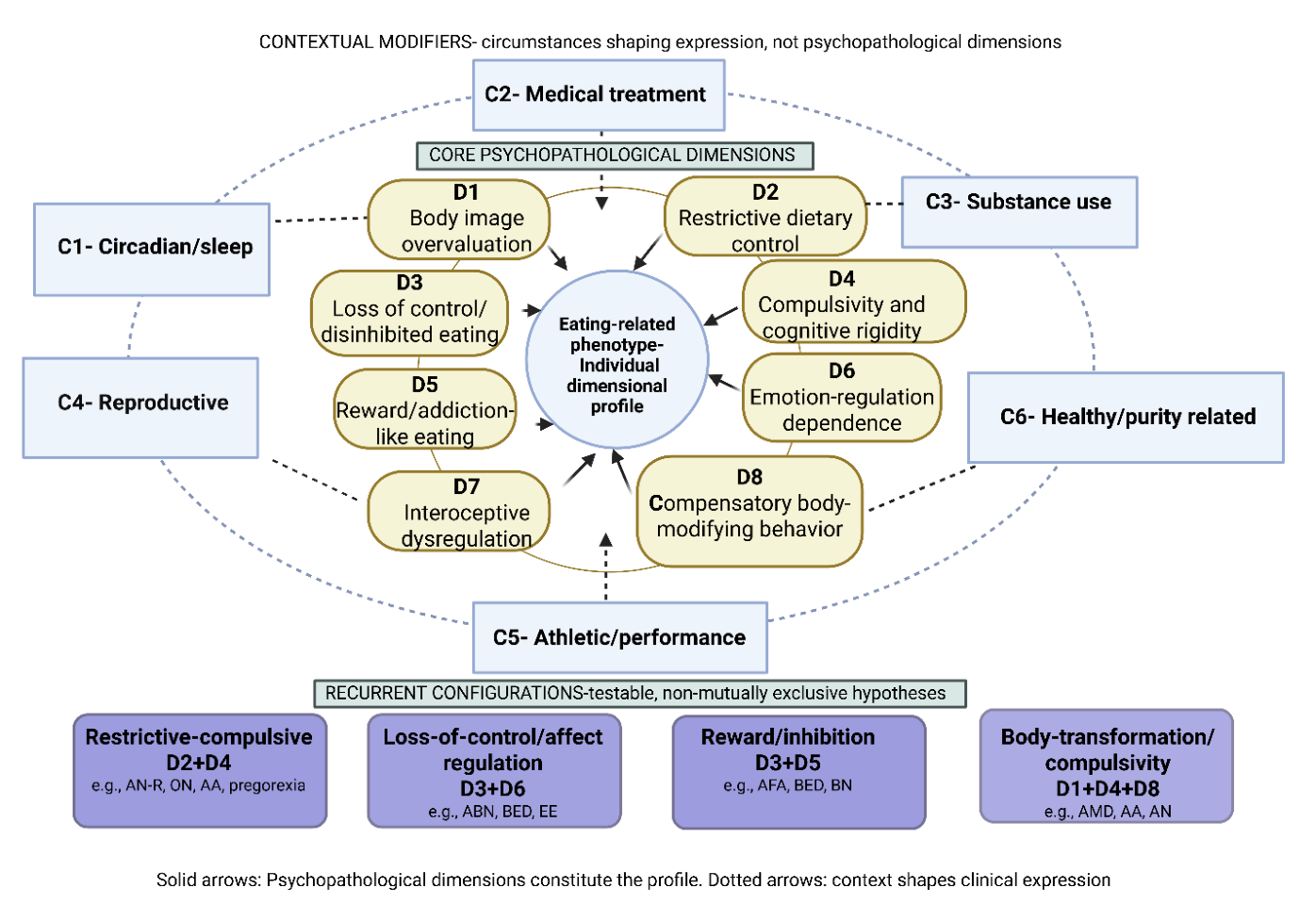
The DEPM characterizes each eating-related phenotype through an individual profile across eight core psychopathological dimensions (D1–D8). Contextual modifiers (C1–C6) describe circumstances that may shape the clinical expression of these dimensions but are not themselves considered psychopathological dimensions. Solid arrows indicate that the dimensions contribute to the individual phenotype profile, whereas dotted arrows indicate contextual influences on its expression. Abbreviations: AA, anorexia athletica; AN, anorexia nervosa; AN-R, anorexia nervosa, restricting type; BED, binge-eating disorder; BN, bulimia nervosa; EE, emotional eating; MD, muscle dysmorphia; ON, orthorexia nervosa. Created in BioRender. Vasiliu, O. (2026). https://biorender.com/xs0tlci.
The present study proposes a multidimensional extension of a previous integrative model of eating-related psychopathology (Fig.1). Its principal conceptual contribution is not the introduction of dimensionality into ED classification, an approach already supported by substantial theoretical and empirical work, but the application of a common dimensional framework to formally recognized EDs, proposed syndromes, behavioral constructs, and context-dependent eating-related presentations while explicitly preserving differences in their nosological status. A second distinctive element is the separation of core psychopathological dimensions from contextual modifiers, which permits shared psychopathological processes to be examined without equating the circumstances in which they are expressed with psychopathology itself.
The DEPM is consistent with the broader movement from exclusively categorical toward dimensional and hierarchical models of psychopathology. Existing ED research has shown that dimensional structures may explain heterogeneity and predict impairment and longitudinal outcomes more effectively than diagnostic categories alone. The hierarchical model proposed by Forbush et al., for example, identified multiple lower-order dimensions of eating psychopathology and demonstrated strong predictive utility [32,4446]. These findings support the premise underlying the present model, i.e., psychopathological components may cross diagnostic boundaries and recombine in different proportions across phenotypes.
The DEPM nevertheless differs from these approaches in its intended level of analysis. Hierarchical systems such as HiTOP seek to derive empirically supported structures of psychopathology extending from broad spectra to increasingly specific dimensions. The present framework is narrower and explicitly hypothesis-generating. It does not attempt to provide an alternative general psychiatric nosology or an empirically established latent structure. Instead, it asks whether a limited set of clinically interpretable dimensions may provide a common descriptive language for eating-related presentations that currently occupy markedly different positions in diagnostic systems and the scientific literature.
One implication of the DEPM is that restrictive eating should not automatically be equated with a single diagnostic mechanism. High D2 scores were hypothesized for AN, ARFID, orthorexia, AA, and pregorexia, yet the surrounding dimensional architecture differed substantially among these. Restriction combined with strong shape/weight overvaluation and rigidity may characterize AN, whereas severe restriction in ARFID may occur in the relative absence of shape/weight overvaluation. Orthorexic restriction may instead be particularly associated with rigid health- or purity-related rules.
This distinction is supported by emerging research on ARFID classification, which identified substantial heterogeneity within this diagnosis, particularly across sensory sensitivity, lack of interest in food or eating, and fear of aversive consequences, and current evidence remains mixed on how clearly ARFID can be distinguished from other restrictive ED presentations [49-53]. A dimensional framework may therefore be particularly useful when superficially similar restrictive behavior reflects different underlying processes.
Compulsivity and cognitive rigidity may likewise represent related phenomena rather than diagnosis-specific features. Increasing interest in dimensional models spanning obsessive-compulsive and eating psychopathology further supports examining rigidity and compulsivity independently of categorical ED diagnoses [54].
A second major region of overlap concerns D3, D5, and D6. BN, BED, food addiction, and emotional eating may all involve increased disinhibition or loss of control, but the proposed model distinguishes the experience of impaired control from the motivational processes accompanying it. Eating may be driven predominantly by affect regulation in one presentation and by craving/reward salience in another, while both mechanisms may coexist in individual patients, making this distinction particularly relevant to the debated construct of FA/UPFA. Existing evidence demonstrates substantial overlap between food-addiction measures and binge-spectrum EDs, and recent clinical data continue to associate food-addiction severity particularly strongly with bulimic and binge-eating symptoms [31,55-56]. At the same time, interoceptive and affective processes appear to contribute substantially to addiction-like eating across diagnostic categories. These findings argue against interpreting reward-related eating as a diagnostic category necessarily independent of other EDs and instead support examining it as a potentially transdiagnostic dimension. Thus, D5 is deliberately formulated as reward/addiction-like eating, rather than “food addiction” itself. The distinction between dimension and phenotype is important; for example, a person may demonstrate substantial reward-related or compulsive eating without satisfying any proposed threshold for FA/UPFA, and the same mechanism may contribute to more than one established ED.
Separating D1 from D8 constitutes another potentially useful feature of the DEPM. Body-image overvaluation and behavior intended to modify the body are related but not identical. A phenotype may involve marked dissatisfaction or overvaluation without extensive compensatory behaviors, whereas another may involve highly structured exercise, dietary manipulation, purging, or treatment manipulation directed toward changing weight, shape, or muscularity.
This separation may be particularly relevant to muscle dysmorphia and anorexia athletica. Previous comparisons between muscle dysmorphia and AN have demonstrated substantial overlap in disordered eating, disturbed body image, and compulsive exercise, despite opposing desired physical outcomes [30,57-59]. Within the DEPM, such similarity does not require the two presentations to share a diagnostic category. Instead, they may occupy overlapping positions on D1, D4, and D8 while differing in the specific content and direction of body-related goals.
Interoceptive dysfunction was retained as an independent dimension because difficulties in perceiving, interpreting, or appropriately using internal bodily signals may contribute to several forms of eating pathology without being unique to any one diagnosis. Contemporary transdiagnostic work continues to implicate interoceptive abnormalities across eating, affective, and addictive psychopathology, and recent ED research suggests that interoceptive and emotional difficulties may jointly contribute to addiction-like eating [60-62].
However, D7 is also among the dimensions that will require particularly careful operationalization. Interoception is itself multidimensional and encompasses detection, attention, interpretation, trust, and regulation of bodily signals. Consequently, empirical validation may ultimately show that a single interoceptive dimension is too broad, or that its components relate differently to restrictive and disinhibited eating.
The proposed contextual modifiers represent an attempt to avoid a common problem when discussing emerging eating-related phenomena: treating the circumstance in which pathological eating occurs as though it were itself a new psychiatric syndrome. Pregnancy, diabetes, athletic participation, alcohol consumption, sleep, and concern with health are not pathological contexts per se. This distinction is particularly important for SRED, which is currently conceptualized as an NREM parasomnia characterized by recurrent eating following arousal from sleep, often accompanied by partial or complete amnesia [12]. Although its observable eating behavior may resemble disinhibition, equating this directly with the consciously experienced loss of control characteristic of BED or BN would obscure its sleep-related pathophysiology. Its inclusion, therefore, illustrates both the usefulness and the limits of a common dimensional framework: superficially similar behaviors should not automatically be assumed to reflect identical underlying psychopathological mechanisms.
A categorical diagnosis could indicate which disorder is present, while the DEPM profile could describe which psychopathological processes are most prominent in that presentation. Two individuals with the same diagnosis may therefore have different dimensional profiles, whereas patients with different diagnoses may share clinically relevant targets. Such characterization may ultimately have implications for assessment and treatment formulation. Prominent D4 could suggest particular attention to rigidity and compulsive processes; D6 to emotion-regulation mechanisms; D5 to craving and reward-related mechanisms; D7 to interoceptive processes; and D8 to compulsive exercise, purging, or other body-modifying behaviors. These implications remain hypothetical, however, and the present study does not demonstrate that dimension-guided treatment improves outcomes.
The framework may also facilitate research into emerging eating-related constructs without prematurely granting them independent diagnostic status. Instead of asking first whether orthorexia, FA, pregorexia, or drunkorexia constitute independent disorders, investigators could initially determine whether these labels correspond to reproducible dimensional configurations and whether those configurations provide information beyond established ED diagnoses.
Several strengths characterize the proposed framework: (1) it explicitly distinguishes diagnostic status from phenotypic description, thereby avoiding the treatment of all included conditions as nosologically equivalent; (2) it separates psychopathological dimensions from contextual modifiers; (3) it accommodates overlap and within-phenotype heterogeneity more readily than the previous categorical model; (4) the dimensions are formulated in clinically interpretable terms and can, in principle, be operationalized using existing or specifically developed measures.
Substantial limitations of this study exist: (1) the DEPM is currently a conceptual, hypothesis-generating model: (2) the eight dimensions may not be statistically independent: restriction and rigidity, loss of control and reward processing, or body-image overvaluation and body-modifying behavior may prove highly correlated; conversely, some dimensions—particularly interoception, compulsivity, and reward processing—may ultimately require subdivision; (3) the included phenotypes vary markedly in nosological status and evidentiary maturity; established DSM/ICD diagnoses coexist in the matrix alongside proposed syndromes, descriptive labels, behavioral constructs, and presentations that are partly context-dependent: (4) dimensional profiles may differ within a phenotype according to age, sex or gender, illness stage, severity, comorbidity, cultural context, and treatment exposure; (5) the proposed contextual modifiers should not be assumed to be exhaustiv, as additional environmental, developmental, interpersonal, cultural, or biological modifiers may prove necessary as the model evolves.
The next stage of research in this domain should focus on content validation rather than immediate statistical taxonomy-building. Independent experts could first evaluate whether each proposed dimension is conceptually distinct, clinically meaningful, transdiagnostically applicable, and adequately defined. This stage may lead to merging, splitting, removing, or adding dimensions before quantitative phenotype mapping is attempted. Once the dimensions are stabilized, independent expert ratings could test the reproducibility of the proposed phenotype profiles. Subsequent patient-level studies should examine whether dimensions measured with validated instruments reproduce the hypothesized architecture, independent of diagnostic labels. Patient-level validation studies should also account for medical conditions and somatic and psychiatric comorbidity that may influence eating-related symptoms and phenotypic presentation [34,63-68]. More broadly, dimensional study designs may help identify clinically relevant heterogeneity and psychopathological features that are not fully represented by categorical diagnosis alone [32-33,43-46,56,62,69-71].
The DEPM proposes that eating-related psychopathology can be conceptualized as a combination of eight transdiagnostic dimensions whose clinical expression may be further shaped by contextual modifiers. This approach does not replace established diagnostic systems, nor does it imply equivalent diagnostic status for the heterogeneous phenotypes included in the model. Mainly, DEPM provides a common descriptive framework through which formally recognized disorders, emerging constructs, behavioral phenotypes, and context-dependent presentations can be compared without forcing them into mutually exclusive categories.
The authors declare no conflict of interest. This research received no external funding.
The authors used ChatGPT (GPT-5.6 Sol, OpenAI) during manuscript preparation to assist with language editing, refinement of wording and structure, consistency checks, and bibliographic/citation verification. All AI-assisted content was critically reviewed and verified by the authors, who take full responsibility for the final manuscript.
Conceptualization, O.V., and A.G.M.; methodology, O.V., B.M.P., A.G.M.; software, O.V., A.G.M., B.M.P..; validation, O.V., A.G.M., B.M.P.; formal analysis, O.V.; investigation, O.V.; resources, O.V.; data curation, O.V., A.G.M., B.M.P.; writing—original draft preparation, O.V.; writing—review and editing, O.V., A.G.M; visualization, O.V., B.M.P.; supervision, O.V.; project administration, O.V. All authors have read and agreed to the published version of the manuscript.
Not applicable.
Not applicable.