
Loneliness is a phenomenon with high incidence in adults, and the estimate of this subjective emotional state (i.e., the feeling of being alone) in an analysis conducted by the Centers for Disease Control and Prevention (CDC) in the US shows high values, of 32%, among adults in 2022 [1]. According to the same report, 24% of the US adults perceived a lack of social and emotional support, which is another important indicator of social disconnection, and the values were the highest for individuals aged between 18 and 34 years old, for both variables [1]. The third indicator that should be explored in this context is social isolation (an objective variable, this time, defined by lack of interpersonal interactions) in the adult population, which has a prevalence ranging from 15 to 40% [2-4]. According to another report published in 2020, when loneliness and social isolation were analyzed by age group, more than 33% of adults aged 45 years and older reported feeling lonely, while over 25% of adults aged 65 years and older were considered socially isolated, based on assessments using a validated instrument, such as the UCLA Loneliness Scale [2-4].
The exploration of loneliness and social isolation is not limited to psychosocial factors alone, as the impact of these phenomena on overall health, quality of life, and psychological well-being is substantial and cannot be overstated (Fig.1). For example, loneliness has been linked to higher rates of heart disease, lung illnesses, stroke, and metabolic disorders [5]. More specifically, this feeling of being alone and the lack of social contacts were independently associated with a diagnosis of cardiovascular disease and type 2 diabetes after 5-year follow-up, in a study that paired the results of a survey (N=24687 participants) with data collected from the National Danish Patient Registry [6]. Loneliness was significantly associated with a higher probability of metabolic syndrome, not moderated by age or central obesity, in a population-based survey in England (N=3211 patients aged 52 to 79 years old) [7].
Also, loneliness is an essential predictor of psychological difficulties and psychiatric symptoms, such as depressed mood and anxiety, and it is linked to overall morbidity and mortality in the adult population [5]. A systematic review that included 32 reports concluded that most studies focused on depressive disorders were able to detect an association between the new onset of depression during the patients’ evolution and loneliness at baseline, and similar correlations were reported for anxiety and self-harm [8]. The adjusted odds ratio for new-onset depression in adults who had significant levels of loneliness was 2.33 when compared to those who were not feeling lonely [8]. Moderate to severe loneliness predicted higher depression scores six months later, and higher depression and anxiety scores at baseline predicted social isolation at follow-up [9].
![Loneliness and its negative consequences [5-15] CVD=cardio-vascular diseases, SC=social cognition](https://revistamedicinamilitara.ro/wp-content/uploads/2026/07/a-fig1-3.png)
Loneliness was involved in the all-cause mortality increase in a meta-analysis (n=86 studies), and equivalent correlations were found for social isolation and living alone (HR=1.14, 1.35, and 1.21, respectively) [10]. The negative consequences of loneliness were related to hypervigilance for social threats that alter psychological functioning, reduced quality of sleep, and increased morbidity [9]. Loneliness also had a negative impact on cognition, with lower overall cognitive performance, faster cognitive decline, poorer executive functioning, more negativity and depressive cognition, heightened sensitivity to social threats, and biases in social cognition [11,12]. These cognitive differences modulate emotions, decision-making process, behavior, and social interactions, all of which play a role in linking loneliness to cognitive decline and increased risk of illness [12].
Social isolation and loneliness were also associated with a poor quality of life [13]. Loneliness was proven to be an independent determinant of poor health, quality of life, and psychological well-being in home-dwelling older adults (N=989) [14]. Individuals who were lonely also presented social inactivity and social isolation (38% of the cases), were widowed or lived alone, and had the lowest levels of health-related quality of life and psychological well-being, compared to other groups [14]. Loneliness significantly reduced the physical and mental health components of quality of life and patient satisfaction with medical services in a survey-based study (N=2756 adult participants) [15].
Loneliness among military personnel possesses distinct characteristics that set it apart from the general population, being influenced by deployment-related events and the highly structured military environment, both of which shape the way this phenomenon is experienced [16]. The exploration of loneliness in military personnel is necessary in active-duty members, veterans or former service members without combat experience, since factors like frequent relocations, separation from family members, emotional suppression due to professional circumstances, difficulties in reintegrating into civilian life may significantly reduce their quality of life and their general well-being through the mediation of social isolation, dispositional negativity, stress, and feelings of being alone [17,18]. Loneliness also represents an essential factor shaping the reintegration of veterans and other former military personnel into civilian society after retirement. A sizeable minority of veterans in the US are returning from deployment with psychiatric or physical injuries, but even in the absence of clear illnesses, many experience functional problems that interfere with full reinsertion into civilian life [19]. Also, many service members and veterans with reintegration difficulties have significant challenges in receiving adequate treatment, raising the topic of a necessary comprehensive approach to the psychosocial aspects, like loneliness and ignored, subclinical mental health problems, in these cases [19]. An estimated 60% of military personnel who experience psychopathological manifestations do not seek help, regardless of their active or veteran status, mainly due to worries related to stigma [20]. A systematic review and meta-analysis (n=20 papers) highlighted the two most commonly reported fears of stigma in active-duty military personnel, i.e., that of being treated differently by unit leadership and of being perceived by others as “weak” [20].
![Loneliness and challenges in the military active personnel and veterans [16-26]](https://revistamedicinamilitara.ro/wp-content/uploads/2026/07/a-fig2-3.png)
The military environment is highly structured and integrates healthcare, housing, welfare, and social support, with a very well-organized daily program and clearly defined professional rules, all of these creating an identity difficult to translate into civil society after retirement [21-23]. The transition into retirement involves a complex process of identity reconstruction, which includes changes in social roles, the loss of former professional responsibilities, the formation of new support systems and social networks, and the need to adapt to new rules, norms, and a different daily rhythm [22]. All of these shifts demand substantial psychological resources from the retiree and may lead to a heightened perception of loneliness, alienation, or mis-adjustment to the new stage of life. The axiological shift is another important factor that should be taken into consideration when discussing loneliness in retired military personnel. Values like camaraderie, courage, discipline, loyalty, integrity, honour, commitment, and selfless service may not be translatable into civilian life to the same extent and with the same intensity as they were inculcated in the active duty. When veterans return from active duty, they may feel disconnected from civilians, who often lack understanding of the realities of war and the suffering it involves; this gap in knowledge can lead to a perceived lack of respect for the veterans’ personal struggles and experiences [24].
Multiple models have been suggested to explain difficulties in the adjustment of veterans to civilian life. One of these is the “injury model”, which focuses on veterans who are unemployed or have various service-related health conditions, facing difficult challenges to civilian life [25]. Narrative models approach this sensitive topic from normative experiences of transition from active duty and war experiences to civilian life, in an attempt to create a continuous life story [22,26]. Regardless of the preferred model, the importance of investigating loneliness as a mediator of the adjustment problems in this population, together with the need to find prophylactic interventions for such psychosocial phenomena, justifies further explorations in this field (Fig.2).
The primary objective of this article was to explore the currently available data on the loneliness phenomenon in the military personnel (active duty and retirees), and also its possible causes and consequences. The secondary objective was to identify potential intervention directions that could be helpful in the management of loneliness in this population.
An initial review of literature was a conceptual analysis based on a search in three main electronic databases (PubMed, Google Scholar, and Web of Science/Clarivate) for primary and secondary reports published in any language, with no temporal limitations, using the keywords “military”, “recruits”, “officers”, “veterans” AND “loneliness”, “social isolation”, “quality of life”, “well-being”, “health status”. The second stage of the research involved developing intervention strategies, based on the collected data and a conceptual analysis, to support the prevention and treatment of loneliness among military personnel.
A total number of 42 reports (most of them studies based on surveys, but also reviews and meta-analyses) were reviewed and clustered in eight categories, according to their main focus and potential to stimulate further directions of interventions (Table 1).
Seven primary and secondary reports were included in this section, based on their common focus on the exploration of potential vulnerability and protective factors, and triggers for loneliness and social isolation in active military or veteran populations. The identified factors in these categories were related to social descriptors (e.g., interpersonal engagement, comradeship, social support), psychological (e.g., mental skills, self-esteem, attachment styles), psychiatric (e.g., anxiety, depression, stress-related reactions), engagement in armed conflicts (e.g., deployment, war experience), early traumas (e.g., childhood abuse), economic (e.g., income level), and demographic (e.g., marital status, age).
A study evaluated the factors related to loneliness and social isolation in ex-military personnel (who served in the British Armed Forces), starting from their discharge until the time of evaluation (N=11 participants) and found three main themes of interest, i.e., a “sense of loss”, difficulty in connecting during civilian life, and seeking out familiarity [27]. These results show that switching from a highly connected network of relationships during the active duty, i.e., close bonds through significant and prolonged interpersonal contact, to retirement leads to intensely unfavourable perceived feelings of loneliness in this second phase [27]. The strong sense of belonging associated with active duty constituted a significant factor that complicated the transition to retirement, as it impeded the development of connections with the civilian community [27]. A study in Dutch veterans (N=2643 retired military personnel with combat experience) reported that in 27% of the cases, at least a mild level of loneliness, and in 13% of them, severe levels could be detected [16]. Factors mitigating loneliness were social support, perceived comradeship during deployment, and a feeling of positive effect of deployment on current life [16]. A young age, living alone, unemployment or work disability, needs of care (either general or related to deployment causes), perceived frustration related to deployment, and longing back to the time of deployment were correlated with a higher level of loneliness [16]. This study highlighted the need for more attention to the deployment-related experiences and their consequences, including loneliness, that could be identified even at long distances after the event [16].
| Type of report | Number of participants | Outcomes | Results | Conclusions |
|---|---|---|---|---|
| Factors contributing to loneliness in military personnel | ||||
| Survey-based investigation [16] | 2643 veterans from the Dutch Armed Forces | Prevalence of loneliness and its relationships with deployment-associated factors | 27% – at least a mild level of loneliness, 13% – severe levels could be detected. Various protective and risk factors have been identified for loneliness | More attention is needed to the deployment-related experiences and their consequences, including loneliness, that could be identified even at long distances after the event |
| Qualitative, phenomenological study (semi-structured interviews) [27] | 11 British Armed Forces ex-members (Army, Royal Navy, Royal Air Force) from discharge to the present day | Factors related to loneliness and social isolation, identified from discharge to the present day | 4 themes have been identified- a “sense of loss”, difficulty in connecting during civilian life, and seeking out familiarity | A strong sense of belonging during active duty interferes with adjustment to the retirement period |
| Cross-sectional observational study [28] | 662 soldiers from the US Army | Distal to proximal risk factors in active duty soldiers | A set of factors associated with loneliness was found, including demographic, relational, personal traumas, and professional-related elements | Unique predictors of loneliness in the military environment were found, besides those shared by civilians |
| Cross-sectional observational study [29] | 2025 US veterans aged ≥60 years | Loneliness assessment using UCLA-LS | 44% – feelings of loneliness at least some of the time, 10.4% – often feeling lonely. Multiple factors were associated with loneliness, including PTSD, depressive symptoms, and lifetime traumas | Loneliness is associated with the existence of multiple psychopathological phenomena |
| Cross-sectional observational study [30] | 78000 respondents, veterans and civilians without prior military service | Volunteering behaviour (presence/absence, number of hours dedicated to volunteering activities, and type of such activity/organization) | ↑ volunteering rates for veterans overall, but especially for those who served during wartime, had higher education levels, and were married; ↑ number of hours for volunteering in activities vs. the civilian population without military experience | Veterans had a higher involvement in volunteer activities vs. non-veterans |
| Cross-sectional observational study [31] | 427 male soldiers from the US Army | Psychosocial characteristics and level of intrinsic motivation | Stronger mental skills correlated with lower levels of loneliness | Screening for types of mental skills may be helpful in detecting the risk of loneliness in soldiers |
| Exploratory qualitative study [32] | 1000 recruits in the British Army Infantry | Causes for attrition | The cumulative effect of stressors and disruption of the previous supportive network explains early discontinuation | Screening for stressful factors, including loneliness, is needed in the population of Army recruits |
| Impact of loneliness on the health status of military personnel | ||||
| Longitudinal observational study [33] | 100 veterans, aged ≥62 years | Mood, loneliness, and activity levels before and during the COVID-19 pandemic | “Blued mood” and loneliness were at significantly higher levels during the COVID-19 pandemic vs. before the pandemic | Vulnerable populations were at higher risk for low mood due to movement restriction rules during the pandemic |
| Cross-sectional observational study [34] | 1562 UK Armed Forces veterans | Relationship between structural and functional support during the COVID-19 pandemic | Single individuals, living alone and experiencing loneliness, had worse mental health and well-being | High association between feelings of loneliness and low levels of perceived support |
| Longitudinal observational study [35] | 112 Italian Army cadets | Relationship between personality features, stressful events, and the onset of illnesses | A high rate of infections was detected in relation to a higher number of stressful events and a set of psychological characteristics | There is a complicated relationship between immunity, stress and psychological factors that needs further exploration |
| Cross-sectional study [36] | 4069 US veterans, mean age 62 years | Relationship between loneliness and physical and mental health, overall functionality and suicidal ideation | Significant correlations between loneliness and the other mentioned variables were detected | More than 50% of the veterans in the US report loneliness, which predisposes them to health problems and suicidal ideation |
| Particularities of loneliness in military spouses | ||||
| Cross-sectional observational survey study [37] | ~2300 Army spouses during the Iraq war period | Mental health, physical health, overall health status, functioning and coping | Mental well-being, household strains, and aspects related to their jobs were more affected in spouses who were exposed to extensions of deployments | Deployment extensions had a clear negative impact on the health and well-being of Army spouses |
| Quasi-experimental study [38] | 231 military wives | Improvements in mental health, including loneliness, through therapeutic interventions | No difference between the two interventions was found, but both were efficient | Educational and theory-based interventions may mitigate loneliness in military wives |
| Cross-sectional observational survey study [39] | 400 civilian wives of enlisted soldiers during the Somalia peacekeeping mission | The perceived impact of stressors experienced during brief deployments | Experiencing a pregnancy during deployment, facing loneliness, confronting the death of a close friend or relative, and/or having problems communicating with one’s spouse were identified as main stressors | The perceived impact of stressors experienced during brief deployments was found to be less detrimental to marital satisfaction than commonly presumed |
| Cross-sectional observational survey [40] | 500 civilian wives of enlisted US Army soldiers during the Somalia Operation Restore Hope deployment | The self-reported impact of rumours on the spouses’ levels of stress | The perceived stressfulness of rumors was mitigated by effective unit leadership, strong family support networks, and greater emotional adaptability to deployment | Significant correlations were found between the experience of rumors as problematic and wives’ fears regarding their soldier’s safety or uncertainty about his current status |
| Qualitative observational study [41] | 18 spouses of deployed military (Guard/Reserve service members) | Analysis of major stressors during the deployment of their partners | Worrying, waiting, going through it alone, pulling double duty, and loneliness were identified as stressors during this period | There is a very complex role for loneliness as part of a larger set of variables that model the resilience vs. vulnerability dynamics in this population |
| Qualitative study [42] | 15 Israeli bereaved girlfriends of fallen soldiers | The impact of the event on psychological status | Loneliness was experienced both among peers and within close family relationships | Loneliness is an important variable during the grieving period in this population |
| Literature review [43] | 9 papers focused on military widow/ers | The themes most frequently identified in the literature regarding social isolation and loneliness | The four themes identified were: “experiences of loneliness and social isolation”, “the uniqueness of the military”, “access to social support”, and “the importance of peer support” | Loneliness has a central role in the life of military widow/ers |
| Quantitative observational longitudinal study [44] | 4003 participants (59% nonveterans, 31% served in the military but without exposure to death, 10% veterans and exposed to death) | Exploration of adjustment to widowhood and loneliness among older men | A significantly lower level of feeling lonely among veterans exposed to death vs. civilians who become widowed, but veterans without such experience had a similar level of loneliness to the civilian widowers | The training of new skills and strategies to cope with challenging life events that imply death, in the case of widowed military may have a protective role in the case of widowhood |
| Cross-sectional observational study [45] | 122 participants, students | Psychological distress and physiological stress | Psychological distress was correlated to personal history of trauma, lower levels of social support and high media exposure. No prior bereavement individuals had ↑ hair cortisol levels vs. those with 1-2 prior bereavements | ↑emotional and physiological stress appear in response to repeated peer deaths. Although no military personnel was involved in this study, its conclusions may be relevant due to the exposure of participants to peer loss. |
| Long-term observational study [46] | ~35000 Union Army veterans | The effect of wartime stress on old-age mortality, and the impact of unit cohesion as a buffer | ↑ Wartime mortality rates are associated with ↑mortality in old age, while ↑unit cohesion decreased the negative effect of wartime stress on later-life mortality | Wartime stress harms long-term health, but strong social bonds within military units can buffer these effects, improving survival decades after service. |
| Loneliness and post-traumatic stress reactions | ||||
| Longitudinal observational study [47] | 225 Israeli ex-POWs | Marital adjustment, PTSD symptoms, loneliness | Lower levels of marital adjustment and higher levels of PTSD in POWs than in controls | Loneliness was a mediator of the relationship between PTSD, 18-year post-war experience, and marital adjustment, at 30 years post-war |
| Longitudinal observational study [48] | 83 Israeli ex-POWs | Relationship between loneliness and perceived social support and TL length 18 years after repatriation | The psychological variables predicted, each, shorter TL in later life, and when combined, they explained 26% of the overall variance | There is a long-term impact of the extreme stress on a defined biological parameter, namely the TL length |
| Longitudinal quasi-experimental design study [49] | 79 Lebanon War soldiers with CSRs and frontline treatment, 156 soldiers with CSRs but without frontline treatment, and 194 soldiers without CSRs | PTSD and general psychiatric symptoms, loneliness, and social functioning | 20 years after the war, traumatized soldiers who received frontline treatment had lower rates of posttraumatic and other psychiatric symptoms, experienced less loneliness, and better social functioning than similarly traumatized soldiers who did not receive such treatment | A cumulative effect of the application of frontline treatment principles was documented |
| Longitudinal observational cohort study [50] | 382 Israeli soldiers | Relationship between CSRs and other psychosocial factors | CSRs were worsened by perceived lack of support from officers, leading to ↑feelings of loneliness and stress reactions in soldiers | Both battle intensity and perceived support from officers directly modelled the onset of CSRs and indirectly influenced feelings of loneliness |
| Loneliness as a mediator of depression and suicide in military personnel | ||||
| Cross-sectional observational study [51] | 301 US veterans with symptoms of depression | Depression severity, suicidal ideation, health-related behaviors, help-seeking intention, and patient activation | Loneliness was associated with ↑ levels of depression and suicidal ideation, ↓ patient activation and help-seeking intentions, while social support and social norms about depression treatment were associated with ↑ patient activation and help-seeking intentions | Loneliness is a strong and independent correlate of depression severity and suicidal ideation among military veterans in primary care |
| Cross-sectional observational study [52] | 443 US Navy recruits | Depression severity, loneliness, sense of belonging | 49% of the variance in depressive symptoms was explained by loneliness and sense of belonging | Interventions targeting the sense of belonging applied in high-risk depression recruits to decrease their feeling of loneliness and depression could be helpful for them not to discontinue their basic training |
| Cross-sectional observational study [53] | 32, 38, 33 military suicide attempters, non-suicidal psychologically treated peers and controls | Problem-solving capacity, emotion regulation, perceived burdensomeness, loneliness, suicidal ideation | Loneliness and burdensomeness together explained 65% of the variance in suicidal ideation in the stage prior to the suicide attempt. | Loneliness is a significant contributor to the suicide risk |
| Retrospective observational study (psychological autopsy) [54] | 100 US Air Force married vs. unmarried suicide decedents | Impact of life stressors on suicide intent | Married decedents were twice as likely to have had documented interpersonal conflict 24 hours prior to suicide and communicated suicide intent to peers or professionals | Loneliness + frustrated belongingness + rejection were the interpersonal factors most frequently detected in this population |
| Cross-sectional observational study [55] | 937, 3386, and 417 US military service members and veterans | Insomnia symptoms, thwarted belongingness, and suicidal ideation | Thwarted belongingness significantly mediated the relationship between insomnia and suicidal ideation | Chronic insomnia is a significant predictor of suicidal ideation within this population, and it can also be an essential contributor to feelings of hopelessness |
| Cross-sectional observational study [56] | 443 US Navy recruits with depression | Depressive symptoms during basic training (self-report), loneliness, life-change events, stress levels, sense of belonging, coping styles | Loneliness was a frequently reported concomitant factor, together with higher levels of stress, life change events, lower sense of belonging, more emotion-oriented coping, and less task-oriented coping in recruits with depressive symptoms vs. controls | Interpersonal dysfunction, including loneliness, is a factor reported in the depression onset in recruits |
| Particularities of loneliness in minorities within the military personnel | ||||
| Cross-sectional observational survey study [57] | 640 active duty US soldiers | Behavioral health outcomes, behavioral health care utilization, and psychological factors, including loneliness | ↑% of LGB soldiers than heterosexual soldiers had a higher load of anxiety, PTSD, and suicidality than heterosexual soldiers, but no differences between groups in the use of health care services were detected. No difference between the loneliness in the two groups was found, while the perceived prejudice was higher for the LGB soldiers, and perceived support was lower | Organizational barriers appear to still exist for sexual minority soldiers |
| Qualitative study [58] | 12 post-9/11 racial minority ex-service members | Thematic areas of cultural identity among the Black minority related to the service post-9/11 event | Four main themes of interest were identified by the respondents, reflecting emotional restraint, limited self-disclosure, discrimination, and deindividuation | A phenomenological sensitivity when approaching the world of minorities from the perspective of mental health specialists is recommended |
| Mixed-methods observational study [59] | 15 LGBT+ in semi-structured interviews veterans and 101 LGBT+ veterans in online survey | Emotional and psychological impact of serving under the UK “gay ban”; experiences of discrimination, harassment and identity concealment; barriers to help-seeking; measures of social isolation and loneliness | LGBT+ veterans reported feelings of losing their identity and inability to foster relationships after being discharged due to this law, and also mentioned emotional distress, mental illnesses, social isolation, and limited access to appropriate support, due to harassment and discrimination | Long-term unfavorable psychological consequences may still be detected in stigmatised minorities |
| Motherhood during military service, loneliness and mental health | ||||
| Cross-sectional study [60] | 750 female Army veterans | The impact of having a first child while being on active duty on the mothers’ health status, well-being, and service separation | The most frequent health-related outcomes were low social support, loneliness, and common mental health problems | Female Army veterans who had a first child born during active military duty had poorer outcomes, including leaving the service non-voluntarily |
| Therapeutic and prophylactic interventions targeting loneliness and social isolation in military personnel | ||||
| Longitudinal observational study [61] | 212 military caregivers | Perceived social isolation, depressive symptoms | Caregivers in the online peer group experienced less perceived social isolation after three months, but not at six months | Joining and actively engaging with an online peer support group helped reduce perceived social isolation among military caregivers, but it did not lead to improvements in depressive symptoms |
| Cluster-randomized controlled trial [62] | 99 active-duty US Army platoon leaders + 118 service members supervised in the intervention group + 158 service members in the control group | Levels of loneliness | This supportive-leadership training proved itself beneficial in reducing the loneliness reports for service members (N=118) vs. the control group (N=158), and higher baseline loneliness severity was associated with more positive effects of the intervention | The intervention was especially impactful for those already feeling lonelier at baseline, demonstrating how workplace leadership training can contribute meaningfully to improving social connection and well-being |
| RCT [63] | 48 Army platoons participating in social resilience training vs. cultural awareness training | Social cognition, loneliness, unit-level attitudes, mental health outcomes, effectiveness of cultural awareness training | Social resilience training produced small but significant improvements in social cognition and reduced loneliness. Cultural awareness training specifically increased cultural knowledge and reduced outgroup prejudice | An increase in empathy and perspective taking was observed as a result of the training, but benefits for the training outside the training foci were not observed |
| Prospective RCT [64] | 801 Navy recruits receiving BOOTSTRAP intervention vs. non-intervention at-risk recruits vs. comparison group of recruits | Sense of belonging, loneliness, problem-solving skills, attachment security, and training performance | An increase in the sense of belonging, a lowering of loneliness feelings, a more frequent use of problem-solving coping skills, and a decrease in insecure attachment were observed in “at-risk” recruits for depression by the end of the 9-week training period | The intervention significantly enhanced recruits’ sense of belonging, reduced loneliness, improved coping skills, and led to higher completion rates of basic training |
| Systematic literature review [65] | 28 studies | Social connection, social isolation, loneliness | A direct focus upon social reintegration and engagement, psychosocial functioning, building trust, peer support, group cohesiveness and empowerment through a sense of purpose and learning new skills could decrease loneliness and social isolation in this population | Interventions emphasizing social reintegration, peer engagement, group cohesion, empowerment through purpose, and the rebuilding of trust appear most effective at reducing loneliness and social isolation among military veterans with PTSD |
| Systematic narrative review [66] | 17 papers | Prevalence of loneliness in the veteran population, contribution of military service experiences to loneliness/social isolation, and the impact of loneliness on mental health | The uniqueness of the loneliness and social isolation post-deployment in the military involves the need for tailored psychosocial interventions | Military veterans experience unique and persistent challenges with loneliness and social isolation, indicating that tailored interventions beyond general population campaigns are necessary |
| Mixed-method, pilot feasibility study [67] | 200 veterans (phase 1), 19 veterans (exposed to the CONNECTED intervention) | Social isolation, social support, anxiety and depression symptoms | Significant reductions of social isolation, an increase of social support, and a decrease of anxiety and depression were recorded due to the intervention | This is a feasible, acceptable, and promising intervention for reducing social isolation and improving social support, anxiety, and depression among veterans |
BOOTSTRAP= Building Our Opportunities to Strengthen Trust, Respect, and Purpose; CONNECTED= Creating Networks of Necessity by Engaging in Community-Based Telehealth to Enhance Connectedness and Decrease Isolation; CSR= combat stress reaction; POW= prisoners of war; PTSD= post-traumatic stress disorder; RCT= randomised controlled trial; TL=telomere; UCLA-LS= University of California, Los Angeles- Loneliness Scale
An exploration of the distal (such as demographic and socio-economic factors) and proximal factors (for example, platoon relationships and their quality) associated with loneliness in active duty soldiers in the US Army revealed a set of factors associated with loneliness, i.e., age, frequency of contact with friend and family by phone, childhood trauma, self-reported overall emotional health, intra-platoon harassment, perceived stress, perceived platoon cohesion and support, organizational citizenship behavior, relationship satisfaction with friends, and relationship satisfaction with platoon members [28]. The association between loneliness, perceived stress, and relationship satisfaction with platoon members demonstrated a moderate effect size [28].
Combat experience was also associated with lower levels of loneliness among older veterans, in an extensive study (N=2025 US veterans aged ≥60 years) [29]. Loneliness was found to be higher among individuals who were older, had disabilities affecting daily activities, experienced lifetime traumas, reported greater perceived stress, or were currently experiencing depression or posttraumatic stress disorder (PTSD) [29]. In contrast, loneliness was lower among those who were married, had higher incomes, demonstrated better cognitive functioning, received social support, had secure attachment styles, expressed greater dispositional gratitude, and attended religious services more frequently [29]. Also, volunteering is more frequently reported in individuals who had military service, especially married veterans and those who had served during wartime, which signals a higher level of social interest in this group [30]. A high interest in social activities that are normative, such as voting, was also linked to military service, especially in the case of ethnic minorities [30]. The cultivation of civic responsibility, social resources, and social skills is commonly observed in military personnel and may be extremely helpful in reducing the risk of loneliness in veterans [30].
An observational, cross-sectional study examined the psychosocial characteristics and levels of intrinsic motivation among U.S. Army soldiers with varying mental skills profiles [31]. Findings indicated that soldiers with stronger mental skills profiles exhibited higher intrinsic motivation and better psychological health compared to those with weaker profiles [31]. Strong mental skills were correlated with higher self-esteem scores, lower hopelessness, loneliness, depression, anxiety, stress, and anger scores [31]. Therefore, it could be inferred that strong mental skills may be considered protective factors against the feelings of being lonely and the associated psychological and psychopathological negative consequences.
A study that investigated the causes for attrition in British Army Infantry (N=1000 recruits) found the cumulative effect of stressors, combined with the severing of the recruit support established network, as the core of the failure phenomenon among this population [32]. Homesickness (“I miss my friends and family”), the loss of freedom (“I feel trapped…I have lost my freedom”), inability to cope psychologically with physical demands (“I find the training hard…discipline hard…I don’t fit in”), and relationship deficits, all these lead to early discontinuation from the training program [32]. A very competitive environment was considered by some recruits an obstacle to making new friends and, therefore, a trigger for loneliness [32].
The four reports in this section are dedicated to the negative effects of loneliness and social isolation on the general health status of military personnel, including some observations that were made during the COVID-19 pandemic. The interplay between loneliness, mental health, and susceptibility to physical illnesses represents an important area of inquiry that warrants further investigation, including in research involving military personnel.
A study examined the changes in mood and activity during the COVID-19 pandemic in veterans, aged ≥62 years, who were asked to complete online health forms, and the results collected from 100 participants reflected “blued mood” and loneliness at significantly higher levels than before the pandemic [33]. A study explored the relationship between structural and functional support and mental health and wellbeing in 1562 UK Armed Forces veterans during the COVID-19 pandemic and reported a high association between feelings of loneliness (27%) and low levels of perceived support (28%) when functional social support was assessed [34]. Individuals who were single, lived alone and experienced loneliness had worse mental health and psychological well-being [34]. On the contrary, those who lived with other adults and had high levels of perceived social support also had better mental health and well-being [34].
A study involving 112 Italian Army cadets, who completed a series of personality assessments and reported stress-related events from the previous year, found that individuals experiencing a higher number of stressful events also reported significantly more total health episodes, particularly infections [35]. These associations were moderated by factors such as attitudes toward parental figures, psychological hardiness, feelings of loneliness, and alienation [35]. Additionally, younger age was a significant predictor of increased total episodes and infections, both as an independent factor and in interaction with attitudes toward the mother, hardiness, and alienation [35].
A cross-sectional study explored the feelings of loneliness in US veterans (N=4069, mean age 62 years) and their relation with mental and physical health [36]. Almost 57% of the veterans reported feeling lonely at some point or often, and these feelings were independently associated with a wide range of mental health problems (OR=1.21-33.3), somatic diseases (OR=1.21-6.80) and functional difficulties [36]. Current suicidal ideation was also associated with feeling lonely often or sometimes, with a 12- and, respectively, 3-time higher risk, even after adjustment for multiple variables [36].
Ten sources reviewed here investigated the characteristics of loneliness as an existential crisis in spouses of military personnel, a critical, although less researched, topic. The consequences of partners ‘ deployment, or of losing them in battle, and the impact of being a widow/er on mental health, all of these aspects are explored, based on evidence derived from studies involving spouses or bereaved unmarried partners of military personnel.
The military spouses commonly report feelings of loneliness and isolation, due to their partners’ deployments, and variables such as mental well-being, household strains, and aspects related to their jobs were more affected in spouses who were exposed to extensions of deployments [37]. In a quasi-experimental study, an online standard educational intervention was compared to an interactive, theory-based intervention for exploring their comparative effects on the health of military spouses (N=231 participants) [38]. Although no major difference was observed between the effects of the two interventions, both improved significantly in all the mental health outcomes, i.e., loneliness, stress, anxiety, depression, self-esteem, physical activity, and diet [38]. The scores of the UCLA Loneliness Scale in this study supported significant differences between the intensity of this feeling in the explored groups (p=0.05 for the control group and 0.03 for the active group) [38]. The importance of determining the presence of loneliness, high levels of stress and depression in this population derives from the fact that they were unlikely to take the initiative to enrol in therapy, leading to the possibility of gradual worsening of their status [38].
In a study involving 400 civilian wives of enlisted soldiers, the perceived impact of stressors experienced during brief deployments was found to be less detrimental to marital satisfaction than commonly presumed, even among marriages characterized by low stability [39]. Among Army wives of soldiers deployed overseas, the perceived stressfulness of rumors was mitigated by effective unit leadership, strong family support networks, and greater emotional adaptability to deployment [40]. In contrast, reliance on surface mail was associated with increased stress from rumors [40]. Furthermore, significant correlations were found between the experience of rumors as problematic and wives’ fears regarding their spouse’s safety or uncertainty about his current status [40].
An interview with the spouses of deployed military personnel (N=18) acknowledged five major stressors during deployment of their partners- worrying, waiting, going it alone, pulling double duty, and loneliness [41]. These results suggest a very complex role for loneliness as part of a larger set of variables that model the resilience vs. vulnerability dynamics in this specific, vulnerable population. Also, the practical implication would be the need to explore loneliness, together with the other four major stressors in spouses of deployed personnel, and to find the most adequate strategies to reduce their influence on daily life.
A qualitative study investigated the loss experience effect of 15 Israeli bereaved girlfriends of fallen soldiers, and the results supported a multidimensional experience, which includes personal, interpersonal and social components, each ranging from a sense of acceptance to a sense of exclusion [42]. Informants reported experiencing loneliness both among peers and within close family relationships [42]. Feelings of loneliness and a lack of social support were frequently described (e.g., “I was very lonely… I felt lonesome´), with this phenomenon situated on a continuum ranging from emotional or intimate loneliness to social loneliness [42]. Additionally, avoidance of discussing such sensitive topics was noted within the informants’ network groups [42]. Therefore, the results of this study show the importance of personal resilience factors, since the support group may fail to provide the necessary safeguards in such difficult situations.
A review (n=9 papers) focused on the exploration of social isolation and loneliness in military widow/ers, identified four themes related to loneliness in military personnel from the US and Israel, i.e., “experiences of loneliness and social isolation”, “the uniqueness of the military”, “access to social support”, and “the importance of peer support” [43]. These themes reflect the central role of loneliness in military widow/ers and the potential directions of therapeutic interventions aiming at mitigating this outcome, i.e., enhancing peer support and creating specialised services within the health system for this vulnerable population.
The exploration of adjustment to widowhood and loneliness among older men, with a focus on the military service, showed a significantly lower level of feeling lonely among veterans exposed to death vs. civilians who become widowed, but veterans without such experience had a similar level of loneliness to the civilian widowers [44]. The basics of this observation may reside in the training of new skills and strategies to cope with challenging life events that imply death, in the case of widowed war veterans [44,45]. Another possible explanation would be the construction of stronger networks of relationships during military service that could represent a buffer for further adverse life events [44,46]. Also, the training of social skills and the opportunity to understand the importance of meaningful relationships throughout life may contribute to better resilience capacity, a phenomenon that could be inferred in the widowhood military population [44].
Four reports, all studies with significant participation, signal the existence of relationships between loneliness and combat stress reactions. The significance of loneliness in the development of PTSD is considerable, as it should be incorporated into screening and therapeutic interventions, given its role as a moderating factor in the emergence of clinically significant stress reactions.
A prospective study investigated the contribution of loneliness and PTSD to marital adjustment in Israeli veterans (N=225 participants) and found that ex-POWs (prisoners of war) had lower levels of marital adjustment and higher levels of PTSD than controls [47]. Loneliness was a mediator of the relationship between PTSD, 18-year post-war experience, and marital adjustment, at 30 years postwar [47]. In former ex-POWs, loneliness was found to contribute to marital adjustment independently of the effects of PTSD, even when assessed 30 years after the war [47].
A study involving Israeli former prisoners of war (ex-POWs; N=83) examined the associations between loneliness and perceived social support, assessed 18 years after repatriation, and telomere (TL) length, used as a biomarker of cellular aging [48]. The psychological variables predicted, each, shorter TL in later life, and when combined, they explained 26% of the overall variance, thus proving the long-term impact of the extreme stress on this biological parameter [48].
A longitudinal quasi-experimental design study recruited participants with combat stress reaction (N1=79), comparable combat stress reaction casualties who did not receive frontline treatment (N2=156), and matched soldiers who did not experience combat stress reaction (N3=194) [49]. The study reported that 20 years after the war, traumatized soldiers who received frontline treatment had lower rates of posttraumatic and psychiatric symptoms, experienced less loneliness, and better social functioning than similarly traumatized soldiers who did not receive such treatment [49]. A cumulative effect of the application of frontline treatment principles was documented, which supports its importance and suggests the need for further exploration of its effects on medium and long term [49].
Combat stress reactions in a sample of 382 Israeli soldiers could be worsened by the perceived lack of support from officers, which triggered greater feelings of loneliness and a greater likelihood of stress reactions in soldiers [50]. Higher levels of loneliness were associated with reduced social support from comrades, while greater battle intensity was linked to increased loneliness and a higher likelihood of combat stress reactions [50]. In a path analysis, both battle intensity and perceived support from officers directly contributed to combat stress reactions and indirectly influenced feelings of loneliness [50].
The six reviewed studies in this section approach the sensitive topic of loneliness in relation to depression and suicide. The results of this line of research highlight the role of loneliness as a predisposing or even causal factor for depression and suicidal ideation, therefore inviting the early detection of this variable in military personnel exposed to stressful situations.
The influence of social relationships on mental health has been explored intensively, and a study that recruited veterans (N=301 participants) from the US, presenting symptoms of depression, confirmed this correlation [51]. Loneliness was associated with higher levels of depression and suicidal ideation, lower patient activation and help-seeking intentions, while social support and social norms about depression treatment were associated with higher patient activation and help-seeking intentions [51].
A relational model for depression in the US Navy was constructed based on a theory-testing analysis (N=443 recruits) and 49% of the variance in depressive symptoms was explained by loneliness and sense of belonging [52]. Therefore, interventions targeting the sense of belonging applied in high-risk depression recruits to decrease their feeling of loneliness and depression could be a helpful strategy in order for them not to discontinue their basic training [52].
Military suicide attempters were compared to non-suicidal psychologically treated peers and controls (N=32, 38, and 33, respectively), and the study showed that the first group presented more difficulties in problem-solving, negative emotion regulation, and burdensomeness compared to their peers [53]. Loneliness and burdensomeness together explained 65% of the variance in suicidal ideation in the stage prior to the suicide attempt [53].
In a sample of US Air Force married vs. unmarried suicide decedents (N=100), the analysis of the impact of life stressor precipitants and communications of distress and suicide intent showed that married decedents were twice as likely to have had documented interpersonal conflict 24 hours prior to suicide and communicated suicide intent to peers or professionals [54]. Loneliness, together with frustrated belongingness and rejection, were the interpersonal factors most frequently detected in this population [54].
Across three groups of U.S. military service members and veterans (N = 937, 3386, and 417), thwarted belongingness significantly mediated the relationship between insomnia and suicidal ideation [55]. These findings indicate that chronic insomnia is a significant predictor of suicidal ideation within this population, and it can also be an essential contributor to feelings of hopelessness [55]. The same study showed that loneliness, social isolation, and social connectedness among service members and veterans with sleep problems may need to be assessed in order to determine the risk of insomnia and its complications [55].
Depressed recruits in the US Navy were more likely not to finish their training, had more predisposing factors regarding family history of mental illness, alcohol abuse, and personal history of psychiatric problems, in a study with 443 participants [56]. Loneliness was a frequently reported concomitant factor, together with higher levels of stress, life change events, lower sense of belonging, more emotion-oriented coping, and less task-oriented coping in recruits with depressive symptoms vs. controls [56]. Therefore, interpersonal dysfunction, including loneliness, is a factor reported in the depression onset in recruits [56].
The importance of exploring the mental health status in a culturally sensitive manner, including within the military setting, is supported by the reviewed studies in this section (n=3). It can be easily seen that research on this topic remains limited, despite its high relevance given the negative consequences it may entail within the highly regulated organizational context of the military environment.
The assessment of well-being in sexual minority soldiers in a Military Academic institution (N=640 active duty US soldiers) showed that a higher proportion of LGB soldiers than heterosexual soldiers had positive results on anxiety, PTSD, and suicidality, but no differences between groups in the use of health care services were detected [57]. No difference between the loneliness in the two groups was found, while the perceived prejudice was higher for the LGB soldiers, and perceived support was lower [57]. Therefore, organizational barriers appear to still exist for sexual minority soldiers [57].
The provision of culturally sensitive and appropriate mental health care for Black veterans has been the focus of a study that involved an assessment of 12 post-9/11 racial minority ex-service members [58]. These participants identified four key thematic domains: (1) “keep pushing/suck it up” – reflecting emotional restraint and limited self-disclosure regarding deployment experiences and systemic discrimination; (2) “family oriented/communalism” – denoting the expression of communal or familial identity; (3) “seeing green/colorblindness” – referring to a deindividuation process, and (4) “no protective cloak/microcosm of American society” – indicating experiences of significant discrimination [58]. Loneliness, but also confusion and anxiety, were reported within this group of Black former service members, and a lack of “cultural fluency” was considered important as a generator for these negative emotions [58]. A phenomenological sensitivity when approaching the world of minorities (e.g., women, ethnic minorities, LGBTIQA+) from the perspective of mental health specialists was recommended by the authors of the respective study [58].
The effects of the exemptive military laws in the UK that banned LGBT individuals from the respective professional environment were explored in an empirical study (N=101 participants, veterans), focused on emotional impact, adapting to change, and aftermath (barriers to help-seeking) [59]. LGBT+ veterans reported feelings of losing their identity and inability to foster relationships after being discharged due to this law, and also mentioned emotional distress, mental illnesses, social isolation, and limited access to appropriate support, due to harassment and discrimination [59]. Although this law was cancelled, the long-term unfavorable psychological consequences may still be detected; therefore, further exploration of such subclinical psychological phenomena is needed, and it can be extrapolated to different minorities that have been historically neglected or mistreated, including in the military environment. An increase in the awareness of such phenomena is a step forward in the creation of possible policies destined to prevent and mitigate the negative consequences of discrimination and stigmatization, loneliness and social isolation included.
Although a provocative topic, only a single study employing a scientific approach was identified in the literature that examined the impact of motherhood in this specific environment. The cross-sectional study was based on self-report surveys (N=750 participants, female Army veterans) and explored the impact of having a first child while being in active duty [60]. The results showed that the most frequent health-related outcomes were low social support, loneliness, and common mental health problems [60]. Female Army veterans who had a first child born during active military duty had poorer outcomes, including leaving the service non-voluntarily [60]. Although none of the health or well-being outcomes remained statistically significant after adjustment, the observed trends still highlight the need to further investigate this under-researched population segment [60].
Identifying early factors for mood disorders, such as insufficient social support and loneliness, can be of interest for improving female Army personnel’s quality of life, general well-being and mental health in vulnerable periods, such as having a first child. Also, the impact of these variables on the professional trajectories was identified as significant by this study, and counselling in the perinatal period may decrease the risk of premature military service withdrawal.
The effects of interventions focusing on preventing and approaching feelings of loneliness and mitigating the impact of social isolation were reviewed based on the results of seven primary and secondary reports. The range of explored interventions is not large; still, individual and group therapies and training programs, both online and in-person, have been identified. It can be observed that interventions targeting specifically loneliness as an outcome are very few, most data being derived from studies that enrolled military personnel with PTSD, who also reported loneliness or social isolation as a contributing factor.
A longitudinal questionnaire study investigated the effects of the participation of 212 military caregivers in an online peer support community program vs. those who were members of other military caregiver groups [61]. Caregivers in the online peer group experienced less perceived social isolation after three months, but not at six months [61]. Both groups (active controls and main intervention) had, over time, less perceived social isolation and increased interactions with other military caregivers, mediated by this phenomenon [61]. There was no significant effect on the depressive symptoms of the participants, indicating that such support groups are not sufficient for this purpose [61].
The efficacy of evidence-based supportive leadership training interventions targeting active-duty US Army platoon leaders, including destigmatisation techniques and proactive support behaviors, was explored in a study with 99 trainees (both in-person and computerbased training sessions) [62]. This intervention proved itself beneficial in reducing the loneliness reports for service members (N=118) vs. the control group (N=158), and higher baseline loneliness severity was associated with more positive effects of the intervention [62].
A randomized controlled study explored the short-term effect of social resilience training vs. cultural awareness (as a control group) in 48 Army platoons, and the results showed that the active intervention produced small but significant improvements in social cognition and decreased loneliness [63]. An increase in empathy and perspective taking was observed as a result of the training, but benefits for the training outside the training foci were not observed [63].
A prospective study investigated the effects of a survival training for Navy recruits (N=801), and an increase in the sense of belonging, a lowering of loneliness feelings, a more frequent use of problem-solving coping skills, and a decrease in insecure attachment were observed in “at-risk” recruits for depression by the end of the 9-week training period [64].
A systematic review dedicated to interventions for military veterans with a PTSD diagnosis (N=28 studies) found that a direct focus upon social reintegration and engagement, psychosocial functioning, building trust, peer support, group cohesiveness and empowerment through a sense of purpose and learning new skills could decrease loneliness and social isolation in this population [65]. Another review (n=17 papers) supported the uniqueness of the loneliness and social isolation post-deployment in the military, which involves the need for tailored psychosocial interventions [66]. A study that enrolled veterans with social isolation showed positive results for a targeted intervention based on group support and individual counselling delivered by peers via telehealth (CONNECTED), with significant reductions of social isolation, an increase of social support, and a decrease of anxiety and depression [67].
Loneliness is a multifaceted phenomenon with an impact larger than just its psychosocial negative effects, as was stated in the introductory part of this article and supported by evidence in the “Results” section. The detrimental effects of loneliness have been demonstrated by numerous studies in various populations and on a range of outcomes. For example, insomnia was related to loneliness and a review and meta-analysis that explored various groups (undergraduates, Army recruiters, adults with suicidality history and/or depression, adult psychiatric outpatients, young adults at elevated risk of suicide) concluded that more severe insomnia symptoms were significantly associated with feelings of loneliness, while depression was a moderator of this relationship [68]. Loneliness also exerts a negative influence on eating behaviors through the mediation of negative interpersonal relationships, both individual and skewed individual perceptions, which is an interesting phenomenon, due to the rising incidence of eating disorders in the post-modernistic society [69-73]. Loneliness was also associated in older individuals with a higher risk of dementia (OR=1.64) in a cohort study (N=2173 community-living persons), when compared to people without such feelings, thus showing another essential negative consequence of this phenomenon [74].
The need to train the coping mechanisms in recruits, in order to strengthen their abilities to face loneliness and changes in lifestyle when compared to civilian norms, can not be overemphasized. Studies have shown that lonely service members are more likely to experience suicidal ideation and reduced coping mechanisms [75]. The reports reviewed in this article support the positive role of a prophylactic strategy, but also of therapeutic interventions targeting dysfunctional coping mechanisms that may foster loneliness and social isolation in the military environment and in veterans and retirees. For older former military personnel, psychotherapy aimed at enhancing cognitive skills may be beneficial in strengthening their capacity to cope with retirement and, potentially, the transition to widowerhood [76].
Exploration of minorities, for example, female military personnel, or ethnic, cultural, gender/sexual or religious subgroups, is another topic of interest from the perspective of loneliness research in the military environment. The existing data are too few to support clear directions for interventions, although training in cultural sensitivity may be of some use in this environment. However, there is room for optimism when data from civilian society is analysed, because interventions targeting loneliness in various minority groups may lead to positive results [77,78].
The analysis of risk and protective factors for loneliness in military personnel is essential because this variable is a stage in the process of development of mental disorders, like depression, anxiety disorders, or PTSD. Therefore, screening for such factors may help in creating policies for early intervention and prophylaxis, as well as therapy of vulnerable subgroups. The investigation of the relationship between loneliness and physical and mental disorders is bidirectional, because researchers may start from the diagnosis of a particular illness and, when constructing the image of potential causal factors, identify loneliness and social isolation among them. Loneliness has been associated with multiple organic diseases; therefore, interventions targeting its prevention may have beneficial effects far beyond the psychological well-being [79-83].
Military spouses are an insufficiently explored vulnerable population to loneliness, due to their partners’ deployment, frequent relocations and absences, or being killed in action. Extensive exploration of their quality of life and health status is granted based on the existing data, reviewed in this article. The importance of this topic’s exploration is further enhanced by the existence of factors that may represent barriers to mental health services for military wives, such as inability to attend daytime appointments, incapacity to find a counselor who understands the specifics of military families, concerns about confidentiality, and lack of knowledge on where to find specialised services [84]. Phases of their partners deployment associate specific challenges that require targeted approaches from counsellers, such as facing the news of deployment and making preparations (during the first phase), shifting focus, emotional and physical turmoil, staying strong (during spartners’ deployment), and property of time span, themes of absence and reestablishing roles (after deployment) [85].
Other topics of interest may be the relationship between loneliness and difficulties faced by female military personnel during motherhood, the problems confronted by military families who may have children with severe and incapacitating illnesses, or the challenges of military personnel enduring physical disabilities or mental disorders [86-89].
The importance of loneliness and social isolation (the latter being considered the objective equivalent of the former) in military environments, but also in veterans and retirees, supported by a large volume of data in the reviewed literature, indicates the urgency to find adequate methods aimed at controlling these two phenomena.
Based on the reviewed data, the core interventions aimed at improving the level of loneliness detection in military personnel refer to (1) the use of validated screening tools, the most commonly used, although not specific for the military environment, being the UCLA Loneliness Scale; (2) such instruments need to be developed and adjusted to the characteristics of armed forces setting; (3) the use of these tools need to be included in the annual check-ups of the psychological status of active military personnel and periodical evaluations for veterans and retirees, due the signifiant impact of loneliness on the general health; (4) identifying risk factors for loneliness, some of them being presented in this article, such as childhood traumas, low self-esteem, or lack of social skills; (5) use of behavioral indicators, as provided by direct superiors and peers; (6) initiation of digital platforms that are secured and confidential, for self-report of loneliness-related components, in order to avoid stigmatisation; (6) training of leadership and command-level awareness, especially regarding the vulnerable minorities, individuals with risk factors, and early signs of mental health problems.
Prophylactic interventions for loneliness in a military setting may include (1) measures to increase unit cohesion, by fostering trust and camaraderie; (2) enhancing the role of the psychologists in military units to initiate training for military leadership focused on cultural sensitivity, enhancing coping skills and capacity to detect vulnerability factors in recruits; (3) social skills training targeting communication and general coping abilities; (4) developing peer support networks.
Therapeutic interventions aimed at reducing loneliness in military settings should envisage (1) individual therapy, especially cognitivebehavioral therapy, but also (2) group therapy, for mutual support, and (3) psychoeducation programs conducted by psychologists; (4) community reintegration programs for veterans and retirees; (5) the use of digital technologies in creating networks for military personnel during their transition to civilian life, during deployment or prolonged isolation.
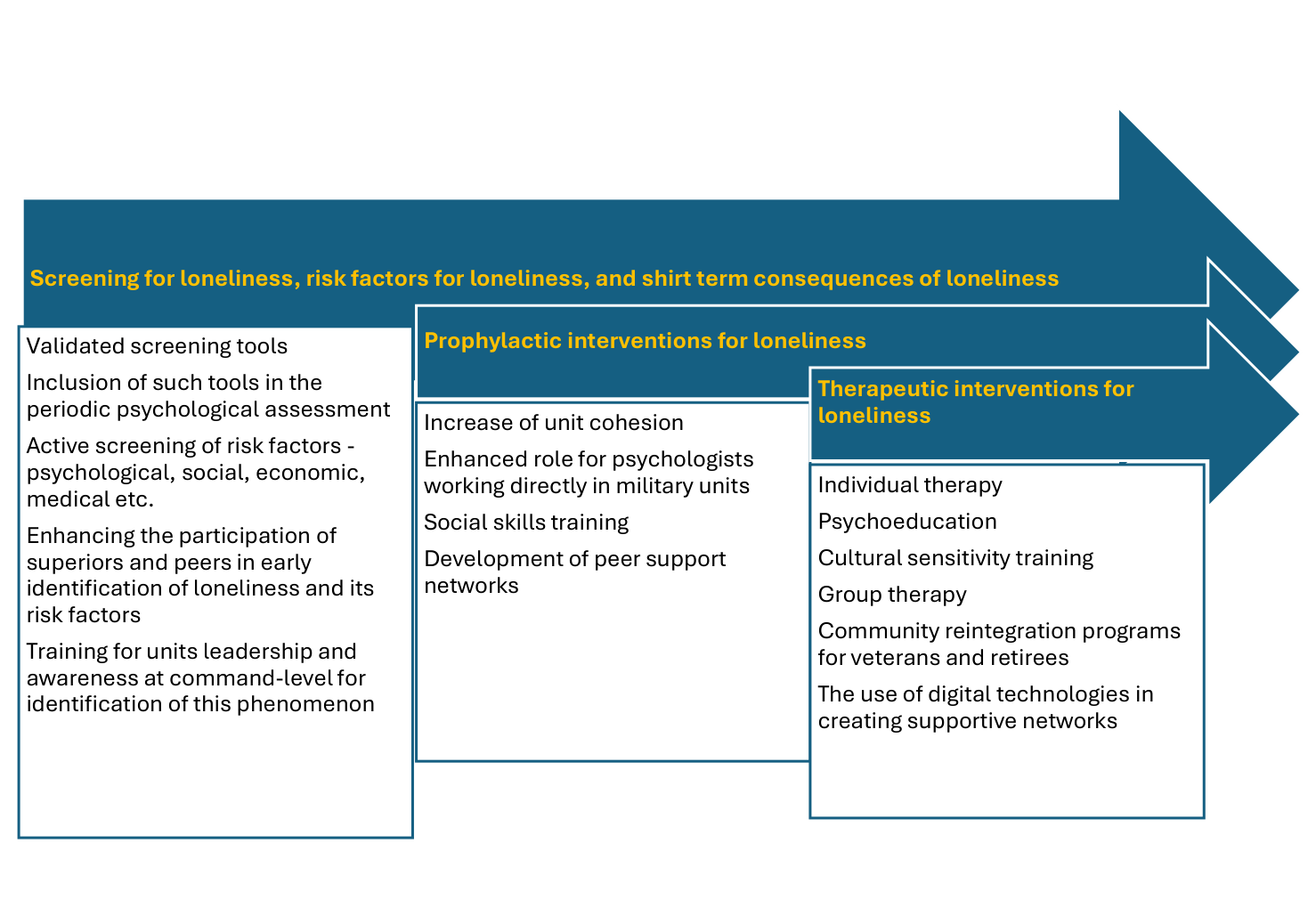
Synthesized in Fig.3, these three directions of interventions represent the foundation for further research in the field of loneliness in military active and retired personnel and of possible policies destined to decrease the medical and social impact of this phenomenon.
There are some limitations that need to be acknowledged by the readers, the most important one being the fact that the first part, consisting of the literature overview, was not conceived as a systematic search; therefore, relevant sources might have been missed. It is also noteworthy to consider other pertinent components of the three strategies focused on reducing the phenomenon of loneliness and its negative impact on active and former members of the military, which could have been overlooked. It is also important to adapt the conclusions and recommendations of this research to the specific military traditions and cultural contexts of each country, and to address sensitive issues, such as the situation of minorities in the Army, with care, avoiding pre-determined or inflexible solutions.
Loneliness constitutes a prevalent and consequential psychosocial phenomenon, characterized by its association with a wide range of health-adverse outcomes in both civilian and military communities. Within the military context, its impact can be particularly pronounced, contributing to premature attrition from training programs, diminished quality of learning and skill acquisition, reduced morale, and an impaired sense of cohesion and connectedness with peers and unit members. These effects not only undermine individual well-being but may also compromise operational readiness and the overall effectiveness of military training environments.
Data reviewed in this article suggest the importance of analysing risk factors for loneliness and for its consequences on mental and physical health in active military personnel and ex-service members. Improving the level of loneliness detection, initiating prophylactic interventions for loneliness, and therapeutic interventions aimed at this phenomenon are of significant importance within military settings. Further research in this field is urgently needed, in order to find the most validated instrument for loneliness and social isolation detection, to explore the specific consequences of loneliness on general health, quality of life, psychological well-being, and combat readiness, and also to examine the risk of loneliness in spouses of military personnel, vulnerable sub-groups, and veterans who were exposed to prolonged deployments.
The authors declare no conflict of interest.
This research received no external funding.
Authors’ contribution
Conceptualization, O.V., B.M.P., A.G.M., and O.M.S.; methodology, O.V., A.P., and D.G.V.; software, O.V.; validation, O.V., C.A.C., A.P., O.M.S., and A.G.M.; formal analysis, O.V., A.G.M.; investigation, O.V., A.G.M., A.P., and B.M.P.; resources, O.V., O.M.S, and D.G.V.; data curation, O.V.; writing—original draft preparation, O.V.; writing—review and editing, O.V., A.G.M., B.M.P, D.G.V, A.P., and O.M.S.; visualization, O.V., C.A.C. and A.P.; supervision, O.V. All authors have read and agreed to the published version of the manuscript.
Not applicable.