
Colorectal adenocarcinoma is a significant global health concern, affecting approximately one million individuals annually and causing nearly 500,000 deaths each year [1-2]. Although rare before the age of 40, its incidence sharply increases after age 45, with most cases diagnosed beyond the age of 50. In Romania, colorectal cancer ranks second among all cancers, accounting for about 13% of cases and a five-year survival rate close to 50% [3-5]. Despite a declining population, Romania saw an increase in cancer incidence from 2011 to 2018, reflecting challenges in healthcare access and prevention [6].
Colorectal cancer is frequently diagnosed at advanced stages due to insufficient screening programs and common risk factors such as smoking, poor diet, and lack of physical activity [7-8]. Additionally, Romania’s healthcare system faces significant challenges, including financial and logistical barriers, which hinder early detection and treatment [9-12]. Some studies indicate that approximately 40% of cases occur in the right colon, 31% in the left colon, and 29% in the rectum [13].
The rising incidence of early-onset colorectal cancer has led to changes in screening guidelines, with organizations such as the American Cancer Society lowering the recommended starting age from 50 to 45 years. This shift aims to enhance early detection and improve patient outcomes, though its overall impact remains under evaluation. The optimal screening approach, whether through non-invasive tests followed by confirmatory colonoscopy or direct colonoscopic screening, continues to be debated [14-15].
Effective screening methods such as colonoscopy, flexible sigmoidoscopy, CT colonography, capsule endoscopy, and stool-based detection tests play a crucial role in identifying and removing precancerous lesions, ultimately reducing cancer-related mortality. This paper asserts the importance of increasing awareness and implementing systematic screening programs to curb colorectal cancer incidence and mortality, potentially preventing severe complications such as bowel obstructions [16-19].
This narrative review systematically examines the existing literature concerning colorectal cancer screening, diagnosis, and the management of acute complications. A comprehensive search was conducted across four prominent electronic databases, namely PubMed, NCBI, Google Scholar, and MDPI. Relevant articles were identified using targeted keywords, such as “colorectal cancer”, “screening”, “early diagnosis”, and “treatment.” To ensure the inclusion of contemporary advancements, priority was given to recent publications, primarily from the past five years. Only studies specifically addressing methods for colorectal cancer screening, diagnostic processes, and therapeutic interventions for advanced stages were selected for detailed evaluation in this review.
Colorectal cancer (CRC) screening is a critical tool in the early detection and prevention of the disease, significantly lowering both incidence and mortality rates. Several screening strategies are available, each with its own benefits and limitations (Figure 1). As technology advances, newer approaches are being incorporated to enhance detection accuracy, patient compliance, and accessibility. The current landscape of CRC screening includes invasive procedures such as colonoscopy, non-invasive stool-based tests, imaging modalities, molecular biomarker assessments, and emerging techniques such as artificial intelligence (AI) and liquid biopsies [20].
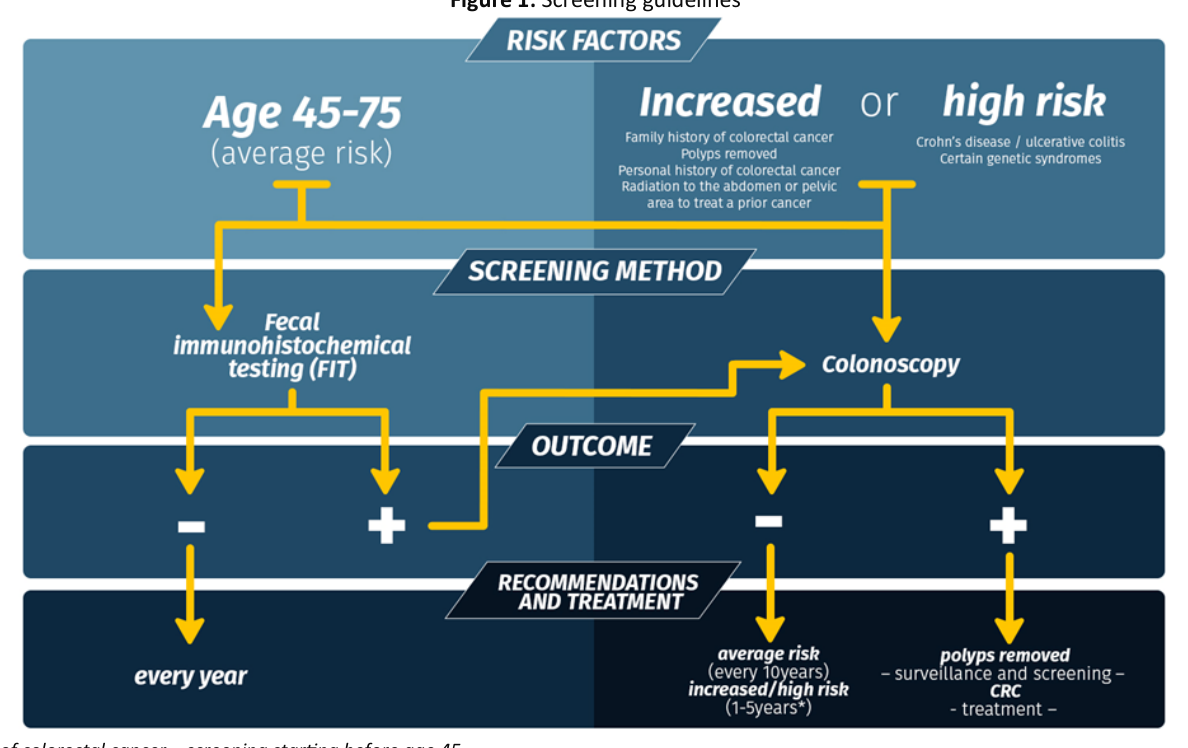
Colonoscopy remains the most effective and widely used screening method due to its ability to directly examine the entire colon and rectum. This procedure enables the detection and removal of precancerous polyps, thereby preventing progression to malignancy. With a sensitivity exceeding 95% for advanced neoplasia, colonoscopy is a highly reliable diagnostic and preventive tool. However, its drawbacks include the need for extensive bowel preparation, sedation, and the expertise of trained specialists. Additionally, although rare, complications such as perforation and post-procedural bleeding can occur. Given these factors, adherence to colonoscopy screening remains suboptimal, particularly in average-risk individuals. Nevertheless, it is strongly recommended for high-risk populations, such as those with a personal or family history of CRC or genetic syndromes like Lynch syndrome and familial adenomatous polyposis [21-22].
Flexible sigmoidoscopy is another visualization-based screening tool that examines only the rectum and the lower part of the colon. While it is less invasive and does not require sedation, it is limited in its ability to detect right-sided lesions in the proximal colon. Despite this limitation, studies have shown that sigmoidoscopy reduces CRC incidence and mortality, particularly for left-sided tumors. It is often used in conjunction with stool-based tests to improve overall detection rates [23].
Capsule endoscopy is another innovation being explored for CRC screening. This technique involves swallowing a small, camera-equipped capsule that captures images of the gastrointestinal tract as it moves through the digestive system. Unlike traditional colonoscopy, capsule endoscopy does not require sedation and is non-invasive. However, current challenges include incomplete visualization of the colon, difficulty detecting small lesions, and limitations in image interpretation. Research is focused on enhancing camera resolution, battery life, and image processing technology to improve its effectiveness as a screening tool [24-25].
Computed tomography (CT) colonography, also referred to as virtual colonoscopy, is a radiological screening technique that generates three-dimensional images of the colon and rectum using low-dose CT scans. This non-invasive method eliminates the need for sedation and is generally more tolerable for patients. CT colonography has demonstrated high sensitivity for detecting polyps larger than 10 mm but is less effective for smaller lesions. Unlike conventional colonoscopy, it does not permit biopsy or polyp removal, requiring follow-up colonoscopy for confirmation and intervention when abnormalities are detected. Radiation exposure is another factor that must be considered, particularly for younger individuals undergoing repeated screenings [26].
Blood-based testing has emerged as a promising direction in colorectal cancer (CRC) screening, providing a minimally invasive alternative to traditional methods. These assays aim to detect tumor-associated molecular alterations in circulation, offering improved patient compliance, especially among those hesitant to undergo invasive procedures such as colonoscopy. Among the most studied blood-based tools are circulating tumor DNA (ctDNA) tests, which identify somatic mutations, copy number alterations, and epigenetic changes shed by tumor cells into the bloodstream. ctDNA-based screening has demonstrated high specificity for CRC detection and holds potential for both early diagnosis and post-treatment surveillance. Despite these advances, the sensitivity of ctDNA for detecting early-stage CRC and precancerous adenomas remains limited [27]. This poses a challenge for its application as a standalone screening modality, particularly for detecting lesions before malignant transformation. Additional liquid biopsy strategies, including the analysis of circulating tumor cells (CTCs), exosomal RNA, and methylated DNA, are under active investigation. These approaches aim to enhance detection sensitivity by capturing a broader spectrum of tumor-derived signals, though most remain in the experimental phase and require extensive validation in large-scale prospective studies before being adopted into routine practice. Parallel to bloodbased diagnostics, biomarker-driven innovations in stool and urine-based screening have gained traction. Advances in genomics and proteomics have led to the identification of novel molecular signatures associated with CRC, including aberrantly methylated DNA sequences, microRNAs, and tumor-specific proteins. These biomarkers have contributed to the development of next-generation assays that improve the performance of non-invasive tests. The multitarget stool DNA test (sDNA-FIT), which combines fecal immunochemical testing with molecular markers for DNA mutations and methylation, exemplifies this approach and has already been integrated into clinical practice. Nevertheless, ongoing research seeks to refine these assays further, expand biomarker panels, and improve sensitivity and specificity—particularly for early-stage lesions [27-28].
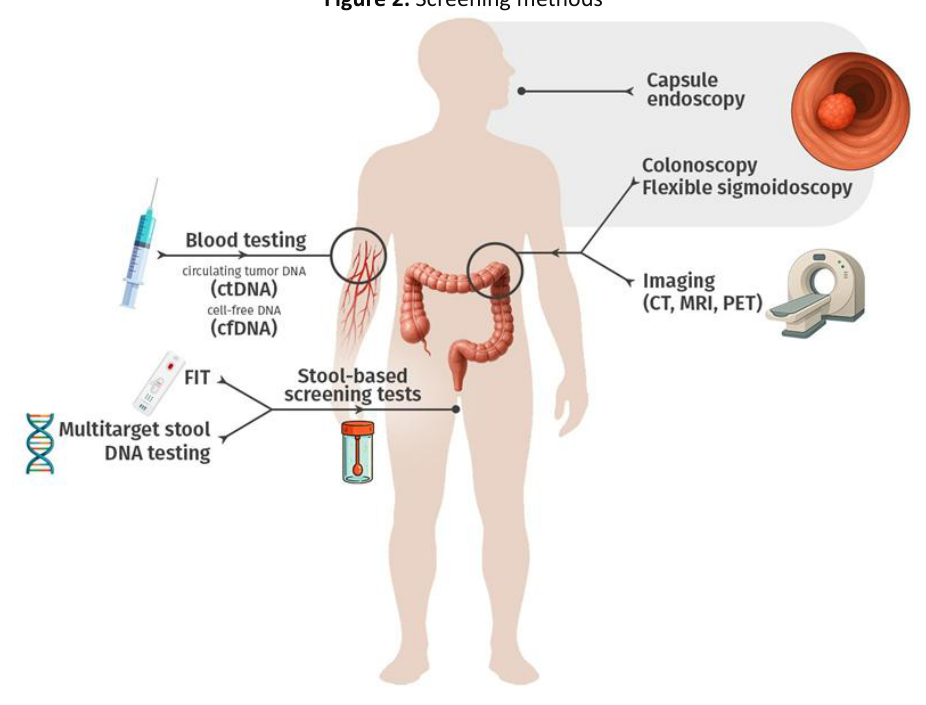
Stool-based screening tests offer an alternative for individuals who prefer non-invasive methods. The fecal immunochemical test (FIT) has largely replaced the traditional guaiac-based fecal occult blood test (gFOBT) due to its improved specificity and sensitivity. FIT detects human hemoglobin in stool samples, reducing the risk of false positives from dietary or upper gastrointestinal sources. This test is typically performed annually and has been associated with a reduction in CRC-related mortality. However, its lower sensitivity for detecting advanced adenomas necessitates frequent retesting. A more advanced stool-based approach, the multitarget stool DNA test (sDNA-FIT), combines FIT with molecular markers to detect genetic mutations and epigenetic changes linked to CRC. This method enhances sensitivity beyond FIT alone and improves the detection of precancerous lesions. However, it has a higher false-positive rate and requires a confirmatory colonoscopy for abnormal findings [29-31].
Artificial intelligence (AI) is increasingly being applied to CRC screening, particularly in colonoscopy and imaging-based methods. AIenhanced colonoscopy utilizes deep learning algorithms to analyze real-time endoscopic images and improve the detection of adenomas. Studies have demonstrated that AI-assisted colonoscopy increases the identification of subtle mucosal abnormalities, reducing the risk of missed lesions. AI is also being integrated into stool and blood-based screening tests, where machine learning models optimize the interpretation of molecular signatures to improve accuracy. Additionally, computational models incorporating genetic, environmental, and clinical data are being developed to personalize CRC risk assessment and screening recommendations [32-33].
Despite the variety of available screening methods, adherence to CRC screening guidelines remains a significant concern, particularly in populations with limited healthcare access. Socioeconomic barriers, healthcare infrastructure, and patient awareness all play critical roles in screening participation. Efforts to improve accessibility include at-home testing kits, such as FIT and stool DNA tests, which allow individuals to collect and submit samples without visiting a healthcare facility (Figure 2). Increasing public awareness, healthcare provider engagement, and offering personalized screening options based on individual risk factors are essential strategies for enhancing participation in screening programs [34].
Colorectal cancer (CRC) diagnosis relies on a combination of clinical evaluation, laboratory testing, endoscopic procedures, and imaging techniques to confirm malignancy and determine disease stage. Despite advancements in screening and early detection, a significant proportion of patients are still diagnosed at advanced stages, often presenting with complications such as bowel obstruction. Colonoscopy remains the gold standard for CRC diagnosis, allowing for direct visualization, biopsy, and removal of suspicious lesions during a single procedure. Late-stage detection is associated with poorer outcomes, underscoring the need for timely and effective diagnostic strategies [35].
Imaging modalities, including contrast-enhanced CT scans, magnetic resonance imaging (MRI), and positron emission tomography (PET) scans, play a critical role in staging CRC and evaluating tumor spread. These techniques help determine the extent of local invasion, lymph node involvement, and distant metastases. Accurate staging is essential in guiding treatment decisions, including surgical resection, chemotherapy, radiation therapy, or a combination of modalities for advanced cases. Imaging is particularly important for assessing resectability in metastatic disease, as well as monitoring treatment response in patients undergoing systemic therapy [36].
Despite these diagnostic advancements, many CRC cases are still identified at later stages when symptoms become severe. One of the most common emergency presentations of advanced CRC is bowel obstruction, occurring in approximately 20% of cases. This complication results from tumor-induced narrowing of the intestinal lumen, leading to symptoms such as severe abdominal pain, bloating, nausea, vomiting, and the inability to pass stool or gas. Bowel obstruction often necessitates urgent medical intervention, with many patients requiring emergency surgery to relieve the blockage and resect the affected segment of the bowel. Compared to elective surgery for early-stage CRC, emergency surgical interventions are associated with increased postoperative complications, prolonged hospital stays, and higher mortality rates. The occurrence of bowel obstruction as an initial manifestation of CRC highlights the ongoing challenges in early detection, particularly among individuals who do not undergo regular screening. Patients presenting with obstruction often have advanced tumors that limit treatment options, negatively impacting prognosis. Research has shown that individuals diagnosed with obstructive CRC have lower survival rates compared to those diagnosed through routine screening, emphasizing the need for widespread and consistent preventive measures [37-38].
For patients diagnosed with early-stage CRC, particularly stage I and stage II, surgical resection is the primary treatment. In stage I, where the tumor is confined to the bowel wall without lymph node involvement, removal of the affected segment of the colon with regional lymphadenectomy is typically curative. The preferred surgical approach may be open or laparoscopic colectomy, with the latter offering benefits such as reduced postoperative recovery time and lower complication rates. In stage II disease, the cancer has penetrated the muscular layer of the colon but has not spread to regional lymph nodes. Surgery remains the standard of care, but adjuvant chemotherapy may be considered in cases where high-risk pathological features are present, including T4 tumors, lymphovascular invasion, perineural invasion, poor differentiation, or inadequate lymph node sampling. The decision to administer chemotherapy is individualized, considering both the potential survival benefit and the risk of treatment-related toxicity [39-41].
Management of stage III CRC, where the cancer has spread to regional lymph nodes, involves a multimodal approach integrating surgery and systemic chemotherapy. The primary surgical treatment is colectomy with complete mesocolic excision and lymphadenectomy to achieve optimal oncologic outcomes. Adjuvant chemotherapy is recommended in nearly all cases to eliminate micrometastatic disease and reduce recurrence risk. Standard chemotherapy regimens include FOLFOX (5-fluorouracil, leucovorin, and oxaliplatin) and CAPOX (capecitabine and oxaliplatin), with treatment duration typically spanning six months. In patients who cannot tolerate oxaliplatin, fluoropyrimidine monotherapy remains an option, though with slightly lower efficacy [39-40].
Stage IV CRC is characterized by distant metastases, most commonly involving the liver, lungs, or peritoneum. In these cases, systemic therapy is the cornerstone of treatment, intending to prolong survival and maintain quality of life. Chemotherapy regimens such as FOLFOX and FOLFIRI (5-fluorouracil, leucovorin, and irinotecan) are frequently utilized, often in combination with targeted agents. Bevacizumab, an anti-VEGF monoclonal antibody, is commonly added to chemotherapy to inhibit tumor angiogenesis, particularly in patients with RAS-mutant tumors. In contrast, EGFR inhibitors such as cetuximab and panitumumab are used in RAS-wild type tumors, demonstrating improved response rates when combined with chemotherapy. Molecular profiling, including assessment of KRAS, NRAS, and BRAF mutations, is crucial in guiding treatment selection, as tumors harboring certain mutations exhibit resistance to EGFR-targeted therapies. Additionally, immunotherapy has emerged as a novel treatment option for patients with microsatellite instabilityhigh (MSI-H) or deficient mismatch repair (dMMR) tumors, with checkpoint inhibitors such as pembrolizumab and nivolumab demonstrating promising efficacy in this subset of patients [39-40, 42-43].
A significant proportion of CRC cases, particularly those diagnosed at advanced stages, present with bowel obstruction, a lifethreatening complication resulting from tumor-induced luminal narrowing. This condition manifests as severe abdominal pain, nausea, vomiting, and bowel distension, often necessitating urgent medical intervention. The management of bowel obstruction is guided by the patient’s overall prognosis, performance status, and treatment goals. In patients with potentially resectable disease and good functional status, surgical intervention, such as resection of the obstructing tumor or creation of a diverting ostomy, may be performed to restore bowel function and facilitate further oncologic treatment. However, in patients with widespread metastases or poor surgical candidacy, non-surgical approaches such as endoscopic stenting are preferred. Self-expanding metal stents (SEMS) can be placed to relieve obstruction and maintain luminal patency, serving as either a bridge to surgery in operable patients or a palliative measure in those with unresectable disease. While SEMS placement offers symptom relief with a lower risk of perioperative morbidity, potential complications include stent migration, re-obstruction, and perforation, particularly in patients receiving antiangiogenic therapy [44-46].
Medical management plays an essential role in symptom control for patients with bowel obstruction. Corticosteroids may be administered to reduce tumor-associated edema and improve bowel patency. Antiemetics, including dopamine antagonists and serotonin receptor antagonists, are used to alleviate nausea and vomiting, while opioid and non-opioid analgesics help manage pain. In cases where bowel function cannot be restored, a venting gastrostomy tube may be placed to decompress the stomach and relieve symptoms of persistent vomiting. Total parenteral nutrition (TPN) may also be considered for select patients to prevent malnutrition when enteral feeding is not feasible. Given the complex nature of malignant bowel obstruction, a multidisciplinary team approach, including oncology, gastroenterology, surgery, and palliative care specialists, is necessary to ensure comprehensive management tailored to the patient’s individual needs [47].
Colorectal cancer (CRC) remains a major health challenge despite advances in screening, diagnosis, and treatment. A key issue is the persistent late-stage diagnosis, which is often associated with complications such as malignant bowel obstruction. The need for improved screening adherence and the integration of novel technologies to enhance early detection is evident, as early intervention significantly improves survival outcomes. However, real-world implementation of screening recommendations remains suboptimal due to accessibility issues, patient reluctance, and limitations of existing tests.
The effectiveness of CRC screening depends on balancing sensitivity, specificity, patient compliance and healthcare system feasibility. While colonoscopy is the most definitive method, its invasiveness and preparation requirements often deter patients. Non-invasive alternatives like fecal immunochemical tests (FIT) and stool DNA testing provide practical options but require frequent testing and have limitations in detecting precancerous lesions. CT colonography offers another alternative but lacks the ability to remove polyps during the procedure. The future of CRC screening may lie in risk-adapted strategies that personalize screening intervals and methods based on genetic predisposition, lifestyle factors, and emerging biomarkers.
A significant portion of CRC cases are detected at advanced stages, often when symptoms such as bowel obstruction arise. These cases require urgent medical intervention, typically involving surgery or endoscopic stenting. While self-expanding metal stents (SEMS) are increasingly used for temporary relief, their risks, including perforation and migration, necessitate careful patient selection.
Addressing late-stage CRC diagnosis requires increased awareness of early warning signs, improved access to screening programs, and adherence to recommended screening guidelines. Healthcare providers play a crucial role in recognizing potential symptoms and encouraging high-risk individuals to undergo regular screening. Strategies to improve early detection include expanding non-invasive screening options, utilizing risk-based stratification models to identify individuals at greater risk, and integrating emerging technologies such as liquid biopsy and artificial intelligence-assisted diagnostics. By strengthening early detection efforts, the burden of late-stage CRC and its associated complications, including bowel obstruction, can be significantly reduced, leading to better patient outcomes and improved survival rates.
Disparities in CRC outcomes highlight the need for broader access to screening and timely treatment. Socioeconomic barriers, healthcare infrastructure disparities, and patient education gaps contribute to late-stage diagnoses. Efforts to integrate artificial intelligence (AI) in colonoscopy and risk prediction models could enhance detection accuracy and optimize screening protocols. AIassisted imaging analysis has demonstrated the ability to improve adenoma detection rates, reducing missed lesions and potentially lowering CRC incidence.
The treatment of CRC is continually evolving, with research focusing on optimizing multimodal therapeutic strategies to improve survival and quality of life. While surgery remains the foundation for early-stage disease, systemic therapy plays a critical role in advanced CRC, particularly with the integration of targeted agents and immunotherapy. The management of complications such as malignant bowel obstruction requires a patient-centered approach, balancing aggressive interventions with supportive care to maintain comfort and dignity. Ongoing clinical trials continue to explore novel therapeutic approaches, including next-generation targeted therapies and personalized medicine strategies, which aim to refine treatment paradigms and improve outcomes for patients diagnosed with colorectal cancer.
While significant progress has been made in CRC screening, diagnosis and treatment, challenges remain in optimizing early detection, improving treatment outcomes for advanced-stage disease and addressing disparities in care. A multidisciplinary approach integrating surgery, systemic therapy and supportive care remains crucial in managing CRC across different disease stages. Ongoing research into AI, molecular profiling and liquid biopsies holds promise for further refining CRC management strategies and improving patient outcomes. Continued efforts to enhance screening adherence, personalize treatment approaches and expand access to novel therapies will be key in reducing the global burden of colorectal cancer.
The authors declare no conflict of interest. No artificial intelligence automatically generated text was inserted in this manuscript, and no image was previously published in another journal or is under consideration of being published elsewhere. This research received no external funding.
Conceptualization- M.T., J.C. and B.I.; methodology – M.T.; investigation – M.T., J.C. and B.I.; writing of the manuscript- M.T. and J.C.; review, editing – M.T., J.C. B.I. and H.S; data curation – J.C. All authors have read and agreed to the published version of the manuscript.
The study was conducted under the Declaration of Helsinki. The research was conducted under ethical guidelines and regulations, ensuring compliance with all necessary protocols.
Written informed consent has been obtained from the patient to publish this paper.