
In 1868, the neurologist Jean-Martin Charcot mentioned for the first time multiple sclerosis (MS) as a neurological affection with unpredictable evolution varying from benign (mild) up to aggressive. This illness especially affects people, aged between 30-50 years, most of them being diagnosed in their mid-thirties. There are also teenagers affected, mostly the ones who smoke and the overweight young women. The official reports [1] mention the ratio of males and females as 1:3.
There is no identified specific factor to trigger MS, so the assumption is that of a series of factors that could cause the disease, like:
Multiple sclerosis is an autoimmune neurodegenerative disease that acts on and destroys the central nervous system [2,3]. It is an inflammatory disease that leads to demyelination and axonal loss, resulting in manifest cognitive, motor, or sensory symptoms such as depression, emotional distress, or anxiety. As mentioned in [4],
the clinical course of MS is classified as follows: Clinically Isolated Syndrome (CIS); Relapsing-Remitting (RRMS); Primary Progressive (PPMS); Secondary Progressive (SSMS).
Once the evolution of MS is on, the predominant emotional disorder is stated to be [5,6] depression. Patients with depression also have a poor psychosocial quality of life, manifest diminished capacity to work, and manifest decreased therapeutic compliance.
Most of the studies [7,8,9,10,11] mention fatigue, depression, and pain as inherent disorders associated with structural and functional changes in the brain in MS. These changes have been noticed in the basal ganglia, prefrontal cortex, and limbic system [12,13,14].
Comorbid fatigue and/or depression symptoms reported in patients with MS are also linked to impairment of the hypothalamicpituitary-adrenal (HPA) axis [15]. Because chronic fatigue and depression are low levels of cortisol and dehydroepiandrosterone (DHEA) it is possible to be endocrine contribution. Studies [16,17] have proved that MS patients state to have increased energy after taking corticosteroids as treatment for MS relapse.
As mentioned in [18,19] depressive disorder (MDD), or clinical depression, represents a debilitating disease exhibiting at least one major depressive episode for at least two weeks, with an evident bad mood, low interests and pleasure (anhedonia), poor cognition and neurovegetative symptoms (fatigue, loss of appetite, insomnia). There is a high focus on improving the quality of life for MS patients. Depression treatment usually is individualized and is split between associated pharmacological and non-pharmacological ones.
The pharmacological treatment with Desipramine (tricyclic antidepressant) 200 mg/day [20] and Paroxetine (selective serotonin reuptake inhibitor) 40 mg/day [21] is mentioned in comparison with placebo, for a period of five and, respectively, twelve weeks. As a result, there was noticed a slight improvement of depression symptoms but, not a statistically significant result.
In [22] it is analyzed how a specialized exercise training program with prescriptive guidelines [23, 24] having as background the social cognitive theory sustains the reduction severity of depressive symptoms in MS patients.
This article presents the research results on therapeutic particularities of depression, a survey carried out on a group of relapsingremitting multiple sclerosis (RRMS) patients with moderate, or severe, depression forms. The therapy plan was developed based on the authors’ expertise in the treatment of multiple sclerosis and mainly consists of the administration of one of the following antidepressants: venlafaxine; sertraline; mirtazapine; and trazodone. The diagnosis and the severity of depression were evaluated by the total Hamilton Depression Rating Scale (HAM-D).
Aspects of materials and methods used in research, as well as results, discussion, and conclusion of the obtained results, are evidenced in the next chapters. Further research development focus is also mentioned.
There are different signs of multiple sclerosis [25,26] caused by the location and severity of the myelin sheath lesions. Troubles in moving arms or legs, disorders in equilibrium, visual disturbances, or, when severe, loss of ability for independent motion – these are the alarm signals for this illness.
For the moment, there is no specific and targeted treatment for curing MS, but there are therapeutic schemes usually focusing on fast and high recovery from attacks, reducing probabilities of relapse, slowing down the disease progression, and adequate managing of symptoms. There are also cases when the symptoms are mild and patients do not need specific treatment.
While MS attacks are on, for reducing inflammation of the nerves are used intravenous corticosteroids. If there is no positive response to corticosteroids and the symptoms are extremely severe, plasma exchange can be used for ease of symptoms (not for curing). There are also treatment schemes for lowering the rate of relapse and reducing the risk of brain atrophy, such as immunomodulatory medication, monoclonal antibodies, or antihistamines. Solutions for MS symptom relief are various and customized on patients, like: kynetotherapy to increase muscle strength; muscle relaxers for reducing pain in muscle rigidity; specific medication against pain, insomnia, and depression; and psychological counseling.
There is a common opinion regarding the risk of immobilization for patients with multiple sclerosis but, the highest risk for them is that of suicide. Psychological manifestations have been noticed since the 19th century [27], once the clinical signs of this illness have been described.
About 50% of patients with multiple sclerosis exhibit at least one depression symptom, and a percentage varying in-between (15 ÷ 30)% of these patients have severe depression disorder.
A comprehensive study [28] indicates that the majority of MS patients present with both anxiety and depression symptoms. However, due to the presence of multiple overlaps in diagnostic criteria, it is challenging to ascertain the exact frequency of each of these conditions. The predominant feature of their syndrome points towards depression, anxiety, or, mixed anxiety-depressive disorder. Even for now, it has not been identified yet a direct relationship between multiple sclerosis and depression, the main mechanisms are assumed to be the ones that follow:
The criteria for diagnosis of depression, as mentioned by the Diagnostic and Statistical Manual of Mental Disorders, DSM-5 [27] are evidenced in Table 1.
| No. | Criteria | Tickif YES within two weeks |
|---|---|---|
| 1 | Mood of depression – long time a day, almost every day | |
| 2 | Diminished interest/pleasure in most activities – long time a day, almost every day | |
| 3 | Significant weight loss/gain without specific dieting | |
| 4 | Slow down in decision-making and performing physical activities (relevant to the others) | |
| 5 | Fatigue and poor energy | |
| 6 | Bad feelings and guilt for most of the things done – almost every day | |
| 7 | Difficulty in concentration and thinking, indecisiveness – almost every day | |
| 8. | Repeated thoughts of death, suicidal behavior |
An individual is diagnosed with depression if, at least, five of the above symptoms are exhibited within two weeks and one of them should be depressed mood and/or diminished interest or pleasure. Attention is to be given so that symptoms do not result from any substance abuse.
There are also two additional specifiers for the diagnosis, of depression:
The depression causes are multiple and commonly classified in four main categories (A ÷ D), as follows:
A. Psychosocial stress – that represents the disability in MS because it is generated by: global physical impairment; illness evolution in pus, with no possible estimation in time; motor deficits; diminished social role / inadequate support from the family.
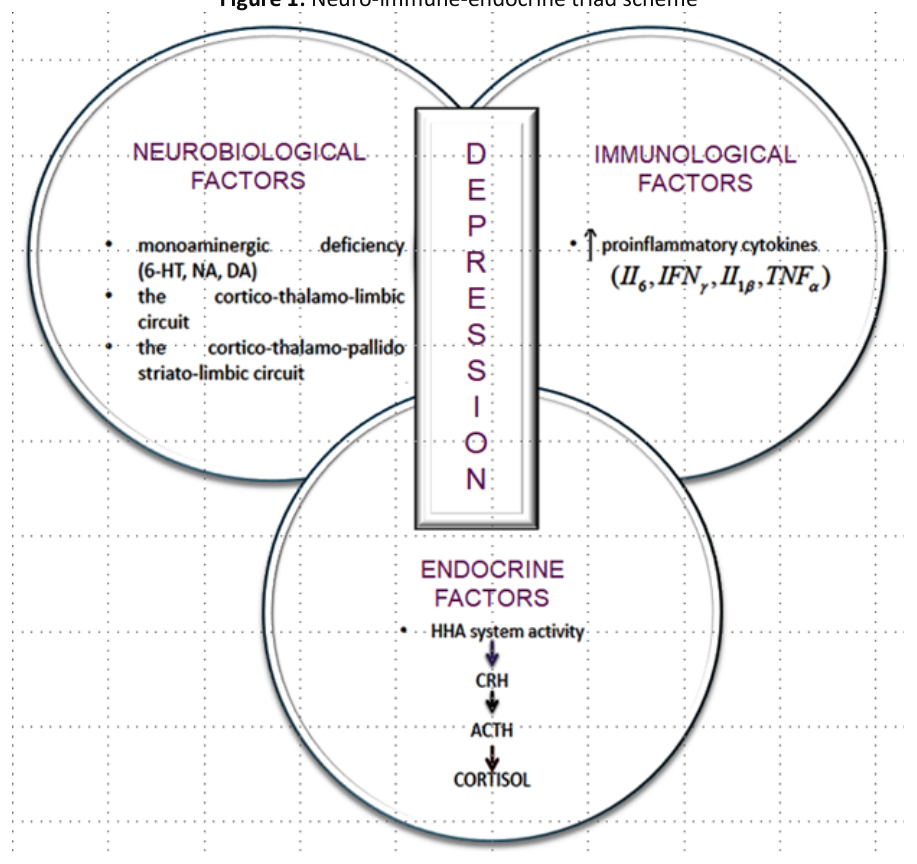
B. Neuro-immune-endocrine triad (see figure 1) – as in MS patients the severity of depression depends directly on the amount of cytokines, IFN . In this research, there was noticed decrease in IFN amount after antidepressant treatment, once the depression symptoms diminished. The cytokines stimulate the axis: HHA (hypothalamic-hypophyseal-adrenal) CRH (Corticotropin-releasing hormone) ACTH (Adrenocorticotropic hormone) CORTISOL. The cytokines disturb the metabolism of monoamines (serotonin, nonadrenaline, dopamine) by prostaglandins – in cerebral areas highly important for depression: the hippocampus and hypothalamus.
C. Relationship between brain injuries and depression – based on neuroimaging evidence (RMN). Multiple sclerosis illness does affect myelin and nerve conduction so depression could be a direct consequence of the disease. The severity of depression directly depends on the right temporal lesions of the frontal lobe and the area adjacent to the basal ganglia.
D. Pharmaceutical treatment – there is no relevant evidence of increased occurrence of depression symptoms caused by the MS pharmacological treatment. Mainly, if the depression gets worse it is caused by the worsening of disability. Depression treatment for MS patients stands in two categories, one is psychotherapy and the other is pharmacological. Psychotherapy commonly consists of: psychological counseling; support therapy and cognitive-behavioral techniques.
To diminish depression, there are some additional steps [29] that could be done by multiple sclerosis patients, complementary to psychotherapy and pharmacological treatment, such as:
In this research the focus is not on either psychotherapy, or additional actions, even the patients in the sample group also practiced some of these therapies. This research is focused on the therapeutic particularities of depression, in relapsing-remitting multiple sclerosis (RRMS) patients.
Pharmacological treatment in depression for relapsing-remitting multiple sclerosis patients is evidenced in Table 2. These therapeutic schemes are particularly used in neurology clinics the authors work. All the patients of the survey are included in the national program for the treatment of multiple sclerosis and monitored by: neurological examination; brain imaging; psychological examination; and psychiatric examination.
| Class | Representative | Dose [mg/day] | Comments |
|---|---|---|---|
| ADT (antidepressants) | Nortriptyline Desipramine |
50 ÷ 200 100 ÷ 300 |
limited use because of anticholinergic side effects (dry mouth, constipation, urinary and cardiovascular disorders) |
| SSRI (selective serotonin reuptake inhibitors) | Sertraline Fluoxetine S-Citalopram |
50 ÷ 200 20 ÷ 80 10 ÷ 20 |
good tolerance; efficiency; side effects (sexual dysfunctions, insomnia) |
| NaSSA (noradrenergic and specifically serotonergic antidepressants) | Mirtazapine | 15 ÷ 45 | efficiency; minimum effects on sexual function; side effects (weight gain, drowsiness) |
| SARI (reuptake inhibitors and serotonin 2A antagonists) | Trazodone | 150 ÷ 300 | efficiency; minimum effects on sexual function; side effects (drowsiness, orthostatic hypotension) |
| NDRI (noradrenaline and dopamine reuptake inhibitors) | Bupropion | 150 ÷ 400 | efficiency; minimum effects on sexual function; side effects (convulsions, psychotic symptoms) |
| SNRI (serotonin and noradrenaline reuptake inhibitors) | Venalafaxine | 75 ÷ 225 | efficiency; side effects (intestinal disorders, psychotic symptoms, arterial hypertension) |
The patients in the research group were diagnosed and subsequently admitted to the hospital when acute attacks occurred. Because of the relapsing attacks, patients develop anxious depressive disorder with panic attacks. Once the severe symptoms were relieved, they were discharged from the hospital and followed up the therapeutic scheme so that to get into the survey.
Initially, it was considered for the study a group of 102 patients, registered within a period of 4 years (2019 – 2023). Because of changes in their health conditions, mental and willingness to take part in the study, not the least family involvement, some of them had to retire. So, the size of the study (sample) group got down to 58, but its size remains fit for a research study (as the sample size is greater than 30).
The survey group is made of 58 relapsing-remitting multiple sclerosis patients with moderate, or severe, depression, out of which 18 are males with ages in between 18 and 30 years. The others are 40 females with ages between 30 and 40 years.
One can notice the higher percentage of females with MS diagnostic (40 out of 58, meaning around 69%) aspect revealed by most of the specific literature references. There has to be mentioned the fact that young people (above 25 years old) usually suffer from anxiety or anxious depression disorder, while mature people suffer from anxious depression disorders or recurrent depressive disorders. The survey period lasted for 16 weeks.
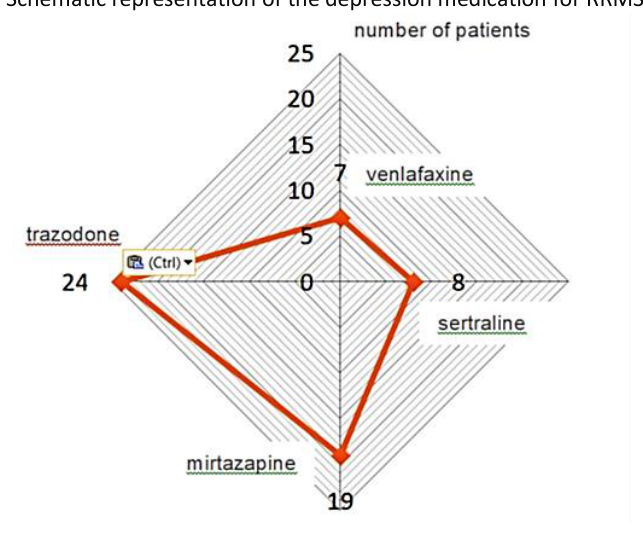
The customized therapeutic scheme applied for diminishing depression, based on the authors’ expertise in the diagnosis and treatment of (relapsing-remitting) multiple sclerosis consists of the administration of one of the antidepressants (see Figure 2):
The selected percentages for medication considered the medical history of patients and estimated positive effects of the antidepressant. Also, previous experience of the authors (medical team) in the administration of these types of medicines is important. If there are multiple relapsing attacks, an increase in dosage has to be considered.
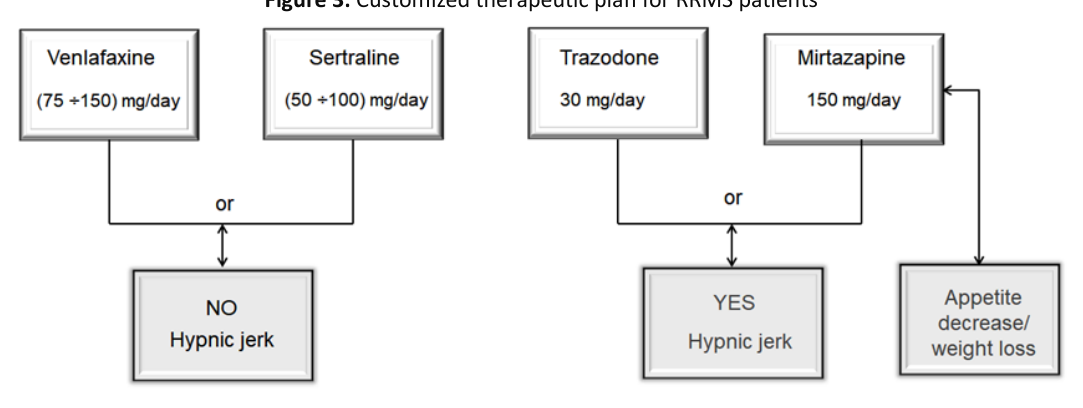
The antidepressant medication has to be administrated only in consideration of the following rules (see Figure 3):
In diagnosing depression among patients with relapsing-remitting multiple sclerosis, it’s essential to apply DSM-5 criteria tailored for MS. Recent guidelines from the National Multiple Sclerosis Society (2025) highlight the interplay between neurological symptoms and psychological distress in MS. These updated guidelines advocate for a nuanced diagnostic approach beyond traditional tools like the Hamilton Depression Rating Scale (HAM-D), ensuring diagnoses reflect current clinical insights.
This scale is a multiple-item questionnaire, providing a self-evaluation tool for depressive symptoms. The advantage of using HAM-D is that of high fidelity [30] in terms of clinical symptom assessment due to multiple questions for most of the items. It is compatible with DSM and provides an indicator for the severity of depression reported by an adult, based on a threshold score of clinical value.
Some relevant aspects of HAM-D and its scores are mentioned [31,32] next:
Before starting the customized depression disorder therapeutic schemes, based on the HAM-D test results, patients were divided into five groups, depending on test scores, as follows:
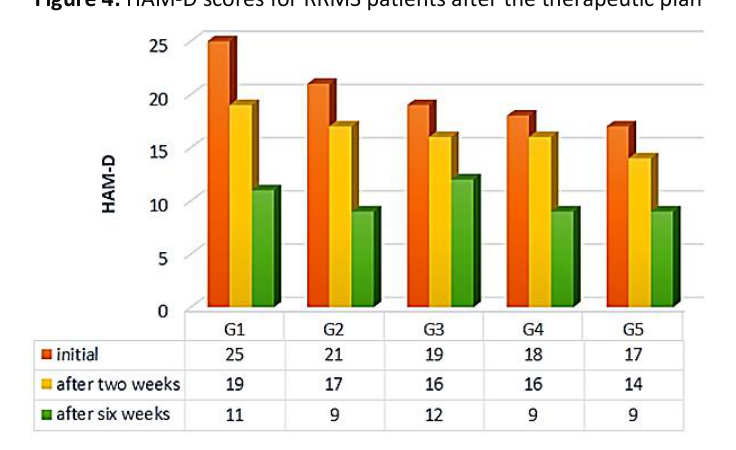
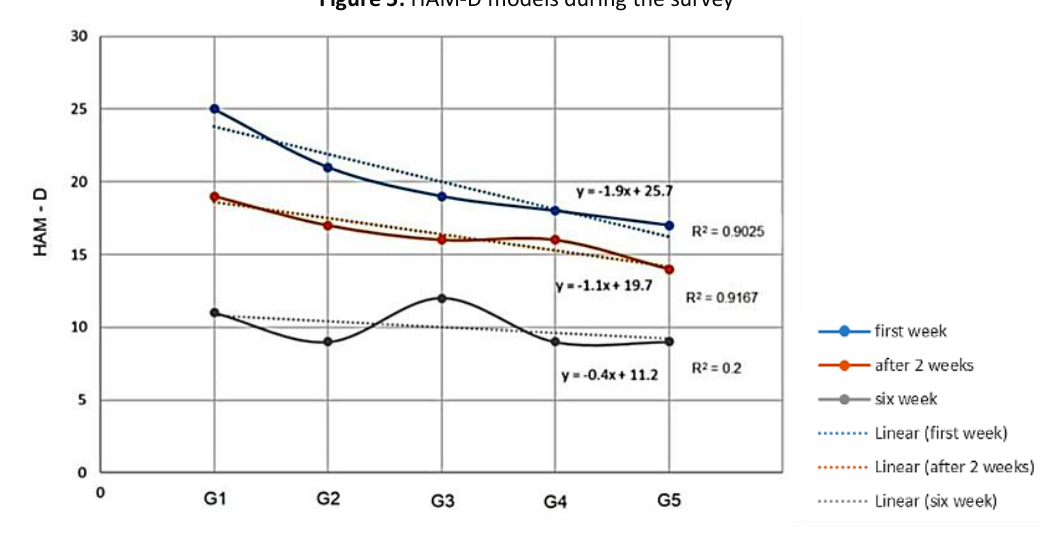
Survey and evaluation after two weeks of treatment proved the improvement of depression symptoms, evidenced by psychiatric examination and HAM-D scores. The same trend was evidenced by further evaluation after six weeks of treatment, as evidenced in Figure 4. One can notice that patients with a HAM-D score of 25 at the beginning of the survey (severe depression, group G1) got to a score of 19 (moderate depression) after 2 weeks of treatment and, further, achieved a score of 11 (mild depression) by the end of the survey (within 6 weeks of therapeutic scheme applied). The same improvements in HAMD-D scores are observed for the patients classified in the other four groups (G2-G5).
There are different signs of multiple sclerosis caused by the location and severity of the myelin sheath lesions. Some alarm signals for this illness are: disorders in equilibrium, visual disturbances, and loss of ability for independent motion.
There is a common opinion regarding the risk of immobilization for patients with multiple sclerosis but, the highest risk for them is that of suicide. Depression represents a real problem in patients with multiple sclerosis, with about 50% of them exhibiting at least one depression symptom.
This research study is focused on therapeutic particularities of depression, in patients with relapsing-remitting multiple sclerosis (RRMS). Even though the patients in the sample group previously practiced either psychotherapy or additional actions for healing depression, the results did not prove to be fundamentally encouraging.
In the sample group, there are 18 males – from 18 up to 30 years old and 40 females aged between 30 and 40 years. This proves the higher percentage of females having the diagnosis of multiple sclerosis.
Depression disorder diagnostic was given to the 58 sample patients based on psychiatric and psychological examination by the total Hamilton Depression Rating Scale. There were considered five groups, depending on HAM-D test scores, all pointing toward severe to moderate depression disorders. The patients are included in the national program for the treatment of multiple sclerosis.
Analyzing the obtained results, important aspects of therapeutic schemes are evidenced. First, it is obvious that any of the four antidepressants are efficient and with patients good tolerance. Surveys and evaluations after two weeks of treatment proved the improvement of depression symptoms. The same trend was evidenced by further evaluation after six weeks of a customized therapeutic scheme.
Then, it is to be emphasized the lack of side effects that could determine interruption of the treatment. None of the sample group patients showed relevant side effects.
After two weeks of treatment, the HAM-D scores turn from severe depression up to moderate depression (for groups G1, and G2) and from moderate depression to mild depression (groups G3, G4, G5). After 6 weeks of the therapeutic scheme applied, in each of the groups, the result was that of mild depression.
The variation of HAM-D scores, through the survey, for each of the groups, G1-G5, is evidenced in Figure 5. Regression models (dash lines) that fit the survey data (curved lines) are marked along each of the regression lines, just to prove the tendency (by the negative slope) of decreasing the HAM-D results.
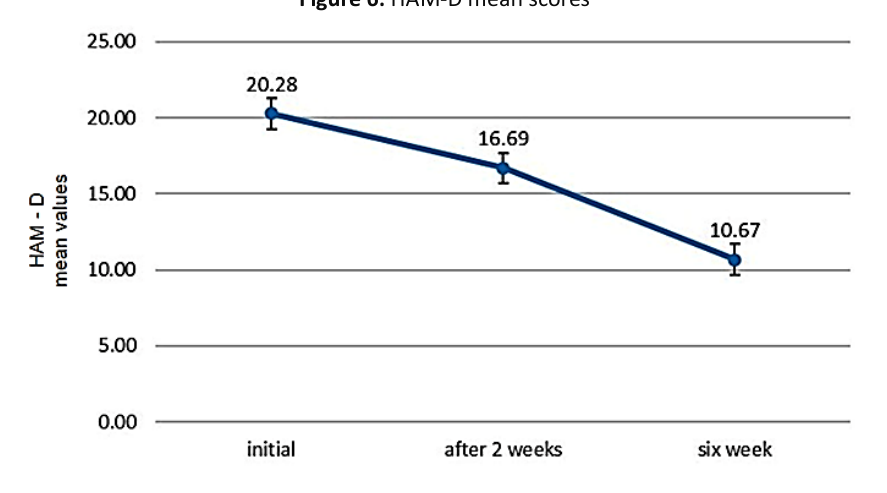
Statistical processing of data resulted in mean values of HAM-D scores as follows: 20.28 when starting the survey (initially); 16.69 after two weeks of customized therapeutic scheme and 10.67 at the end of the survey (after 6 weeks), as evidenced in Figure 6. It can be noticed that the trend was that of decreasing HAM-D scores so that the patients’ symptoms of depression turned from moderate depression (scores of 17–23) to mild depression (scores of 8–16).
The items of the HAM-D scale that target somatic aspects (psychomotor retardation, agitation, depth of sleep, wake-up insomnia) are less specific when evaluating depression and anxious depression in patients with associated relapsing-remitting multiple sclerosis.
Depression is, relatively, common in MS patients, with approximately half of them being diagnosed with it. There is no exact knowledge of its relevance but it is assumed the influence of many factors like: psychosocial, immunological, and brain injuries. It is not sure if some MS patients have depression as a multiple sclerosis reaction or if depression is part of this illness’s biology.
Many times, depression is underdiagnosed in MS patients because some of the depression symptoms also belong to the disease (fatigue, concentration difficulties, psychomotor slowness, sleep disorders, sexual disorders).
There is a negative relationship between multiple sclerosis and depression, as depression can be a factor for worsening MS and reverse. Most of the MS patients exhibit both anxiety and depression symptoms, the predominant feature of their syndrome being the one that points towards depression, anxiety, or, mixed anxiety-depressive disorder. The depressive symptoms are in remission with adequate treatment (psychotherapy and/or pharmacological) thus improving the quality of patient life.
Depression treatment for MS patients stands in two categories, one is psychotherapy and the other is pharmacological. Additionally, these, complementary actions could be performed by the patients as, for example: doing things that make them happy, activating a stress management program, belonging to a group of people that share similar problems, etc.
The research results on therapeutic particularities of depression are presented in this article. The sample group used in the study is made of 58 patients with relapsing-remitting multiple sclerosis, out of which 69% are females. They are between 18 to 40 years old.
The customized therapeutic scheme developed is based authors’ expertise in the treatment of relapsing-remitting multiple sclerosis and mainly consists of the administration of one of the following antidepressants: venlafaxine; sertraline; mirtazapine; trazodone. The antidepressants are prescribed only considering particularities of the patient’s health, like: exhibiting or not exhibiting hypnic jerk; evidence of appetite decrease, or weight loss.
The diagnosis and the severity of depression were evaluated by the total Hamilton Depression Rating Scale (HAM-D). Periodic evaluation of patients’ depression symptoms evidenced improvement from severe to moderate to mild depression, after two weeks and, respectively, six weeks of therapeutic scheme.
Further research development would focus on different treatment schemes for depression disorders in MS patients, as well as on psychotherapy and sustained family involvement. It would also be pay attention to the complementary/additional steps in depression customized treatment as: stress management program – meditation; belonging to a community – so that to take part in targeted activities (walks, talks, reunions); find something that makes happy and enjoy the day; help other people in need – gets a sense of worthiness and utility.
Maybe, more adequate screening could be done using the Beck Depression Inventory (BDI) as it does exclude the items on somatic symptoms. It was not used in this research as the clinic where the survey was developed did not commonly apply the inventory for assessing depression severity.
Finally, it could be stated that a customized therapeutic scheme for depression disorders in patients with multiple sclerosis is considered to be the main tool for reducing symptoms and improving, even if possible, eliminating the depressed mood.
The authors declare no conflict of interest. No artificial intelligence automatically generated text was inserted in this manuscript, and no image was previously published in another journal or is under consideration of being published elsewhere. This research received no external funding.
This study has been made thanks to the contribution of the 3rd Wing located in the Talavera la Real Air Base (Badajoz) of the Spanish Air Force (Ministry of Defence) as well as the Department of Economy and Infrastructure of the Junta de Extremadura through the European Regional Development Fund. A way to make Europe (GR18129 and GR21094).
Conceptualization, E.F.L. and S.L.; methodology, D.G.C. and G.P.G.; software, A.B.; validation, G.P.G.; formal analysis, S.L.; investigation, H.M. and D.G.C.; resources, E.F.L. and S.L. data curation, G.P.G. and A.B.; writing—original draft preparation, D.G.C. and E.F.L.; writing—review and editing, E.F.L. and G.P.G.; visualization, S.L. and D.G.C.; supervision, G.P.G. and A.B.; project administration H.M. and S.L. All authors have read and agreed to the published version of the manuscript.
The study was conducted in accordance with the Declaration of Helsinki, and approved by the Institutional Review Board (or Ethics Committee) of Clinical Hospital CF2, Bucharest, Romania; (protocol code 1121/12.10.2023).
Data is available on reasonable request.
Informed consent was obtained from all subjects involved in the study.