
Sustainable food consumption emerged as a central component of environmental and public health policy discussions, particularly in light of accelerating climate change, resource depletion, and shifting population dynamics. As global food systems experience mounting pressure, understanding how consumers make food choices and what motivates them to adopt sustainable practices has become essential for designing effective strategies that support long-term environmental and public health goals. These behaviors are directly linked to international policy frameworks such as the United Nations Sustainable Development Goals (SDGs), particularly SDG 12 (Responsible Consumption and Production) and SDG 3 (Good Health and Well-being).
Eastern Europe remains underrepresented in empirical research on sustainable food behavior. Romania presents a particularly relevant case study. As an Eastern European country undergoing rapid socio-economic transformation, Romania faces the dual challenge of aligning consumer behavior with sustainability objectives while addressing long-standing issues related to food waste, low environmental awareness, and inconsistent policy implementation. Despite agriculture representing around 3.9% of the national Gross Domestic Product (GDP) [1], sustainable food consumption remains an underexplored topic in the Romanian research landscape. Existing studies tend to focus on Western Europe, leaving a gap in the understanding of how Eastern European consumers perceive and engage with sustainability in everyday food decisions. This gap in the literature is significant, as regional differences in food consumption habits and sustainability practices can influence the success of European Union (EU) policies, such as the Green Deal. By focusing on Romania’s specific context, this study addresses a critical regional gap and provides insights directly relevant to the implementation of sustainability strategies in Eastern Europe. Although the study may not introduce methodological innovations, it contributes to the field by adapting existing research frameworks to a regional context that has been largely overlooked. This makes the research not only relevant but also essential for shaping future policies in the region, with potential long-term impacts on local sustainability efforts.
Consumer engagement plays a crucial role in shaping food systems, influencing not only purchasing behavior but also broader issues such as food waste, packaging choices, and demand for sustainably sourced products. These behaviors directly impact progress toward international frameworks such as the United Nations Sustainable Development Goals (SDGs), especially SDG 12 (Responsible Consumption and Production) and SDG 3 (Good Health and Well-being) [2,3].
This study aims to address this research gap by investigating the extent to which behavioral and demographic factors influence sustainability awareness in food choices among Romanian consumers. Specifically, it examines the relationships between sustainability awareness and variables such as food label reading, shopping frequency, and education level. The study employs a modified version of the well-established Food Choice Questionnaire (FCQ), adapted to incorporate sustainability-related dimensions, including food waste reduction, environmental labeling, and digital information sourcing.
Given the identified research gap and the limited empirical evidence from Eastern Europe, this study tests four hypotheses concerning education, shopping behavior, digital engagement, and label use and addresses the following research question: To what extent do behavioral and demographic factors predict sustainability awareness in food choices among Romanian consumers?
Providing empirical evidence from an underrepresented national context, the study contributes to the literature on sustainable consumption and informs culturally relevant interventions for promoting responsible food choices.
The Food Choice Questionnaire (FCQ) remains a foundational framework for understanding motivations underlying food selection, traditionally emphasizing health, convenience, sensory appeal, and price. Recent extensions integrate sustainability considerations, reflecting growing consumer awareness of environmental and ethical impacts. It has long been an important topic in consumer behavior literature, often grounded in the Food Choice Questionnaire (FCQ) developed by Steptoe [4], which identified key motivational factors influencing food decisions, such as health, convenience, sensory appeal, and price. These foundational dimensions remain relevant for understanding contemporary food choices, especially when extended to include sustainability concerns [5–7]. In the past decade, sustainability has emerged as a crucial dimension shaping consumer food preferences. Researchers [8, 9] have emphasized the integration of environmental and ethical concerns alongside traditional drivers of food choice. This evolution reflects a shift from pure nutritional and sensory factors to a more holistic understanding, encompassing ecological impact, animal welfare, and social justice [10–12].
To capture this complexity, researchers have either adapted the FCQ with sustainability-specific items or developed new instruments tailored to capture environmental awareness and responsible consumption (e.g., the CEFCQ in this study). Recent works [13, 14] highlight the balance between psychometric validity and survey efficiency, especially in large-scale or time-limited research contexts [15–17].
Comparative studies [18, 19] reveal substantial differences in sustainability engagement across countries, often linked to cultural values, economic development, and policy environments. For instance, Nordic consumers tend to prioritize environmental factors more than their counterparts in Southern Europe, underscoring the importance of localized approaches in research and marketing [20–22].
Eastern Europe represents a unique context where traditional values intersect with new sustainability discourses. Other studies [23, 24] suggest that while interest in sustainable consumption is growing, barriers such as limited knowledge, affordability, and weak policy enforcement remain significant. Qualitative research [25] has revealed inconsistencies between expressed attitudes and actual practices, underscoring the need for context-specific instruments and policies.
Romania, in particular, is underrepresented in sustainability research despite its rapid socio-economic transformations and persistent issues with food waste and low environmental awareness. Researchers [26] found that Romanian consumers show rising interest in organic and locally sourced foods, but knowledge gaps and price sensitivity often inhibit adoption. Other studies have identified differences in urban versus rural consumption patterns, revealing that sustainability in Romania is still at a formative stage [27].
Despite these contributions, there is still a lack of validated instruments tailored to the Romanian context. Existing studies often apply frameworks developed in Western Europe without accounting for local cultural and economic factors. This study addresses this gap by adapting the FCQ to include sustainability-specific dimensions such as food waste reduction, environmental labeling, and digital sourcing of information.
The FCQ was modified to reflect contemporary sustainability issues, including items on environmental labeling, food waste, and digital sourcing of information. Although not fully revalidated psychometrically, the adapted instrument was pilot-tested on a small Romanian sample (N = 11) to ensure clarity, cultural relevance, and internal consistency.
Based on the prior research, the following hypotheses are proposed [8,9,14]:
These hypotheses reflect prior findings in sustainable consumption research [6, 10] and are tested using multiple linear regression analysis. These hypotheses also reflect prevailing assumptions that education, information seeking, and frequent market exposure foster sustainable behavior.
In line with recent efforts to optimize the FCQ for large-scale or time-constrained applications [28–30], the questionnaire was pilottested with 11 respondents to evaluate clarity, internal consistency, and completion time. Minor refinements were made based on their feedback.
Shopping frequency has been associated with increased exposure to product information, which may in turn enhance sustainability awareness [8,11]. Similarly, food label reading has been identified as a behavioral cue for environmentally conscious purchasing [21]. Education level is often linked to sustainability knowledge, although recent studies suggest that its predictive power varies across contexts [14, 29].
A quantitative cross-sectional survey was administered online between October 2024 and January 2025. The survey link was disseminated through email and social media using voluntary response and snowball sampling techniques. A total of 527 responses were collected. To ensure data reliability and internal consistency, a quality screening procedure was applied. Responses were excluded if they contained missing data (e.g., unanswered items in key sections of the questionnaire) or if they exhibited logical inconsistencies across related questions, such as contradictory answers to conceptually linked items. Following this process, 105 questionnaires were removed, resulting in a final sample of 406 valid responses used for the analysis. The study adopted a quantitative, cross-sectional research design to examine Romanian consumers’ engagement in sustainable food choices. Data were collected using a modified version of the widely validated Food Choice Questionnaire (FCQ) [4], adapted to incorporate sustainabilityrelated dimensions and behavior-specific constructs.
The adapted instrument, referred to as the Consumers’ Engagement in Food Choices Questionnaire (CEFCQ), includes 11 items grouped into four main sections: (1) demographic profile, (2) food purchasing behavior, (3) sustainability-related awareness, and (4) consumer attitudes toward food labeling, waste, and digitalization. Likert-type scales, multiple-choice, and count-based items were used.
Data were collected via an online survey conducted between October 2024 and January 2025, using non-probability sampling, voluntary response and snowball sampling techniques. While this approach does not ensure statistical representativeness at the national level, it provides valuable exploratory insights from a diverse sample (N = 406), sufficient in size for behavioral analysis.
The sample consisted predominantly of women (64.8%) and university-educated respondents (approximately 79%). Given the nonprobability sampling design and demographic skew, findings are interpreted as exploratory and not statistically representative of the Romanian population.
The CEFCQ was adapted from the FCQ to include sustainability-related items covering food waste reduction, labeling behavior, digital information use, and perceptions of organizational responsibility. The instrument comprised 11 items grouped into four domains: demographics, purchasing behavior, sustainability awareness, and labeling/digital attitudes.
Given the formative nature of the sustainability engagement index, internal consistency reliability was not assessed. The index aggregates nine conceptually related sustainability domains and reflects the breadth of engagement rather than a latent construct. Prior to the main data collection, the adapted questionnaire was pre-tested on a small convenience sample of 11 Romanian adults in order to assess item clarity, linguistic appropriateness, and completion time. This pre-test was conducted as a cognitive and cultural check rather than a psychometric validation. Given the formative nature of the sustainability engagement index and the exploratory purpose of the study, internal consistency reliability and factor structure were not evaluated at this stage. Minor wording adjustments were made based on participant feedback before launching the main survey.
A non-probability sampling approach was used, combining voluntary response sampling with snowball dissemination via digital platforms. The survey was distributed online through email and social media (Facebook, WhatsApp, Instagram, LinkedIn), encouraging participants to forward the link within their networks. While the sample used in this study is not probabilistic and therefore does not permit statistical generalization to the broader national population, the final count of valid responses (n = 406) exceeds the minimum sample size of 384 typically recommended in Krejcie and Morgan’s (1970) table for probabilistic sampling [31]. This minimum is generally applied to achieve a 95% confidence level with a ±5% margin of error. Although the current sample does not follow probabilistic methods, its size still offers a robust foundation for the analysis conducted in this study. However, due to the non-random nature of the sampling, no claims of statistical representativeness can be made. The findings should be interpreted as indicative patterns within the surveyed group rather than as population-level estimates, due to the fact that the current research is an exploratory one.
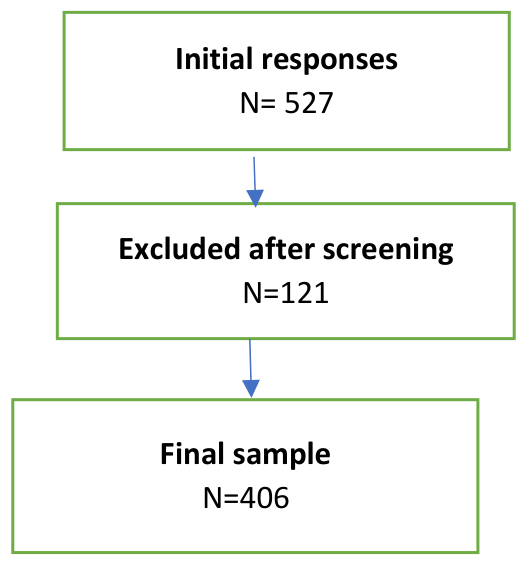
Data were collected between October 2024 and January 2025 using a self-administered online questionnaire hosted on Google Forms. The survey link was disseminated through email and social media using voluntary response and snowball sampling techniques. From 527 initial responses, 16 responses were excluded due to incomplete data and failure to meet predefined quality criteria. This resulted in 511 usable responses. A further quality screening (attention checks, straight-lining detection, and response-time thresholds) led to the exclusion of 105 additional cases. The final analytical sample, therefore, consists of 406 valid questionnaires, which is the sample used in all statistical analyses and reported in Figure 1 in accordance with STROBE guidelines.
The first page provided information about the study’s aim, confidentiality, voluntary participation, and the right to withdraw at any time. Ethical approval was obtained from the Metabolism Research Center under protocol number 0004/03.09.2024. Statistical Analysis
Descriptive statistics (means, standard deviations, and correlations) are presented in Table 2. Multiple linear regression was used to test hypotheses. Model diagnostics included variance inflation factors (VIF), Durbin–Watson statistics, and Breusch–Godfrey tests for autocorrelation. Regression coefficients are reported with 95% confidence intervals.
All variables used in the study are described in Table 1, including their coding scheme and measurement level:
| Variable | Definition | Type |
|---|---|---|
| Educational Attainment (ED_AT) | Self-reported education level (1 = Primary; 6 = Doctorate) | Ordinal |
| Shopping Frequency (S_F) | Frequency of food purchases (1 = Daily; 4 = Rarely) | Ordinal |
| Digital Marketplace Engagement (DME) | Preferred purchase channel (1 = Physical; 2 = Mixed; 3 = Online) | Categorical |
| Voluntary Recycling Behavior (VRB) | Type of shopping bag used (−1 = Disposable; 0 = Mixed; 1 = Reusable) | Ordinal |
| Label Reading Behavior (LRB) | Number of product label elements checked (log-transformed) | Count (log) |
| Nutritional Awareness (NA) | Number of nutritional label items consulted (0–9) | Count |
| Digitalization and Technology Perception (DIGI_TEH) | Perceived importance of technology in the food sector (Likert scale 1–5) | Ordinal |
| Warning Labels Acceptance (WL) | Support for warning labels on unhealthy food (0 = No; 1 = Yes) | Binary |
| Sustainability Engagement (S_E) | Number of sustainability dimensions engaged (0–9) | Count |
The variable Educational Attainment is a demographic variable that captures the respondent’s educational background: primary education = 1; secondary education = 2; post-secondary education = 3; bachelor’s degree = 4; master’s degree = 5; doctorate degree = 6. Our scale, while neglecting those without any formal education, is fair enough to capture the entire educational spectrum.
Shopping Frequency reflects the purchase habits, and it was defined as the number of shopping trips made by a respondent over a specific period of time. It was scaled as daily = 1; several times a week = 2; once a week = 3; rarely = 4.
Digital Marketplace Engagement is a variable that represents the way in which the respondent makes their food shopping. Responses were coded as a polytomous variable with 3 distinct categories (physical, mixed, online) and reflect the preferred purchase channel coded as 1 = physical; 2 = mixed; 3 = online.
Voluntary Recycling Behavior measures the respondent’s choice of shopping bags, with values indicating the degree of engagement in environmentally friendly practices: a score of −1 represents the use of disposable bags, 0 indicates mixed usage of both disposable and reusable bags, and 1 reflects consistent use of reusable bags, signifying a stronger commitment to sustainability and recycling practices.
Label Reading Behavior is a count-type variable that measures the number of informational elements (e.g., ingredients, nutritional value, expiration date, price, manufacturer) selected by the respondent from a predefined list. To reduce distribution skewness and control for extreme variations, the variable was log-transformed (natural logarithm) before being included in the regression model.
Nutritional Awareness measures the total number of nutritional label elements (e.g., proteins, carbohydrates, fats, calories, fiber, salt, vitamins, etc.) read by the respondent from a product’s label. Each respondent selected from a predefined list the types of information they usually consult, and the variable was coded from 0 (reads no information) to 9 (reads all listed categories). It is treated as a discrete quantitative variable (count-type), usable as a predictor in regression models.
Digitalization and Technology Integration measures the degree of importance attributed to the implementation of technology in the food industry, on a Likert scale from 1 to 5, where: 1 = Not important at all, 2 = Slightly important, 3 = Moderately important, 4 = Important, 5 = Very important. This is an ordinal variable used to assess respondents’ perceptions of the role of technology and digitalization in the food sector. Some researchers highlighted its potential to reduce carbon emissions [33-35], while others caution that consumer behavior trends associated with affluence and consumption upgrading may exacerbate environmental degradation [36].
Warning Labels Acceptance is a binary dichotomous variable that measures the respondent’s support for the introduction of warning labels on unhealthy food products, where a score of 0 indicates opposition to such labels, and a score of 1 reflects support for their implementation, signaling an openness to measures aimed at improving public health and informing consumer choices.
The dependent variable, Sustainability Engagement, is a count index (0–9) representing agreement with organizational involvement across sustainability domains. Independent variables include educational attainment, shopping frequency, digital marketplace engagement, label reading behavior (log-transformed), nutritional awareness, perceived importance of digitalization, voluntary recycling behavior, and acceptance of warning labels. Sustainability Engagement was operationalized as a composite index measuring respondents’ beliefs about the extent to which organizations should be involved in various sustainability-related domains. The index consists of 9 items, each representing a distinct area of sustainable action: production, waste management, ecosystem protection, technological innovation, development of plant-based proteins, promotion of healthy eating, sustainable production, eco-friendly packaging systems, and sustainable distribution chains. For each domain where respondents agreed that organizations should be involved, one point was assigned (1 = yes, 0 = no). The total score ranges from 0 to 9, with higher scores indicating a broader and stronger perception of organizational responsibility in promoting sustainability. This index is a simple count measure, combining elements that reflect attitudes, behavioral intentions, and normative expectations. Although the items address different thematic areas, they are theoretically unified under the broader construct of perceived organizational engagement in sustainability efforts. The resulting index was treated as a quantitative variable in the analyses, labeled as Sustainability Engagement. Although the items reflect different sustainability domains, they are conceptually related and contribute formatively to the overarching construct. Since the purpose of the index is to capture a general orientation toward sustainability-related organizational engagement, internal consistency was not a requirement, and the index is considered formative rather than reflective.
A decrease in buying frequency allows customers to make savings, while an increase in buying frequency is related to a short food supply chain [32]. Digitalization and Technology integration (DIGI_TEH) is an ordinal variable used to assess respondents’ perceptions of the role of technology and digitalization in the food sector. Some researchers highlighted its potential to reduce carbon emissions [33-35], while others caution that consumer behavior trends associated with affluence and consumption upgrading may exacerbate environmental degradation [36]. Warning Labels (W_L) is a dichotomous variable measuring respondents’ acceptance of introducing warning labels on unhealthy foods, similar to those found on cigarette packs. Responses were coded as: 1 for positive feedback and 0 for negative feedback. Consumer tools such as health star ratings have been shown to support healthier food choices [37].
Respondents reported moderate sustainability engagement (M = 4.87, SD = 2.31). Label reading behavior and perceived importance of digitalization showed the highest correlations with sustainability engagement (r = 0.42 and r = 0.31, respectively).
Descriptive statistics were computed for all variables. The core of the analysis consisted of a multiple linear regression model, using S_E (Sustainability Engagement) as the dependent variable. Independent variables were selected based on theoretical relevance and empirical findings in the literature.
To enhance model robustness, the analysis included standard diagnostic procedures:
The statistical analysis was conducted using the RealStats Excel Add-in, a validated analytical extension suitable for econometric modeling in spreadsheet environments. Where necessary, transformations (e.g., log for skewed count data) were applied to meet model assumptions.
The data were collected from a Google Forms questionnaire of 406 respondents, distributed via WhatsApp and email. The respondents were male and female over 18 years old who voluntarily agreed to get involved in this study. They were assured that all the answers would be kept anonymous. The survey included a section of demographic information with closed-ended questions about their gender, their age, and their level of education (Table 2).
The possible bias (65% of respondents are female, university-educated, and digitally active) related to the sample limits the generalizability of the findings to the broader population. The gender imbalance may be explained by findings from the UK-based research company YouGov, which indicate that women are more likely than men to be the decision-makers regarding food consumption habits in the household [38]. Thus, the FCQ questionnaire will be invariably biased towards the female gender in the responses. While the sample may seem skewed towards university graduates, according to the 2021 national Romanian census, it should be noted that online surveys tend on average to attract more responses from professionals with better education [39]. This bias is widely documented in survey methodology literature and does not invalidate the internal consistency of the findings, although it does constrain external validity. Finally, we emphasize that the study’s objective is theoretical and exploratory rather than strictly
demographic representativeness. The results contribute to understanding the relationships between food choice motivations within a digitally engaged consumer segment, and future research should employ stratified or probability-based sampling methods to enhance population-level generalizability.
The next section comprises questions related to the consumers’ engagement in sustainable food. All questions comprise an openended section where respondents can add their answers if they are not included within the multiple-choice questions.
The discrepancy between the total sample size (n = 406) and the demographic table (n = 406) reflects partial nonresponse to demographic questions. These respondents were retained for regression analyses where their responses to relevant variables were complete.
| Age Group | Frequency | Gender | Frequency | Educational level | Frequency |
|---|---|---|---|---|---|
| 18-24 | 24,31% | High School | 14,43% | ||
| 25-34 | 15,42% | Male | 35,18% | Bachelor’s Degree | 50,00% |
| 35-44 | 17,39% | Master Degree | 21,94% | ||
| 45-54 | 23,72% | Post-university Studies | 6,52% | ||
| 55-64 | 14,43% | Female | 64,82% | Doctorate | 7,11% |
| >65 | 4,74% |
This distribution of education levels in the sample aligns with findings from similar consumer behavior and sustainability studies, which also report relatively low representation of respondents with doctoral degrees [40-42].
The regression model (Table 3) was statistically significant (F = 18.22, p < 0.001) and explained 25.4% of the variance in sustainability engagement (Adjusted R² = 0.254). Label reading behavior (β = 1.88, 95% CI [1.49, 2.27], p < 0.001) and perceived importance of digitalization (β = 0.34, 95% CI [0.17, 0.51], p < 0.001) were positively associated with sustainability engagement. Shopping frequency showed a significant negative association (β = −0.32, 95% CI [−0.59, −0.05], p = 0.024). Educational attainment, digital marketplace engagement, nutritional awareness, voluntary recycling behavior, and warning label acceptance were not significant predictors.
| Multiple R | 0.5182 | D-lower | 1.7971 |
|---|---|---|---|
| R Square | 0.2685 | D-upper | 1.8774 |
| Adjusted R Square | 0.2538 | DW_TEST sig | Unclear |
| Standard Error | 2.1364 | BGT Lags | 1.0000 |
| Observations | 406 | BGT LM* | 2.3546 |
| Intercept | Yes | BGT df1 | 1.0000 |
| F | 18.2196 | BGT df2 | 396 |
| p-value | >0.0001 | BGT p-value | 0.1257 |
| Sig | Yes | BGT LM | 2.3998 |
| D-stat | 2.1511 | BGT p-value | 0.1214 |
As we can observe in the table below (Table 3), the multiple linear regression has an adjusted R-square of ~25%, meaning the variables explain about 25% of the sustainability indicator. The p-value of the F-test also indicates a statistically significant model. The DurbinWatson test being inconclusive (D-stat = 2.1511) requires us to deploy a lagged Breusch-Godfrey Test with 1 lag for the purpose of the model.
Since the Breusch-Godfrey Test (BGT) yields an insignificant p-value at 1 lag, we can affirm that the model passes the residual autocorrelation test (Table 3).
Regarding the regression variables themselves, two tests were performed. The linear regression model works best with an
intercept when independent values can be zero [43]. The first involved checking for Simpson’s paradox by checking the sign of the regression coefficients against those from the Pearson correlation matrix. The second test involved the multicollinearity coefficients for the independent variables (Figure 2).
No issues were detected with the variables, as both tests yielded negative results.
| Coefficient | Simpson’s paradox | t stat | p-value | Sig | Vif | |
|---|---|---|---|---|---|---|
| Intercept | 0.1344 | 0.2137 | 0.8309 | No | ||
| ED_AT | 0.0567 | No | 0.6278 | 0.5305 | No | 1.0250 |
| S_F | -0.3178 | No | -2.2631 | 0.0242 | Yes | 1.0199 |
| D_M_E | 0.5709 | No | 1.1087 | 0.2682 | No | 1.0241 |
| V_R_B | 0.2674 | No | 1.8292 | 0.0681 | No | 1.0648 |
| L_R_B | 1.8829 | No | 9.4893 | >0.0001 | Yes | 1.1093 |
| N_A | 0.0227 | No | 0.3290 | 0.7423 | No | 1.0956 |
| DIGI_TEH | 0.3368 | No | 3.8923 | 0.0001 | Yes | 1.0169 |
| W_L | 0.5578 | No | 1.6112 | 0.1079 | No | 1.0096 |
Using a significance threshold of 5%, three out of the 9 predictors, including the intercept, were found to be statistically significant. All coefficients are positive, except shopping frequency (S_F), which has a negative and significant coefficient. A higher frequency of shopping is associated with a lower sustainability engagement, suggesting that people who are shopping frequently may not place as much importance on sustainable practices.
Contrary to our initial hypothesis, which posited that frequent shopping would reflect greater consumer involvement and, consequently, stronger sustainability engagement, the empirical results reveal a negative association. This outcome indicates that higher shopping frequency may instead reflect more impulsive or emotionally driven consumption behaviors, potentially limiting consumers’ focus on sustainability-related attributes.
Surprisingly, Educational Attainment (ED_AT) has a positive, but not significant, relationship with sustainability engagement, rejecting hypothesis number 1.
Digital marketplace engagement (D_M_E) is not statistically significant, suggesting that how much a respondent engages with digital marketplaces does not have a significant impact on their sustainability engagement. In addition, Digitalization and Technology integration (DIGI_TECH) is highly significant and positively associated with sustainability engagement. Respondents who think technology plays an important role in the food sector tend to have a positive sustainability engagement.
Label reading behavior (L_R_B) has a positive and highly significant relationship with sustainability engagement. Respondents who read labels are more likely to have a stronger sustainability engagement. However, nutritional awareness (N_A) is not statistically significant.
Warning labels (W_L), even though positively correlated, are not statistically significant. This indicates that the acceptance of warning labels for unhealthy food products by the respondents is not a strong predictor of sustainability engagement in our sample.
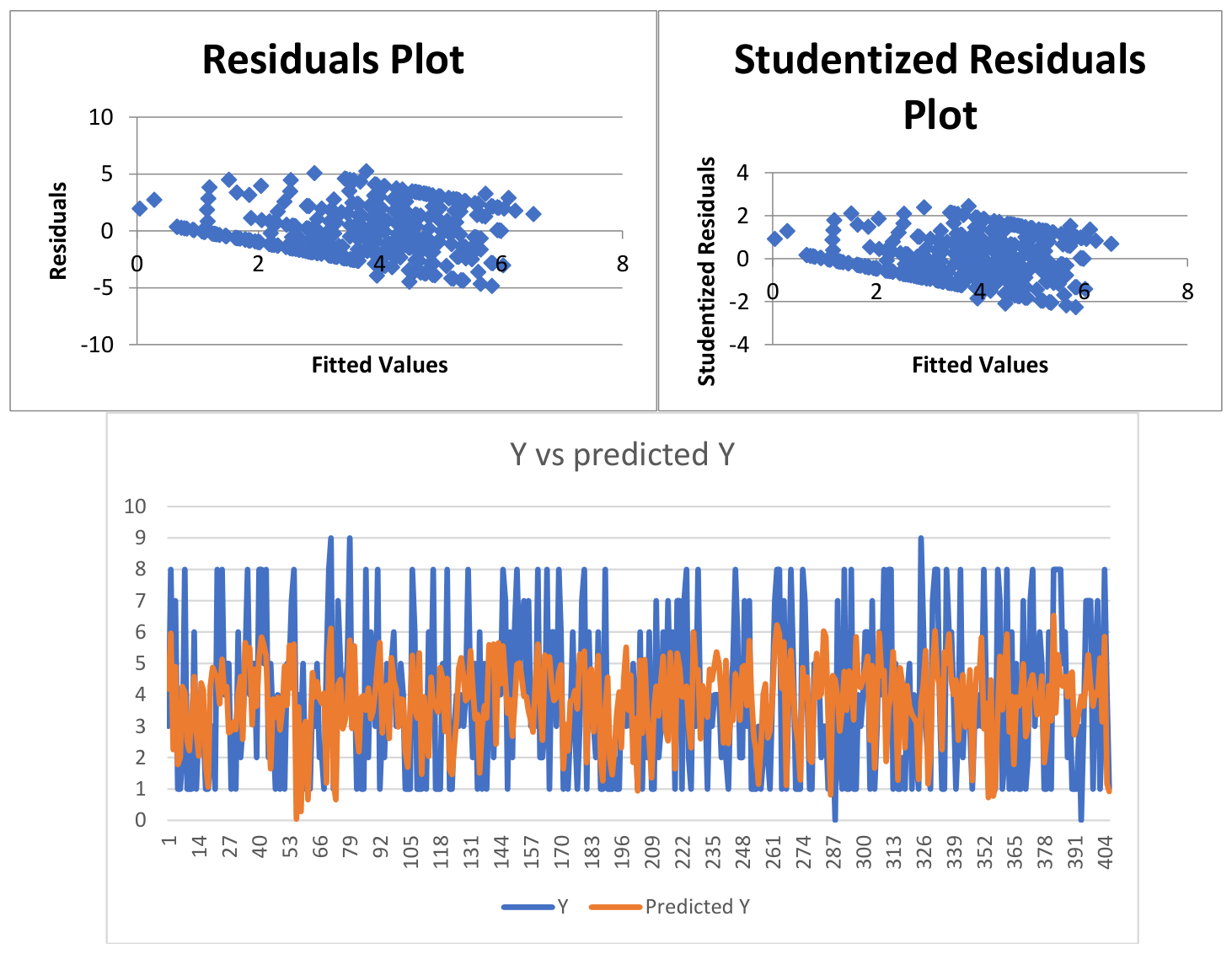
According to the figure above, the predicted values of y fit nicely with the actual observations (Figure 3). The large residuals are to be expected for an exploratory study.
These findings underscore the complexity of sustainability-related consumer behaviors in emerging economies such as Romania. While traditional assumptions suggest that higher education leads to more sustainable behavior, our data show no statistically significant relationship between educational attainment and sustainability engagement, in line with recent studies from Eastern Europe that emphasize the gap between formal knowledge and actual behavioral practices [44]. In contrast, label reading behavior emerged as a robust predictor, suggesting that access to clear and trusted product information may play a more pivotal role than generalized education in shaping sustainable consumption. This reinforces the argument that informed choice, rather than academic background, may drive pro-sustainability behavior [45].
Food production relies heavily on key resources such as water, energy, and labor. Wasting food means wasting valuable inputs. Romania faces a significant challenge regarding food waste, driven by consumer behaviors, industry practices, or inefficiencies. However, legislative reforms (Law number 217 on reducing food waste since 17 November 2016 (revised in 2024); Regulation EU number 1169/2011 of the European Parliament and of the Council of 25 October 2011 on the provision of food information to consumers, amending Regulations (EC) No 1924/2006 and (EC) No 1925/2006 of the European Parliament and of the Council, and repealing Commission Directive 87/250/EEC, Council Directive 90/496/EEC, Commission Directive 1999/10/EC, Directive 2000/13/EC of the European Parliament and of the Council, Commission Directives 2002/67/EC and 2008/5/EC, and Commission Regulation (EC) No 608/2004) underline a sustained effort to address this issue. Moreover, while our model focused primarily on cognitive and behavioral predictors, emotional, cultural, and social factors, such as peer influence, values, or food traditions, should be integrated into future models to offer a more holistic view of sustainable food behavior.
This study provides exploratory evidence on behavioral predictors of sustainability engagement in food choices among Romanian consumers. Contrary to common assumptions, educational attainment was not a significant predictor once behavioral variables were considered. This finding aligns with recent evidence suggesting that formal education alone does not translate into sustainable consumption without accessible and actionable information.
Label-reading behavior emerged as the strongest predictor, underscoring the importance of transparent, credible product information. This supports prior research emphasizing informed choice as a key driver of pro-environmental behavior. The perceived importance of digitalization was also positively associated with sustainability engagement, suggesting openness to technological solutions in promoting sustainable food systems.
The negative association between shopping frequency and sustainability engagement contradicts the original hypothesis and indicates that frequent purchasing may reflect convenience-oriented behavior rather than sustainability considerations. This result suggests that interventions targeting purchasing routines may be as important as information campaigns.
Actual digital marketplace engagement is not significantly correlated with sustainability engagement, a finding that complements the study of Ananda et al. [46], who discovered that online shoppers waste more food compared to their counterparts who shop in situ.
Voluntary recycling behavior is not strongly correlated with sustainability engagement, implying the existence of complex sustainability engagement patterns that can be addressed by further research with other parameters.
Nutritional awareness was not found to be a significant predictor of sustainability engagement in our model. Such findings might be explained by the existence of buyers with specific dietary needs who have limited food choices available to them and for whom sustainability is of less concern than the average population.
While Ozbay and Duyar [47] found that education is a predictor of support for renewable energy production, an indicator of sustainability awareness, this paper finds an insignificant, albeit positive correlation between education and sustainability engagement. Such a finding might be due to effective media outreach campaigns and the interaction between age and educational attainment in the context of the Romanian sample.
While bag usage is prevalent in the Romanian context, it is important to distinguish such actions from a comprehensive implementation and sustainability engagement.
Contrary to our initial hypothesis, which posited that higher shopping frequency would be associated with greater sustainability engagement, based on the assumption that frequent shoppers may rely more on short supply chains, the results reveal a negative relationship. This unexpected finding suggests that sustainability-oriented consumption may be driven less by shopping frequency and more by deliberate purchasing strategies, such as localized shopping in smaller batches, which can reduce environmental impact through lower primary and secondary packaging use.
The findings of this study challenge common assumptions in the literature, particularly the notion that education level is a consistent predictor of sustainability awareness. Instead, behavioral variables such as shopping frequency and attention to food labeling appear to be more strongly associated with sustainable consumption patterns. By focusing on an underrepresented national context and using a tailored FCQ instrument, this study contributes new empirical evidence to the literature on sustainable food behavior.
The results have implications for researchers, policymakers, and stakeholders interested in promoting culturally relevant interventions aimed at encouraging sustainable food practices and reducing food waste in line with European Green Deal targets.
Cooperation between the government, businesses, and civil society is essential to reducing food waste and preserving resources. For instance, businesses are required to implement at least two measures before discarding food, such as reducing prices on near-expiry items, donating surplus food, or converting waste into animal feed or compost. A comprehensive plan is being developed to set targets, assign responsibilities and allocate resources for food waste reduction. The Ministry of Agriculture and Rural Development established a national platform for businesses to report food waste data, which was launched by June 30, 2025. The Ministry of
Agriculture and Rural Development, in cooperation with the Ministry of Education, is promoting campaigns such as „You can protect the planet as well! Together we start reducing food waste”, targeting school students to encourage responsible consumption habits. Romania passed food waste legislation in February 2024, requiring supermarkets and restaurants to implement measures like discounting near-expiry food or donating surplus, aligning with EU goals to halve per capita food waste by 2030. Many educational campaigns were launched by the Ministry of Agriculture, InfoCons, and local councils to inform consumers and promote behavior change.
From a practical perspective, our research on consumer engagement in sustainability in food choices is pertinent for both businesses and policymakers who aim to promote sustainable behaviors. Based on our results, there are several takeaways that could be implemented in the real world, such as increasing consumer awareness and encouraging sustainable purchasing behaviors. For instance, food retailers could start developing educational programs and label literacy to assist customers in assessing the environmental impact of their choices.
Another practical implication refers to food companies and technology providers who should invest in digital platforms that deliver real-time sustainability data and offer personalized feedback on environmentally responsible options. Integration of digital tools can support behavioral shifts toward more sustainable purchasing patterns.
This study contributes to the literature on sustainable food consumption in several ways. First, it applies an adapted version of the FCQ that incorporates sustainability-specific items validated for the Romanian context. Second, it examines a set of behavioral and digital variables, such as label reading, shopping frequency, and digital marketplace engagement, that have been understudied in Eastern Europe. Third, it provides empirical evidence from Romania, an underrepresented country in sustainability research, thereby addressing a clear regional research gap. These contributions support the development of more localized and behaviorally-informed sustainability interventions.
While this study provides valuable insights into Romanian consumers’ sustainability engagement and food-related behaviors, it is not without limitations. The use of a non-probability convenience sample limits the generalizability of the findings. Future research should consider employing stratified or randomized sampling methods to better capture demographic and regional diversity. Another limitation is the cross-sectional design, which restricts our ability to infer causality. Longitudinal studies would be beneficial to track shifts in behavior over time, especially in response to public policy, educational interventions, or market innovations.
Ultimately, our findings support the development of culturally tailored, evidence-based strategies to reduce food waste and advance the goals of the European Green Deal and the broader transition to sustainable food systems.
Future studies could explore the relationship between shopping behaviors, digital engagement, and sustainability engagement through longitudinal data. Additionally, examining the impact of socio-economic factors such as income, urban vs rural location, could help refine the understanding of how different consumer segments engage with sustainable food choices.
This study highlights the primacy of information-oriented behaviors, particularly label reading and digital awareness, in predicting sustainability engagement in food choices among Romanian consumers. Formal education and online purchasing alone appear insufficient to foster sustainable behavior. The findings support policies emphasizing labeling clarity, consumer education, and digital tools aligned with the European Green Deal. Limitations include non-probabilistic sampling and cross-sectional design. Future research should employ representative samples and longitudinal designs to assess causal relationships and temporal dynamics in sustainability engagement. Incorporating stratified sampling strategies across urban and rural regions and across income groups would improve external validity and allow for population-level inference. Moreover, future studies should integrate additional psychosocial and contextual variables, such as values, social norms, household constraints, and price sensitivity, to capture the multidimensional nature of sustainable food behavior. Mixed-method approaches combining survey data with qualitative interviews or experimental designs could further elucidate the mechanisms underlying the attitude–behavior gap and inform the design of more effective, contextsensitive policy interventions.
The authors declare no conflict of interest. This research received no external funding.
Conceptualization, L.M.D. and C.C.; methodology L.M.D., C.A.Z., R.L, AI and C.C; validation, L.M.D. and C.C; formal analysis, L.M.D. and C.C; investigation, L.M.D. and C.C; resources, L.M.D. and C.C; data curation, L.M.D. and C.C; writing—original draft preparation, L.M.D. and C.C; writing—review and editing, L.M.D. and C.C; project administration, L.M.D. and C.C. All authors have read and agreed to the published version of the manuscript. No generative AI was used during the production of this article. Ethics approval and consent to participate
The study was conducted in accordance with the Declaration of Helsinki, and approved by the Ethics Committee of RESEARCH METABOLIC CENTER (No. 0004/03.09.2024). Patient consent for publication
Not applicable.