
Stress in military personnel can arise from multiple sources, including training demands, deployment-related risks, combat exposure, and the challenges of reintegration into civilian life, as well as from extended family
separations, frequent relocations, organizational pressures, exposure to noncombat trauma such as military sexual trauma or moral injury, concerns about stigma and barriers to care, and financial or resource-related difficulties [1]. Lifethreatening situations, unpredictability and uncertainty of the professional schedule, moral injuries, witnessing death or severe traumas, facing harsh conditions, sleep deprivation, irregular meals, leadership challenges, high workload, cultural isolation when operating in foreign countries, but also psychological and emotional challenges, such as anxiety, survivor’s guilt, or moral dilemmas may also represent significant stressors in this population. Retired military personnel have to deal with substantial post-deployment/reintegration stressors, such as adjustment to civilian life, employment challenges, loss of structure or identity, and veteran health issues.
It can be easily deduced that all of these difficult situations and stressors are creating a favorable context for the emergence of mental health conditions that require adequate assistance, in order to prevent a chronic trajectory, severe invalidations, or tragic complications. However, there are several barriers to accessing specialised services, and an estimated 66% of military personnel experiencing mental health problems do not seek help, although they could benefit from it [2]. Concerns about the stigmatisation of individuals accessing mental health services are among the most frequently reported reasons for avoiding psychiatric care in military settings [2]. This phenomenon is also largely present in the civilian population, with an estimated 50% of Americans having a mental illness failing to seek treatment as a result of stigma [3].
Mental health stigma (MHS) originates in a collection of negative stereotypes and involves prejudice and discrimination, thus interfering with the timely provision of the required care [4]. Delayed treatment may lead to severe consequences, such as increased morbidity, diminished well-being and quality of life, and a higher risk of unfavorable evolution [4]. The negative effects of stigma are not limited to the individual level, but encompass the patients’ families (e.g., shame, isolation), healthcare professionals (e.g., burnout and demoralization), and society in its entirety (e.g., misallocation of resources for mental health services, decrease in the professional performance, or long-term increase in healthcare costs due to the onset of complications) [4].
According to Link & Phelan (2001), stigma has five components, i.e., labeling, stereotyping, separation, status loss, and discrimination [5]. Stigma is a socially constructed concept, but individuals may develop their own way to negatively perceive themselves, by introjection of cultural sterotypes, as reflected by the phenomenon of self-stigma. Regarding this last phenomenon, the model suggested by Corrigan (2006) includes the following stages: awareness of public stereotypes, agreement with the respective stereotypes at a personal level, application of the stereotypes to oneself, and negative consequences on the individual domain, such as reduced self-esteem [6,7].
When more closely analysed, public or social stigma refers to the perception of individuals by others, who may regard them as weak, unreliable, or unfit to perform military duties if they seek access to mental health services [1]. The information regarding mental disorders is usually gathered from mass media, which may detrimentally model the attitudes and judgments of individuals towards this type of pathology [1]. Mass media may enhance the level of stigmatization in this field by providing narrowly focused reports on dramatic cases of military personnel who kill themselves or harm others, therefore consolidating cultural stereotypes on psychiatric patients as being dangerous or, at least, unpredictable [1,8]. According to an analysis of mental health images in the printed media in three Central European countries, more than 50% of the retrieved articles contained negative statements reflecting stigma towards persons with psychiatric disorders [8].
In the case of military personnel, the presumed vulnerability attributed to those receiving psychiatric care stands in direct contradiction to the narrative of mental resilience and the endurance of hardship that, in the collective mindset, is strongly associated with this environment [2]. Furthermore, distinctive features of military peer culture frame mental illness as a potential threat to operational stability and team safety [2]. Unit leaders may, whether intentionally or unintentionally, promote the avoidance of psychiatric care, thereby reinforcing stigmatisation [2]. Stigmatizing conceptions may erroneously link the presence of a mental disorder in military personnel with incompetence, dangerous behaviors, disobedience, or lack of discipline [9]. Misconceptions about mental health that circulate within military environments can further discourage service members from engaging with psychologists and psychiatrists. Even in those individuals who are undergoing psychiatric treatment, stigma may lead to its premature discontinuation, and is endorsed by service members as a primary reason for drop-out [9,10].
Self-stigma is based on the internalisation of public stigma, thus leading individuals to consider themselves as less valuable due to mental health changes, even those symptoms placed in the minor register, such as anxiety, insomnia, or fatigue. The individuals tend to compare themselves with colleagues who are healthy and erroneously equate psychological disturbances with personal weakness or moral failure. A connected feature is the tendency to self-blame for their inability to maintain optimal mental functioning at all times [1,11,12]. As a consequence, self-esteem and self-efficacy are lower, and the intention to seek help may also be hindered by this misconception [11,12]. Examples of self-stigma misconceptions are “I am weak because I don’t feel well”, “I am a burden to my fellow soldiers”, or “The diagnosis of PTSD (posttraumatic stress disorder) means I am crazy”, which leads to poor effort invested in received treatment, poor self-esteem and self-efficacy, and denial of symptoms [11].
The latency for mental health services accessed by military personnel may vary from years to decades, according to several authors, due to internalised stigma [13]. Even after discharge from the service, ex-military personnel may have difficulties in motivating themselves to consult with a psychologist or psychiatrist due to the negative influence of self-stigmatisation [13].
The structured evaluation of this phenomenon can be conducted by the administration of the Self-Stigma of Mental Illness Scale (SSMIS), which has been developed by Corrigan et al. (2006) and includes references to a three-level model, i.e., stereotype agreement, self-occurrence, and self-esteem decrement [6]. Another instrument was created by Skopp et al. (2012), i.e., the Military Stigma Scale (MSS), which is a 26-item instrument, designed to measure both the public and the self-stigma, and the scale
demonstrated good internal consistency; soldiers who had been evaluated by a mental health service scored lower in self-stigma than those who had not [12].
Perceived/anticipated stigma refers to the fear of real or imagined consequences of seeking mental health care, a phenomenon that has also been explored in the military environment. This phenomenon is related to different disadvantages that are anticipated, such as the loss of security clearance, missed career opportunities, delayed promotions, problems with the deployment eligibility or weapon handling clearance, etc. [14]. Military personnel may avoid mental health services for fear of not being registered in medical records and prefer informal, off-base support, sometimes of a doubtful quality, that delays the formal treatment [14,15]. According to a study that explored anticipated stigma in the US, UK, Australian, New Zealand, and Canadian militaries, in the re-deployment or immediate post-deployment period, similar patterns of reported stigma and barriers to care across the five nations were found [15].
Structural stigma is a concept that encompasses the formal and informal organizational practices that create difficulties for people with mental health problems, such as a lack of confidentiality, or command-level discretion in dealing with mental health documents, or unclear policy wording [16-18]. Otherwise put, structural stigma is the result of organizations and systems that deliberately or inadvertently produce and maintain social inequalities for individuals who experience mental health problems [16]. In a military environment, structural stigma is associated with the policies regarding mental health, which can be outdated and thus reinforce stigma, according to the US Department of Defense data [19].
Cultural stigma amplification is a phenomenon that emerges due to the interaction between military culture and broader societal stigma on mental health conditions. Societal stereotypes regarding the dangers of mental illnesses may be amplified in a highly organized, competitive environment, such as the military setting. A strong alignment with military values (duty, selfless service, honor, courage) correlated with stigma and influenced the readiness to access mental health services in military service personnel [9,20].
Taking into account the direct and indirect effects of stigma, with its various dimensions (Fig.1), on the general health of individuals, and the need to see the particularities of this phenomenon in a military setting, an exploration of the available data, followed by suggested directions of interventions, was considered opportune.
![Stigma and its dimensions [1,2,8-20] MHS= mental health stigma, MHI= mental health illness](https://revistamedicinamilitara.ro/wp-content/uploads/2026/07/fighting-fig1.png)
This conceptual analysis is based on a literature search for primary and secondary reports focused on stigma related to mental health problems in military settings, which included three databases (PubMed, Google Scholar, and Clarivate/Web of Science), without lower temporal limitations for the publishing date (the upper limit was 01 June 2025) or for the language of published sources. The keywords used for this search were “stigma” OR “stigmatisation” AND “mental health” OR ” psych*” OR individual diagnoses within the DSM-5 TR classification. The main directions of research in this field were further synthesized and compared with data regarding MHS reported in civilian studies.
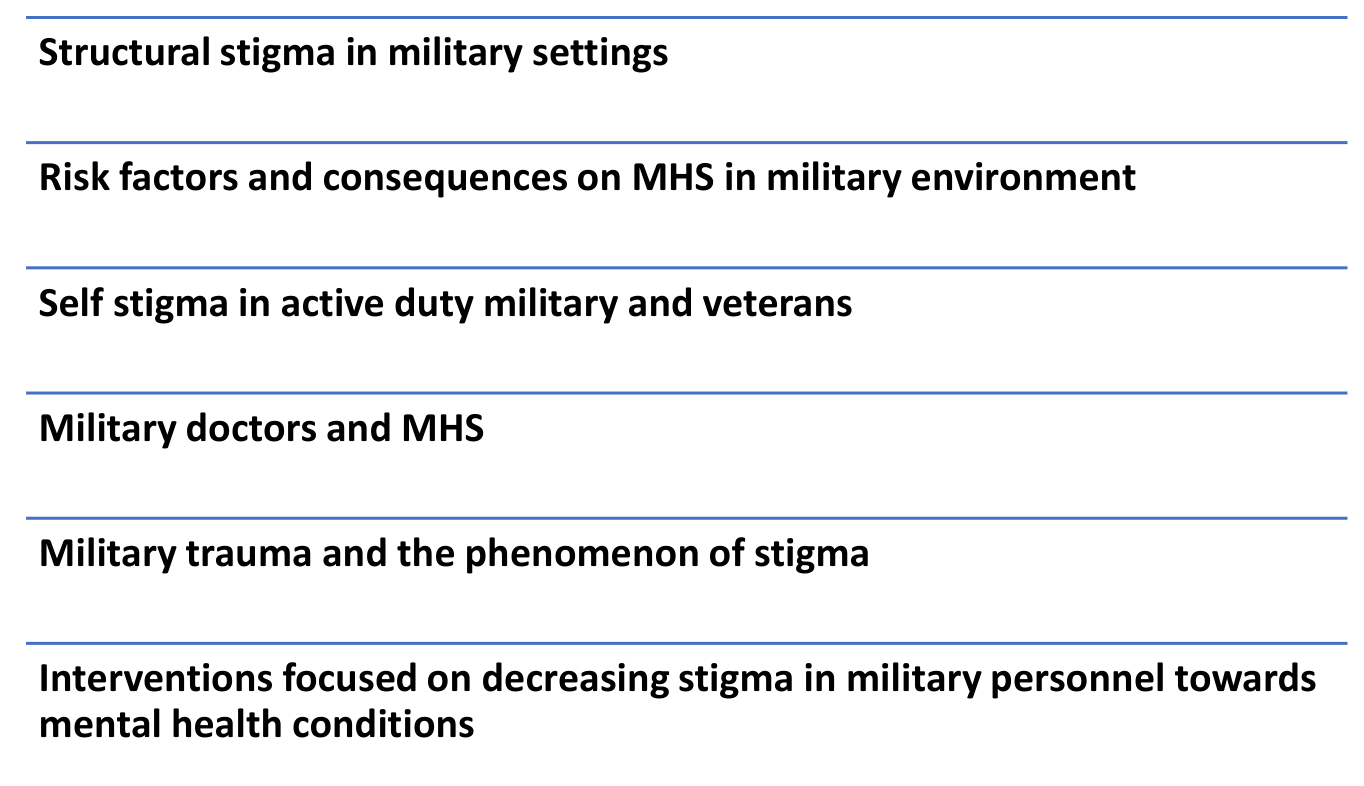
The reports identified were distributed into six large categories: (1) structural stigma in military settings, (2) risk factors and consequences of MHS in military environment, (3) self stigma in active duty military and veterans, (4) military doctors and MHS, (5) military sexual trauma and the phenomenon of stigma, and (6) interventions focused on decreasing stigma in military personnel towards mental health conditions (Fig.2).
According to a RAND (Research And Development) Corporation report,12% of the military policies in the US contained language that was pejorative or presented mental health diagnosis and treatment in a negative way [21]. Based on this RAND document, a lot of service members feared that seeking care would immediately lead to being reported to their commanders, raising concerns about the confidentiality of medical data in military settings [21]. A limitation of the career-impacting policies was recommended by the investigators in this project, in order to ensure such policies are evidence-based and not unnecessarily broad [21]. It was also recommended that mental health be integrated into overall fitness and readiness discussions as a means to mitigate structural stigma, and, in addition, higher-level leadership engagement in the promotion of mental health was suggested to reduce this type of stigma further and foster a supportive culture [21]. Expanding peer support and enhancing access to informal resources, as well as active monitoring and evaluation of mental health, were other potential solutions supported by the RAND report [21].
A study explored the attitudes of commanding and executive officers (N=138 participants) regarding US active duty members who received mental health and related services [22]. The responses to the survey were mainly neutral, and relatively few negative evaluations of service members who received specialised services were identified [22]. This study, focused on institutional culture and
military norms, showed that commanding officers’ attitudes strongly influence whether the service members feel safe to seek mental health care, and that leadership endorsement or disapproval can either reinforce stigma or decrease it [22].
In a study of military personnel following deployment (N=2510), baseline leadership and cohesion were both significantly linked to stigma and barriers to care [23]. However, at follow-up (4–6 months later), only cohesion was significantly associated with awareness of and willingness to discuss mental health [23]. Shifts in perceived leadership and cohesion were related considerably to corresponding shifts in stigma and barriers to care [23]. Fear of being seen as weak and being treated differently by leaders was more frequently reported as a reason for stigma and a barrier to care [23]. In order to decrease these phenomena, effective leadership and cohesion building may be the best options, with increasing awareness and promotion of mental health discussions being helpful in the construction of supportive leader behavior [23].
A large-scale investigation of factors related to stigma toward psychiatric illness and mental health services among Japan Ground SelfDefense Force members (N=4754 participants) showed that age, psychiatric evaluations, leadership, and cohesiveness of the group were markedly associated with the two explored phenomena [24]. Therefore, demographic and Army culture factors need to be thoroughly assessed in military settings in order to develop adequate policies focused on the de-stigmatization of psychiatric services [24].
When analysed together, these studies support (1) the importance of addressing military policies as a vehicle of fighting against stigma related to mental health problems, via reformulation of core concepts and procedures in this field, but they also highlighted (2) the significant role of unit leadership in controlling the same phenomenon, through encouragement of unit cohesion and avoidance of negative evaluations of service member who accessed specialised health services.
A study of 97 military personnel found that self-stigma fully mediated the link between public stigma and both attitudes toward and intentions to seek behavioral health care [25]. These findings underscore the importance of shaping stigma-prevention policies to specifically target and reduce the self-stigma tied to seeking mental health services [25].
A review of the published studies on mental health service utilisation in military personnel and stigma (n=29 reports) showed that public stigma, self-stigma, and concerns about career consequences significantly reduce willingness to seek care, despite high levels of mental health need [26]. The review also highlighted the importance of targeted stigma-reduction interventions and policy changes to improve access to and utilization of mental health services in military populations, and emphasized patterns and inconsistencies across the literature regarding this topic [26].
According to a systematic review and meta-analysis (n=20 papers), the most endorsed stigma concerns in the military were “My unit leadership might treat me differently” (44.2%) and “I would be seen as weak” (42.9%) [2]. These results reflect the importance of the intricacy of social and internalised stigma, and the possible barrier to adequate mental health care raised by such phenomena.
In a study that investigated the influence of various stigma perceptions in therapy seeking and discontinuation among active-duty personnel (N=1324 participants), who were screened positive for a mental health problem, high scores on four stigma perceptions were recorded, i.e., perceived stigma to career, perceived stigma of differential treatment (i.e., the concern that others will treat them differently), self-stigma from seeking treatment (i.e., internalised negative beliefs about oneself for having sought help) and stigmatizing perceptions of soldiers who seek treatment (i.e., related to peers who are in need of treatment) [10]. When each of these perceptions was considered individually, all of them were associated with a reduced likelihood of seeking mental health treatment, but only three of them were related to the risk of treatment dropout, i.e., perceived stigma to career, perceived stigma of differential treatment, and self-stigma [10].
A study that explored the relationship between self and public stigma, on one side, and the attitudes/intentions towards seeking professional mental help in the military environment, on the other, included 442 students of the military academies in Greece, and showed that few participants reported willingness to access professional help, even in cases of suicidal ideation [27]. Many cadets valued independence and equated medical help-seeking to weakness; also, self-stigma and public stigma were connected with each other [27]. In a military environment, high self-esteem may consolidate the perspectives of self-reliance and stigma, decreasing the chances of accessing professional health services [27]. This study did not find any differences by gender or service branch regarding stigma or attitudes toward mental health services [27].
In conclusion, there is evidence that supports the interdependence of public and self-stigma associated with mental health problems in the military environment, which indicates the need to develop strategies focused on both dimensions. Also, these studies showed several factors that contribute to the perpetuation of self and public stigma, such as concerns about the negative impact of a psychiatric diagnosis on career, thus indicating the sensitive domains where interventions are needed.
A study that recruited 956 US National Guard military personnel confirmed the importance of exploring barriers to care and stigma in this population, because mild, moderate, and high stigma/barriers were highly present (30%, 20%, and 20%, respectively) [28]. The group with high stigma levels reported skepticism toward the mental health care system, strong career-related concerns, significant self-stigma, and major worries about leadership attitudes regarding mental disorders [28]. These individuals also exhibited higher rates of psychological distress, suicidal thoughts and behaviors, and mental health care utilization [28].
Another study found that both Canadian military personnel (N=1900 participants) and civilians (N=2960 participants) experience MHS and stigma related to physical diseases, with an association between stigma and poorer mental health outcomes, including psychological distress and suicidal ideation [29]. The authors of that study concluded that reducing stigma requires broad, systemic approaches that extend beyond the military context, and that elements of the military culture (such as the accent placed on toughness, strict fitness requirements) and the physical demands of the profession could explain a higher stigma in the military vs. civilian setting [29].
The relationship between stigmatisation associated with mental health conditions and help-seeking was investigated in a large study (N=1636 UK Armed Forces personnel) that evaluated the same participants immediately after deployment and six months later [30]. Stigmatising beliefs were associated with the reports of possible mental health disorder or harmful alcohol use after deployment, and the degree of stigma was related to changes in mental health symptoms severity [30]. Recovered cases experienced lower levels of stigmatization at a significant level, and new onset cases had significantly higher levels of the same parameter, when compared to those who never presented probable mental health problems [30]. Therefore, the stigma appears to be a dynamic phenomenon that fluctuates depending on the frequency and severity of psychopathological symptoms [30].
„Potential loss of personal military credibility and trust” (PL) and „negative perceptions of mental health services and barriers to help seeking” (NL) were the key components of the stigma/barriers to care phenomenon in a survey study that included 3405 UK military personnel during their deployment in Iraq and Afghanistan [31]. These components were associated with systematically assessed and subjective mental health, medical appointments and admission to hospital (for PL), and only with subjective and objective evaluations of mental health (NL) [31].
In a large survey-based study (N=23101 UK Armed Forces personnel deployed to Afghanistan and Iraq), stigma (including the fear of being treated differently by commanders and loss of trust among peers) was more important than the perceived barriers to care [32,33]. The barriers to reporting stigma were significantly greater during deployment than post-deployment, but anti-stigma campaigns may have resulted in a decrease in the time of this phenomenon post-deployment [32]. Male personnel, reporters of higher PTSD severity and greater combat exposure were significantly more frequently associated with stigma/barriers to care [33].
A study that enrolled Taiwanese military academy students (N=898) from six educational facilities evaluated the relationship between social support and depression [34]. The results of this study reflected the complex dynamics of social support and depression in military contexts, especially for females, who present even more elaborated relationships between the two variables [34]. The same cadets were evaluated three consecutive years, and the data showed that, over time, for female students, the depression does not erode their perception of social support as much as it does in male cadets [34]. The study showed that among cadets, if stigma is lower, they might feel safer acknowledging distress and benefiting from adequate support [34]. Also, when depression is present, and, as the study showed, it is associated with lower social support, cadets may be avoided, pitied, or treated differently, leading to less assistance, with male cadets being especially exposed to this treatment [34].
Iraq and Afghanistan veterans (N=305) presenting symptoms of depression, PTSD, or alcohol abuse received adequate treatment, especially if they were women (OR=4.82) and if they had more severe symptoms of PTSD and depression (OR=1.03 and 1.06, respectively) [35]. Interestingly, perceived barriers to care were not correlated in this study with adequate treatment utilisation [35]. Multiple explanations for this apparent contradiction are possible: barriers may affect timing, rather than eventual use, thus being a gradual phenomenon rather than a yes/no situation; when the level of distress is high, veterans may override barriers to care; there is a relatively small cohort and the methodology used (telephone survey data) has limited power to detect associations.
Members of US infantry units deployed to Iraq (N=2530) or Afghanistan (N=3671) were evaluated pre- and post-deployment, and the outcomes assessed were major depression, generalized anxiety, and PTSD symptoms [14]. Of those who had positive responses for a mental disorder, 23-40% were interested in seeking mental health specialists’ help, which means a quite high proportion, between one quarter and a third of all cases [14]. Positive responses to a mental disorder were associated with more frequent concerns about possible stigmatization and other barriers to seeking mental health care, vs. those who did not acknowledge symptoms of mental disorders [14].
In a large UK military health study (N=821 participants), the most common barriers to care are related to the anticipated public stigma due to consulting mental health specialists, as well as to practical issues such as scheduling an appointment or having time off for treatment [36]. Interestingly, such barriers did not disappear after discharge from active duty, so that veterans added other obstacles to these, for example, a lack of information about mental health services and concerns about the civilian employers who would blame
them for their problems [36]. Individuals with mental health illnesses reported significantly more barriers to care than those without a precise diagnosis [36].
A qualitative study exploring the prevention of suicidal behavior among British Army personnel (N=21 service providers and 10 soldiers) showed that stigmatisation of mental illness in the Army may interfere with accessing mental health services in those with suicidal ideation [37]. Soldiers were trying to access support resources outside the Army and consulted commanding officers rather than healthcare professionals for solving their problems [37]. Helplines or independent sources of confidential advice and support were not mentioned by soldiers or service providers as relevant [37].
A review of 15 reports evaluated the mental health-related beliefs in active duty military personnel and veterans as barriers to service use, identified a lack of attention to the association between the two explored variables, a limited focus on personal beliefs about mental illness and mental health treatment, and the questionable methodology used in research focused on this topic [38].
A survey-based study of 4496 military personnel from the British Armed Forces identified a lack of trust in the healthcare system and perceptions of low-quality healthcare, but also a sense that organizational support for workplace and family life is absent [39]. Lack of confidentiality, fear of stigmatisation, and worries that the interaction with mental health specialists would endanger career prospects were highlighted by respondents, who admitted they would not honestly answer some items in the questionnaire [39]. Also, many respondents admitted they seek, when needed, medical help outside of the Armed Forces [39].
British soldiers who required a formal mental health assessment (N=317 participants) presented ≥2 predisposing factors, mainly family conflicts, relationship problems, and general military stress [40]. A significant proportion of this sample required mental health evaluation as a result of their wish to leave the Army, and admitted to self-harming ideology, with female soldiers being overrepresented [40]. Stigmatisation in this context was not related to social isolation, as the participants did not acknowledge feelings of isolation [40].
In a study investigating common reasons for psychiatric treatment dropout, 57 out of the 260 soldiers who had sought specialised help reported premature discontinuation of therapy [41]. Career-related stigma (concern that seeking treatment would harm one’s military professional prospects) and differential-treatment stigma (fear of being treated differently by others) were both associated with an increased likelihood of dropping out of the mental health treatment in this study [41].
A study that explored the role of stigma and barriers to care in mental health seeking among British Army personnel (N=484 nondeployed participants) showed that 40% of the symptomatic personnel did not seek help, with more than 70% of alcohol misusers avoiding mental health services [42]. Also, more than 80% of probable mental health cases believed that for accessing specialised services, courage or strength is required [42]. Perceptions of possible negative career or social outcomes, along with one’s current mental health status, can affect the decision to seek support [42].
In a survey study that consisted of structured telephone interviews with 1432 UK service personnel and veterans who reported recent mental ill health in the last three years, those presenting with criteria for probable common mental disorders and PTSD were significantly more likely to report concerns about perceived and internalized stigma and barriers to care compared to participants without a probable mental disorder [43]. Individuals with probable PTSD reported more stigma-related concerns and barriers to care vs. those with likely common mental disorders and alcohol misuse, although not at a statistically significant level [43].
All these studies create a framework for better understanding the factors that contribute to the perpetuation of stigmatisation related to mental health problems in military settings, and represent the directions of interventions for those interested in designing strategies to alleviate the weight of this stigma and its negative consequences. From the reviewed studies, the most relevant contributors to stigma are a skeptical approach toward the mental health care system, strong career-related concerns, worries about leadership attitudes toward mental illness, the accent placed on toughness and strict fitness requirements, potential loss of personal military credibility and trust of peers if psychiatric services were accessed, severe PTSD symptoms and greater combat exposure, lack of information about mental health services in veterans, and concerns of the same population about the civilian employers who would blame them for their mental problems. Regarding the consequences of stigma on individual health, the risk of early treatment discontinuation, unfavorable evolution of symptoms, and failure to access military medical resources were identified.
This topic is important due to the fact that military doctors support multiple sources of stress, having to face the need to ensure confidentiality of their patients, but also to help them in the most adequate ways, and to assist them in avoiding the risk of stigmatisation. A study that explored the attitudes towards mental health, self-stigma, psychological distress, and help-seeking among UK Armed Forces doctors (N=678 participants) vs. active duty and ex-military personnel (N=1448) showed that military doctors reported fewer mental disorder symptoms than comparison groups [44]. They also reported higher rates of stigmatizing beliefs, negative attitudes to mental healthcare, desire to self-manage, and tendency to self-stigmatisation, when compared to each of the control groups [44]. The potential negative effects and peer perceptions about receiving a mental disorder diagnosis were the main
topic of concern for military doctors [44]. Although alcohol use disorder and mental health problems were significantly reported by the study group, these participants were less likely to seek help than controls [44].
In conclusion, although the topic is interesting and certainly worthy of further exploration, the current data available in the literature is insufficient to formulate recommendations for this sub-population. However, based on limited data of low quality, the risk of stigmatisation is higher in military doctors than in control populations, suggesting a possible contribution of both social and internalised stigma.
The sensitive topic of military sexual trauma has been approached by several studies, mainly conducted in the US. The prevalence of this trauma and associated mental and physical health consequences varies largely depending on the method of assessment, definition of the phenomenon, and study sampling method [45]. A literature review found age, enlisted rank, hostile home life environment, and previous assault history as significant risk factors for military sexual trauma [45]. Increased rate of depression and alcohol abuse, significantly higher odds of meeting criteria for PTSD, but also an increased number of current physical symptoms, impaired health status, and more chronic health problems have all been associated with this type of trauma [45].
A survey-based study (N=22 telephone interviews) included servicewomen deployed overseas, and its results supported the existence of several important contributing factors to this phenomenon: deployment dynamics, military culture, and lack of consequence for perpetrators [46]. Stigma, concerns about confidentiality, and fear of negative reactions and blame from peers and supervisors can explain the low rate of reporting [46]. Also, barriers to care seeking were similar and referred to confidentiality concerns and stigma [46].
A large study, the 2019-2020 US National Health and Resilience in Veterans Study (N=4069 participants), concluded that female veterans reported substantially higher rates of military sexual trauma (44%); male veterans with this type of trauma had a three-fold increased odds of reporting later suicidal intent, and two- to three-fold higher odds of screening positive for current PTSD, depression, and lifetime PTSD; female veterans with sexual trauma had five fold greater odds for current PTSD, two fold greater odds for engaging in mental health treatment, and lower scores on psychosocial functioning, but higher scores on somatic symptoms [47]. An Independent Review Commission on Sexual Assault in the Military concluded, in 2021, that women and those with lower societal and institutional power, meaning lower rank, are more vulnerable to military sexual trauma [48]. The same Commission reported that sexual trauma survivors have, in many cases, significant and enduring consequences on individual mental and physical health [48]. Experiences of interpersonal betrayal in a military environment may be cumulated with perceptions of institutional betrayal, such as fear of reprisal or ostracism [48]. PTSD was the most frequently reported, and it may be associated with major depression, anxiety, eating disorders, substance use disorders, and increased risk of suicide [48]. From the physical health perspective, higher chronic disease burden and impaired reproductive health and sexual functioning have been observed [48].
Among veteran men who experienced military sexual trauma (N=20) but did not receive trauma-focused mental health care, the primary barriers to accessing adequate care were identified as stigma, limited knowledge, and gender-related factors [49]. Psychoeducation and outreach interventions have been suggested as potential interventions for this population [49].
A study that enrolled 911 women veterans living in the US revealed that military sexual trauma, but not exposure to combat, was correlated with lower infant birth weight, a slight decrease in the probability of having a full-term birth, and an increased likelihood of developing postpartum depression or anxiety (N=1752 unique pregnancies) [50]. Therefore, screening for military sexual trauma during pregnancy could be useful for configuring the prognosis of that pregnancy [50].
A retrospective review of disability reports and electronic medical records (N=322 active-duty women diagnosed and treated for PTSD) showed that military sexual trauma was the most frequent index trauma in the group of women requiring medical disability evaluation (OR=2.6) [51]. A significantly higher number of mental health visits for PTSD and more frequent chronic pain history were present in the study group than in the controls [51]. In this line of research, military sexual trauma significantly increases the risk of PTSD, and reporting both sexual traumas and PTSD in the military environment can be associated with public and self-stigma. The co-occurrence of military sexual trauma, chronic pain, and extensive mental health care in this population may represent higher challenges due to stronger internal barriers to seeking help in the specified environment.
In conclusion, the need to find adequate strategies for fighting stigma in active duty and veterans who have suffered sexual trauma can not be overemphasized, due to the negative impact of these events on professional life, mental health, and overall quality of life. The risk of PTSD is correlated in this population with self-stigma, but also with public stigma, complicating the design of interventions targeting this population.
Interventions aimed at reducing the stigma of mental health conditions need to incorporate both strategies for fighting societal stigma and self-stigma, due to the complex nature of these two phenomena and their interdependence [52]. For example, in a military setting, the stigma associated with PTSD could be mitigated by psychoeducation about the causes of and available treatment options for this
disorder [52]. Also, unit-level interventions that include contact with soldiers who have been successfully treated for PTSD, who may explain to others in that unit their experiences, in a supportive environment, may be helpful [52]. According to the framework of this method, fellow unit members could ask soldiers with PTSD questions about various aspects of the problem, which will lead to a better understanding of the mental health difficulties and of the mental health services’ role [52]. Another method involves training the senior leaders in identifying signs of mental health problems and, thus, making them part of the psychoeducation programs [52].
General recommendations to decrease self-stigma in the military environment, related to mental health problems, are assurance of data anonymity, the use of non-stigmatizing language, and the enhancement of peer-to-peer and stigma-reduction programs development [53].
Offering regular mental health care evaluations as part of the normative, periodic controls may be a helpful de-stigmatising approach [1,14]. Psychoeducation of soldiers about their reactions to stress and assurance about confidentiality of provided data in the medical context could also be a beneficial measure in de-stigmatisation [11].
The empowerment approach is based on the idea that stigmatized individuals are not passive victims of prejudice and discrimination, but active social agents, who can identify positive roles attributed to their group (e.g., solidarity, creativity, adaptability), thus fostering resilience by acknowledging their belonging to a stigmatized group [54]. The stimulation of critical awareness is another technique of empowerment, focused on understanding how stigma operates at a social level and by teaching individuals on how to differentiate external prejudice from internalized stigma, therefore decreasing self-blaming [54]. Agency and choice are favoured within this approach, and this implies a shift from “What is happening to me?” to “What can I do with this situation?” [54]. Cultivation of personal strengths and constructing social support networks may also be helpful from this perspective [54].
Applied in a military setting, the empowerment method could involve reframing stigma as a source of strength by encouraging open discussion of mental health challenges and by reframing these individuals as resilient, not weak. For example, decorated veterans who sought care from mental health services are examples of responsibility and strength. This type of intervention would include framing therapy as a type of “mental health training” or a way to preserve operational readiness. Peer-led support groups may reinforce the idea that caring for each other includes physical safety and mental well-being, while the cultivation of personal strengths refers to the framing of psychological help as an extension of the soldiers’ ethos, as the mind is in itself a powerful weapon that should be kept strong.
Psychoeducation refers to the presentation during the initial sessions of training of videos about myths regarding mental illness, contrasting with the scientific data about the pathogenesis and the recovery from such disorders [11]. Psychiatrists may be invited to participate in platoon meetings and answer questions about mental illness and available, efficient treatment [11]. In the same line of intervention, leaders discussing their ways of coping with PTSD after returning from a tour of duty with new recruits may be useful [11]. Formal media campaigns against stigma have been available in the US since 1999, and a National Mental Health Awareness Campaign was formed [11]. Public service announcements were used in this context to fight against stereotypes about mental illness and replace them with factual information [11]. It is expected that such interventions, applied since the earlier stages of military training, may be beneficial because they would prepare the soldiers before deployment or exposure to combat-related stress [11]. If they were informed by senior officers and by mental health professionals about the identification of symptoms and available evidencebased treatment and military resources, they could become less vulnerable to cultural stereotypes and stigmatisation, if confronted with such health problems [11].
Cognitive-behavioral therapies (CBT) against stigma represent an important therapeutic resource that has been explored for improving attitudes toward mental health treatment and decreasing stigma [55]. When applied in the military setting, for active duty soldiers with PTSD (N=162 participants), exposure therapy (ten sessions) led to significant improvements vs. waitlist in readiness to talk about mental health problems and concerns about social stigma regarding mental health problems [55]. The study concluded that a decrease in the severity of PTSD manifestations and favourable changes in perspectives towards mental health therapy independently predict later reductions in stigma [55].
Technology-based treatments in PTSD may be valuable in mitigating MHS in the military setting. The DE-STRESS (Delivery of Self Training and Education for Stressful Situations) model was constructed by the US Department of Defense and was based on a method that could be implemented in a primary care environment [56]. In order to detect early and approach the stress reactions in due time, Web-based training is provided, and computer-based interventions are made available for military personnel [56]. Each patient is monitored on a daily basis by a trained therapist, so that the recovery process can be kept on track, but the main benefit of this approach is the avoidance of any perceived stigma associated with usual consultations with a mental health specialist [56]. The DESTRESS program starts with a confidential presentation of the basic concepts in therapy and stress management, and after that, they have daily awareness sessions and, as needed, supplementary sessions with a therapist [56]. This program includes training of diaphragmatic breathing, progressive muscle relaxation, and basic cognitive restructuring [56].
Creative art therapy has also been explored in cases of military personnel for a variety of indications. Creative Forces®: NEA Military Healing Arts Network is a program of the National Endowment for the Arts, developed in collaboration with the US Departments of
Defense and Veterans Affairs [57]. Its mission, as posted on the initiatives webpage, is to enhance the health, quality of life, and overall well-being of service members, veterans, and their families and caregivers who have been affected by trauma [57]. Creative art therapies are used in this program not only for clinical symptoms of PTSD and traumatic brain injury, but also to reduce stigma associated with these pathologies, isolation, and related psychological health problems in veterans [57].
A case analysis of a 47-year-old service member’s trauma processing through art and narrative therapy demonstrated good results by expanding the understanding of treatment progress recorded in journal notes, stimulating imagery, and changing linguistic indices of trauma processing [58]. In this case, although a transient increase in the severity of PTSD symptoms was observed, improvements in coping strategies have been reported, and the patient returned to whole military duty following treatment [58].
Veterans diagnosed with PTSD (N=11) received individual art therapy and cognitive processing therapy (CPT), or CPT alone, and the results were positive in both groups, according to the PTSD Checklist-Military Version and Beck Depression Inventory-II scores [59]. Although no difference between the two interventions was observed when scores were analysed, the addition of art therapy may still be helpful in improving trauma processing by increasing access to emotion, healthy distancing, and enhanced trauma recall [59]. Although stigma was not assessed in this study, the impact of art therapy in combination with CPT in veterans with PTSD may contribute to decreasing the stigma of traditional psychotherapy used alone, making it more acceptable. Art therapy also offers a less threatening, indirect channel of communicating emotions and thus avoids the fear of being judged for showing vulnerability, an important aspect of perpetuating stigma in the military environment.
Interpersonal therapy was explored in multiple trials for PTSD, and in an open study that enrolled 50 US military service members, veterans and family members, this type of therapy was administered during 14 sessions [60]. Patients receiving interpersonal therapy showed a decrease in PTSD and depressive symptoms severity to a significant level [60]. In relation to MHS in military contexts, the collaborative, relationship-focused nature of interpersonal therapy may help normalize therapeutic engagement in a less stigmatized framework.
Family therapy could be introduced as a tool in the management of patients within a military setting, to decrease MHS [61]. The participation of veterans’ families in the treatment of veterans with PTSD is desired by both patients and their caregivers, and the potential of improving the outcomes is essential [61]. A study based on qualitative interviews (N=31 providers at 10 US Veterans Health Administration facilities) confirmed that clinicians offered at least occasionally family-inclusive sessions and highlighted the negative impact of PTSD symptoms on the patients’ familial relationships [61]. Therefore, by integrating trusted relatives into therapy, treatment becomes normalized and less threatening, helping to reduce both self-stigma and fear of external judgment, as noted by VHA clinicians who observed the positive impact of family participation on veterans’ willingness to seek and sustain treatment [61].
The Families OverComing Under Stress (FOCUS) program provides resiliency training to enhance family psychological health in US military families impacted by combat- and deployment-associated stress [62]. Using a family narrative framework, FOCUS delivers a tailored intervention that integrates core components such as psychoeducation, emotional regulation strategies, goal setting and problem-solving skills, techniques for managing traumatic stress reminders, and the enhancement of family communication [63]. According to a secondary analysis of data in this program (N=488 unique families at baseline and 331 families pre- and postintervention), a high level of satisfaction with this intervention was reported by families, and a positive impact on parent-child indicators was observed [63]. At baseline, the evaluations indicated higher psychological distress for service members, civilian parents, and children vs. community norms, but significant improvements were observed across all measures for all the categories of population included, i.e., Brief Symptom Inventory (BSI) for self-reports on psychological distress, McMaster Family Assessment Device (FAD) for family functioning, and Strengths and Difficulties Questionnaire (SDQ) for assessment of children mental health problems [62]. Another secondary analysis of the data in the FOCUS program (N=2615 unique families) reported that parental anxiety and depressive symptoms were significantly reduced postintervention and the positive effect was preserved at two subsequent follow-up assessments [64].
Therefore, the FOCUS program offers concrete evidence that addressing mental health proactively leads to better outcomes for the whole family, countering the stigma of treatment inefficacy or the lack of trust in the ability of a treatment to change the severity of psychological status. Also, because the intervention is focused on the family system, it avoids framing distress as a personal flaw, thus avoiding internal stigma; the focus of attention is shifted from individual stress to shared stressors and collective solutions [62].
Participants in a survey study (N=18 US military veterans and 13 family members) viewed engagement in therapy as a family-level decision undertaken with the expectation that it would enhance overall family life [65]. Veterans were often motivated to seek treatment in order to preserve their relationships with loved ones, with family members playing a central role by encouraging engagement in care [65]. In particular, relatives who understood PTSD as a treatable condition rather than a fixed aspect of personality conveyed more positive expectations about the effectiveness of therapy, while veterans embedded in social networks that included others with military or trauma-related experiences reported greater understanding and more supportive norms surrounding treatment [65]. Because PTSD profoundly affects the family system, relatives are frequently involved in the therapeutic process, and their early engagement -at a level aligned with both the patient’s and family’s preferences- may foster positive subjective norms that enhance veterans’ perceptions of the value of treatment [65].
Social policies offer the possibility of accessing a large population using targeted interventions. Potential objectives for this type of intervention are encouraging early help-seeking treatment and sustained engagement, improving measurement and conceptual clarity on stigma types, focusing on broader barriers, including self-stigma and treatment attitudes, and exploring the potential role of social networks in helping individuals overcome stigma-related barriers to seeking care [2].
The previously mentioned FOCUS program demonstrates that prevention programs can and should be integrated into military systems, helping to normalize mental health support as part of standard family readiness services [62,64].
Fighting structural stigma in a military setting involves policy reforms with the strengthening of confidentiality and clear guidelines that avoid stigmatisation related to mental health problems [19]. Leadership training that openly supports mental health care and normalizes mental health as a component of overall health, encouraging cultural and educational interventions, can all be helpful in this domain. An analysis that explored the level of incorporated changes in the vulnerability factors related to structural stigma in the military environment, initially identified by the US Department of Defence, showed that in almost 59% of the 129 mental health policies with stigmatizing language that were reissued, language changes were implemented [9]. These results indicate that a collaborative effort at the institutional level could be very beneficial to identify and modify potentially stigmatizing language in official documents in the military setting [9]. Furthermore, it is expected that such changes could lead to a substantial reduction in problematic policies in military services and prevent the appearance of stigma language in newly initiated documents [9].
In 2011, the Department of Defense issued a command notification policy that established a presumption of confidentiality for service members who voluntarily pursue mental health care or substance use education [66]. The intent was to reduce stigma, with command notification required only under clearly defined circumstances -such as risk of harm to self or others, mission-critical concerns, inpatient admission, entry into substance use treatment, or a command-directed evaluation [66]. The policy seeks to safeguard individual privacy while ensuring operational readiness, outlining specific responsibilities for both healthcare providers and commanders in managing necessary disclosures [66].
Mental health should be acknowledged as an essential element of overall well-being, with the traditional binary view of service members as either “ready” or “unfit/ill” giving way to a continuum of readiness and broader access to diverse support personnel [67]. The US Army has addressed the issue by training leaders to promote a supportive culture and reduce stigma, expanding access to psychological health services beyond duty hours, and creating educational resources designed to challenge stigma [67]. Combat Operational Stress Control programs integrate mental health and substance use treatment providers into each unit’s fitness and preventive care services [67].
Policy modifications that could further reduce stigma in the military setting are related to the creation of an organizational framework allowing service members to be able to seek professional help during the duty day, or not to automatically equate seeking mental health support with losing their job or security clearances [52].
Military members and veterans who were confronted with destructive leadership had more reports of internalized MHS and a lower likelihood of accessing mental health services, according to a study that enrolled 232 participants [68]. Supportive leadership, on the contrary, was associated with a greater likelihood of seeking help from specialised services, and was indirectly related to lower stigma [68].
Overall, multiple interventions are available for decreasing the impact of stigma on the accessibility of mental health services, starting from the general, organizational recommendations, to the individual level (psychoeducation, psychotherapy), and up to the social policies. Although their effects on reducing stigma were not systematically assessed, there is hope that essential programs such as FOCUS will be replicated and their long-term consequences will be evaluated.
The stigma and barriers to care associated with mental health services in civilian society are extensively researched topics in the literature, with multiple warning signs being raised by researchers [4,69,70]. These phenomena have a significant impact on the patients’ overall quality of life, functionality, evolution, prognosis, risk of complications, and life expectancy; therefore, increasing societal awareness about the need to fight against stigmatization-related negative consequences is essential. Aspects like early detection of stress disorders, depressive episodes, addictive disorders, or psychotic disorders, timely initiation of adequate treatment for such mental illnesses, as well as correct monitoring of the mental health in vulnerable populations, require addressing social, structural, and internalized stigma [71-75]. The approached phenomena in this article are by no means limited to psychiatric disorders, because organic pathologies may, as well, be connected to stigma, with AIDS, cancer, Down’s syndrome, diabetes, obesity, intestinal disorders, epilepsy, and SARS-CoV-2 infection being among the most cited in the literature [76-78]. Monitoring the treatment effects also requires a continuous involvement of the patient in the therapeutic alliance, which can not be realized without the patient’s distancing from the stigma associated with chronic treatments [79-81]. These considerations are equally valid for civilian and military populations, with some particularities related to the structured environment, professional models, and limitations to the individual liberties that are co-substantial with the military environment.
Ethical challenges related to mental health care in the active-duty personnel may be connected to the fear of stigmatization at multiple levels: confidentiality of data regarding mental health vs. command responsibility, the dual responsibility of mental health professional for their patients and for the institution, informed consent and mandatory health evaluations, etc. Public stigma, structural stigma, and self-stigma have intricated relationships in this specific environment that reduce help-seeking, delay treatment, and increase the risk of complications, thus reducing the combat readiness in active personnel. Fear of disclosure due to confidentiality limits, policies requiring command notification, and dual loyalty are points of intersection between medical ethics, military ethos, and MHS [36,52,82,83].
The reports reviewed in this article allow for delimitation of six domains where strategies for reducing MHS in the military environment may be applied. The first of these domains is represented by the need to carefully address the structural stigma in such settings, especially that related to the most frequently met pathologies, like PTSD, depression, substance use disorders, and suicidal tendencies [83]. Mental health problems are not isolated phenomena, since, for example, the reported rates of substance use disorders in veterans are over 15% for alcohol and more than 7% for other drugs, with unmarried individuals and veterans younger than 25 being at higher risk [83]. Deployment, combat, and challenges of reintegrating into civilian life are factors that contribute to the psychiatric disorders previously mentioned [83]. Active-duty service members often face a strong stigma around seeking mental health care, largely due to concerns that doing so could negatively impact their military careers, which delays the psychiatric evaluations and treatment initiation [83]. The discussion about adequately addressing structural stigma is by no means limited to the military environment, because negative health outcomes derived from organizational-based prejudice, discrimination, and marginalization may arise in any setting [84]. Educational approaches that reduce structural stigma have been suggested as potential solutions both in civilian and military populations. For example, structural competency has been advocated as a potential instrument that enhances health professionals’ ability to recognize and respond to social and structural determinants that contribute to the maintenance of structural disparities [84].
The second domain of interest identified, based on the literature review, was expanding the understanding of risk factors and consequences of MHS in the military environment. The results of our analysis highlighted the differences between the military and civilian settings, with career-related worries and concerns about how mental illness is perceived by unit leadership and peers being among the most detrimental factors that perpetuate stigma in active-duty personnel. Difficulties in finding adequate information and doubts about the understanding of a psychiatric diagnosis (such as PTSD) by civilian employers are factors for stigmatisation in veterans. All of these factors are, in fact, negative prognosis factors for military personnel diagnosed with psychiatric disorders, due to delays in treatment, treatment discontinuation, and lack of a full engagement in one’s treatment. As research in the general population demonstrated, stigmatization arising from misconceptions about mental illness was associated with illness duration, frequency of clinic visits, and diagnosis of psychotic disorders [85]. Disempowerment, reduced self-efficacy, increased psychiatric symptoms, and lower quality of life were consequences of stigma associated with mental illness in the general population [85].
Self-stigma in active duty military and veterans was the third dimension of analysis supported by this research. In the military, selfstigma is perpetuated by a culture that equates strength with the absence of psychological vulnerability, reinforced by leadership’s promotion of the ideal soldier as someone free of mental or physical limitations. The solution of promoting personal empowerment as a way to challenge self-stigma has been suggested in civilian, as well as in military settings [86,26]. Other strategies were designed for mitigating the impact of self-stigma on personal health, starting from individual interventions to society-level policies [86].
The fourth domain of analysis was the impact of stigma related to mental health problems in military doctors, a subpopulation confronted with specific characteristics in this setting, based on more complex ethical challenges than in civilians. Stigma is not limited to the patients presenting psychiatric problems, but it extends to healthcare professionals, which complicates the delivery of adequate services [85]. Aspects like overestimation of coercion in mental health services, public ignorance about psychiatric disorders, and oversimplification of psychiatric difficulties all contribute to the extension of stigma on mental health professionals [85].
The fifth domain of interest for the research in the field of stigma is military sexual trauma and the stigmatization that stems from these types of events. In the civilian population, negative self-image, disclosure concerns, and concerns about public attitudes have been associated with stigma related to sexual violence [87]. In a study (N=453 Swedish young adults), 89% of those who reported a history of sexual abuse or intimate partner sexual violence also scored at least one item on a stigma scale [87]. Also, stigma in these cases was associated with more severe symptoms of generalized anxiety, depression, PTSD, greater need for treatment, and shame [87]. In military sexual trauma, there is a double-layered betrayal of trust, at the interpersonal and institutional level, complicating the relationships between social, structural, and self-stigma [55].
Finally, finding the most appropriate interventions focused on decreasing stigma in military personnel towards mental health conditions is an important area of research in the field of MHS. Although only a few therapies have been explicitly explored for decreasing stigma in the military, there is room for hope by looking at research conducted in the field of stigma in the civilian population, encompassing education, mental health literacy campaigns, contact with individuals who have already confronted mental problems, peer services, legislative and policy change, etc. [88,89]. However, specific strategies targeting the military personnel exist, and programs like FOCUS, or individual and group therapy focused on social aspects of the core psychiatric symptoms, as well as interventions for mitigating structural stigma, have already been implemented [19,59,62].
There are limitations that have to be listed, with the most important one being the lack of a systematic review on which the conclusions are based; therefore, it is not excluded that relevant sources for the objective of the article might have been missed. Secondly, there is a paucity of data regarding specific dimensions of the analysis, for example, the role of MHS in the activity of military doctors, or the targeted therapeutics for reducing stigma in military personnel. Thirdly, it is important to note that for other potentially relevant dimensions of stigmatisation in military personnel, such as the cultural modelling of stigma or particularities of MHS in ethnic minorities, data have not been identified by this search.
Exploring the domain of stigmatization related to mental health problems, with all its dimensions, i.e., social, self, structural, perceived, and cultural stigma, is a necessity in order to preserve the combat readiness, the military personnel morale, and the proper functioning in daily activities of the active-duty military. Among veterans, the interest in more research in the field of MHS is derived from the need to improve the prognosis of patients diagnosed with PTSD, major depression, and other psychiatric disorders that may be difficult to accept, as they contradict the model of strength promoted by the Army. The available data that was reviewed supports the need for better policies that meet both the necessities of the military institutions and the mental health requirements of the personnel, but also for large-scale programs dedicated to psychoeducation, leadership awareness of mental health issues, involvement of families in psychotherapy, offering regular psychiatric evaluations as a way to preserve the readiness for action, and applying the empowering strategies whenever is the case.
The authors declare no conflict of interest. This research received no external funding.
Authors’ contribution
Conceptualization, O.V., B.M.P., A.G.M., F.A.A, and O.M.S.; methodology, O.V., CA.C, and F.C.P.; software, O.V.; validation, O.V., C.A.C., D.G.V., F.C.P., O.M.S., F.A.A., and A.G.M.; formal analysis, O.V., A.G.M.; investigation, O.V., A.G.M., F.C.P., F.A.A., and B.M.P.; resources, O.V., O.M.S, and D.G.V.; data curation, O.V.; writing—original draft preparation, O.V.; writing—review and editing, O.V., A.G.M., B.M.P, D.G.V, F.C.P., and O.M.S.; visualization, O.V., C.A.C., F.A.A., and F.C.P.; supervision, O.V. All authors have read and agreed to the published version of the manuscript.
Not applicable.